Issues tackled

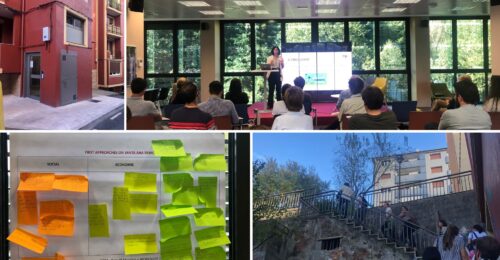
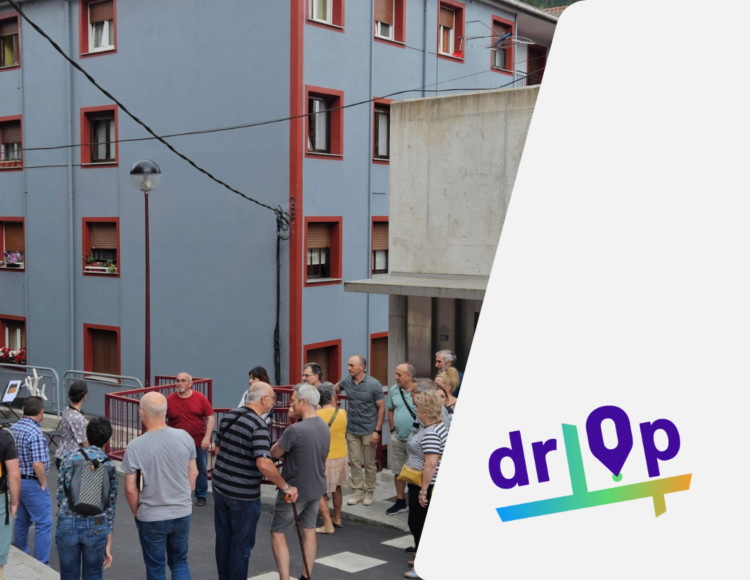
Social housing districts can also become inclusive smart neighbourhoods, and help achieve climate neutrality by 2050. To make this possible, the Horizon Europe project drOp aims to create an Integrated Renovation Methodology, a set of guidelines for district-level renovation, meant to support the public sector from the city and regional level, urban planners, construction experts or neighbourhood associations.

It mainly aims to promote social innovation and boost the local economy, and with that purpose drOp will adopt a human-centred approach, integrate innovative technologies and explore the growth creation potential of cultural and creative industries.

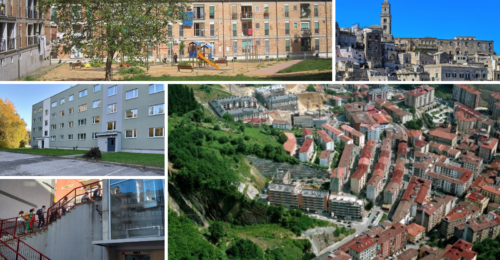
The pilot city of Ermua, in Spain, will be supported by the two peer-cities of Elva, in Estonia, and Matera, in Italy, which will also aim to replicate results. Our member, the Estonian Union of Co-operative Housing Associations (EKYL) is also involved and has the responsibility of sharing what has worked.

drOp is also a New European Bauhaus example and replicator within the Affordable Housing Initiative.
Responsible colleague: Andreea Nacu

The drOp project has received funding from the European Union’s Horizon 2020 research and innovation programme under Grant agreement ID: 101080025.

drop replication roadmap cover

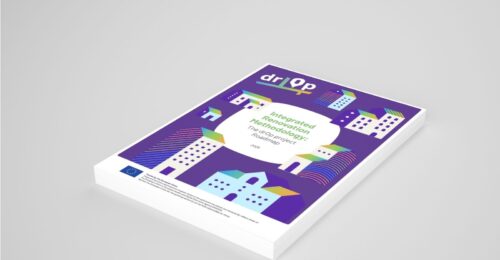
Renovating neighbourhoods together: A practical Replication guide

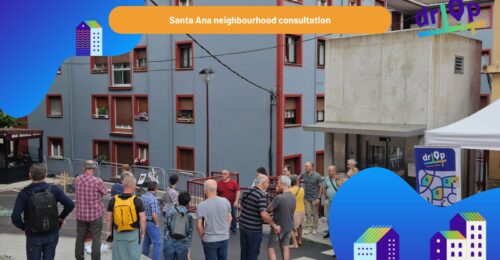
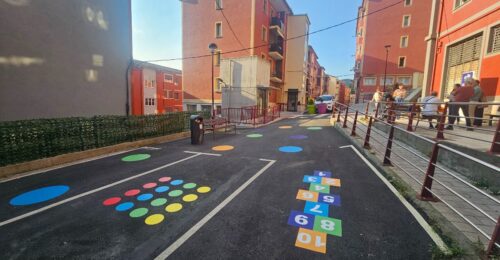
This Replication Roadmap builds on the experience of a European initiative that explored how social housing districts can be renewed through digitally enabled tools, strong local governance and community participation. Tested in the Santa Ana neighbourhood in Ermua (Spain), and enriched through collaboration with peer cities in Italy and Estonia, the approach focuses not only on technical upgrades, but on the processes that make renovation possible.
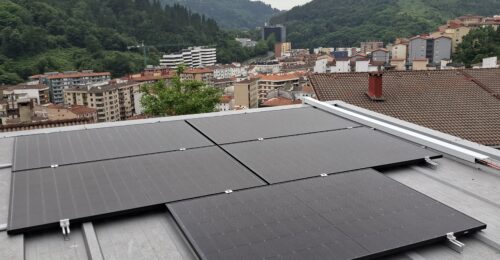
Solar panels - EkiElkar - Ermua

Social housing neighbourhood decides to produce its own energy

In Santa Ana, a post-war social housing neighbourhood in Ermua (Spain), residents, a school and local businesses created their own energy community. With a 40 kWp shared solar installation producing over 40 MWh annually and reducing grid dependency by up to 30%, EkiElkar shows how collective renewable energy can strengthen affordability, governance and community resilience in social housing districts.
12

Rethinking how we take care of our neighbourhoods: lessons from a district-level, residents-centred renovation project

Across Europe, the post-war social housing stock is confronting a familiar set of…

Building skills for inclusive urban regeneration

How can social housing residents play an active role in the regeneration of…

3 cities driving urban regeneration in social housing

Three European cities—Ermua in Spain, Elva in Estonia, and Matera in Italy—are breathing new life into social housing, thanks to the EU-funded drOp project.

Housing Europe’s project demonstrating affordable and well-thought renovation has a special mention in a New European Bauhaus report

Through its objectives and expected results, drOp project can also be considered a demonstration case of the New European Bauhaus. NEB is an initiative designed with the purpose of bringing the European Green Deal and its transition towards climate neutrality. What does it mean in practice?

Rolling our sleeves up to demonstrate some of the first renovation ‘lighthouse districts’

In the industrial town Ermua, near Bilbao in the Basque Country, the Santa Ana neighbourhood with post-war privately-owned multifamily buildings is officially starting the work to become a lighthouse renovated district.