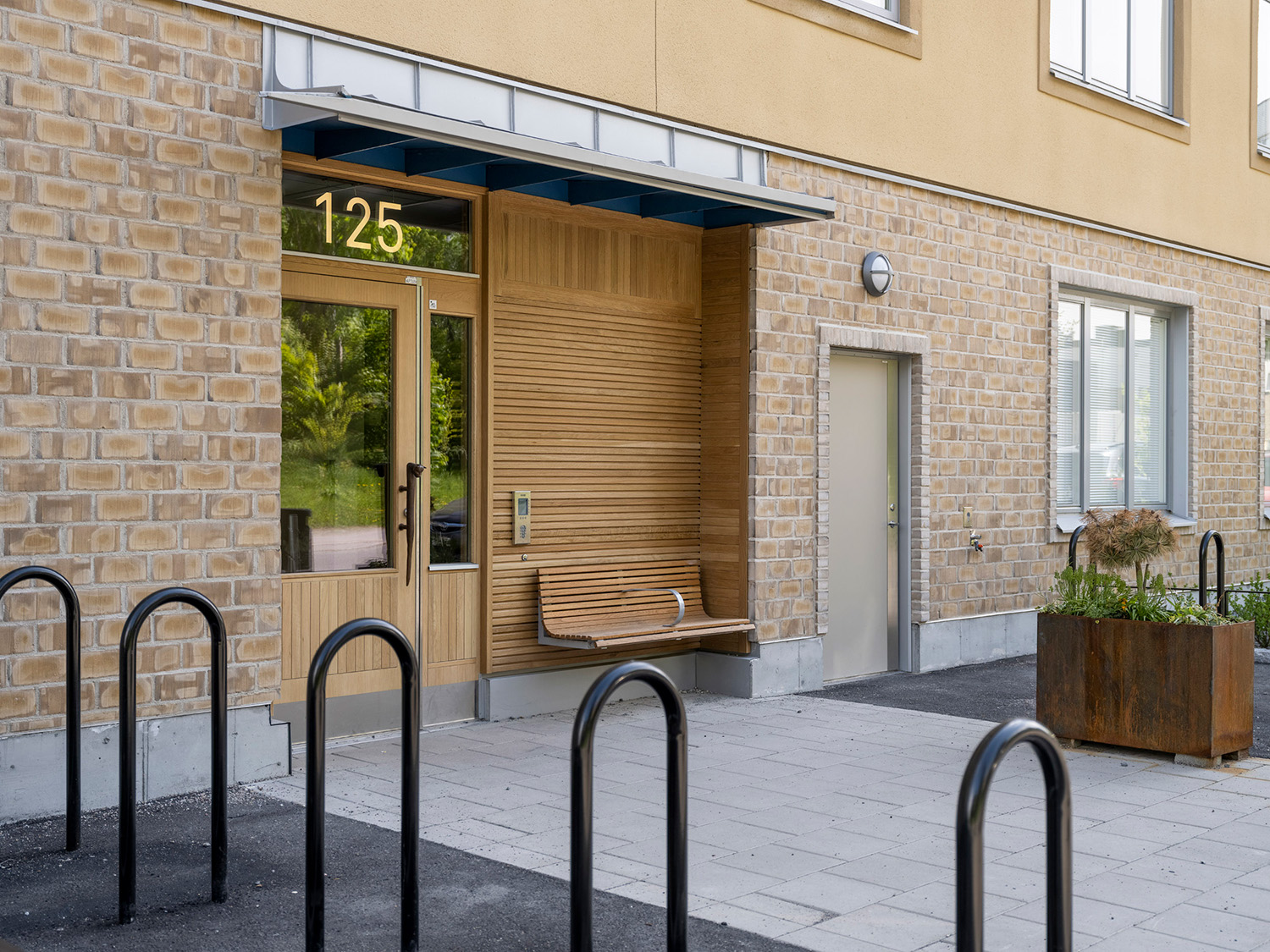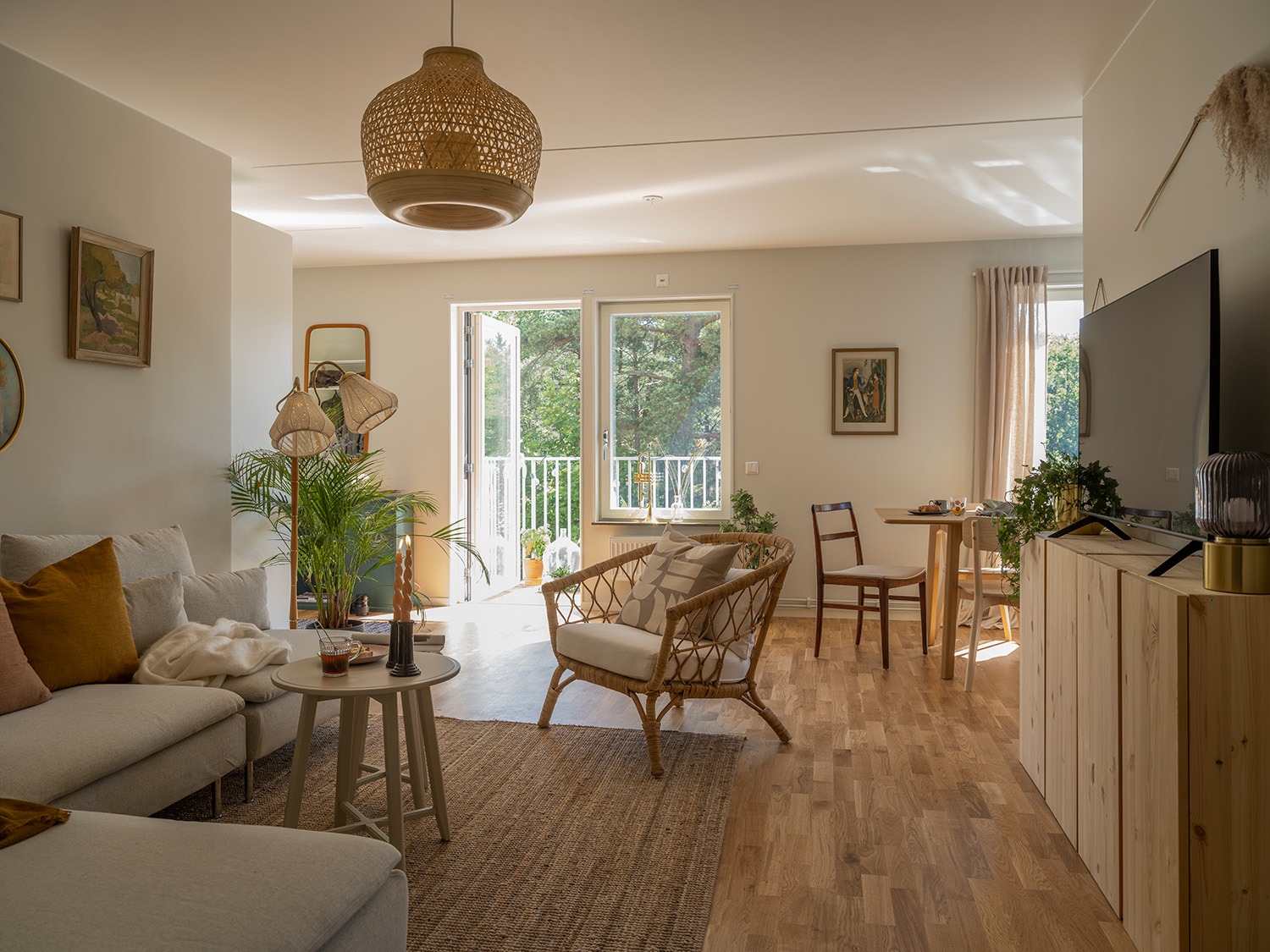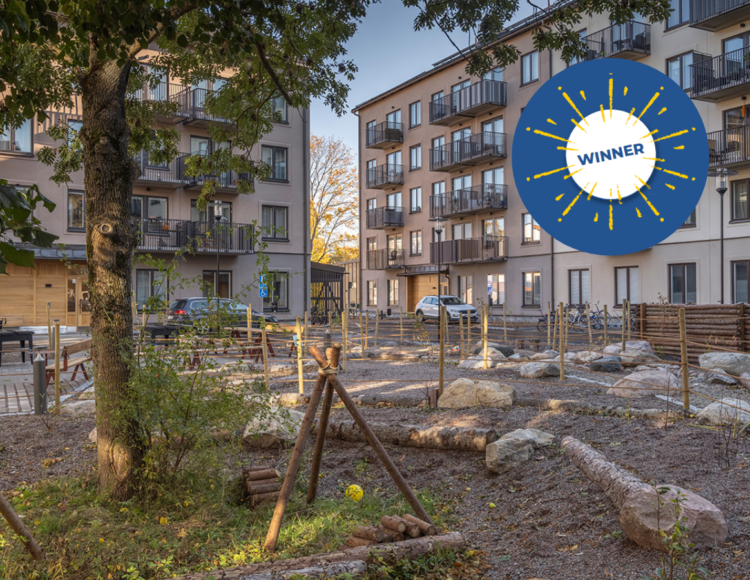
This project was a winner in the European Responsible Housing Awards 2025 under the ‘Management excellence for housing affordability’, organised by Housing Europe, the International Union of Tenants and DELPHIS.
Organisations: Stockholmshem, Familjebostäder, and Svenska Bostäder
Goals
Stockholmshusen is a long-term initiative by the City of Stockholm to rapidly and cost-effectively deliver new rental housing in response to growing demand. The project unites the city’s three municipal housing companies Stockholmshem, Familjebostäder, and Svenska Bostäder—with private contractors and city departments, including the City Planning Department and the Development Office.
Launched in 2014, Stockholmshusen was designed to streamline housing development by simplifying procurement, accelerating planning, and promoting serial construction. The goal is to deliver thousands of high-quality apartments with lower rents, while also contributing to Stockholm’s target of building 140,000 climate-smart homes by 2035.
Context
Stockholm’s housing shortage is one of the city’s most pressing challenges. Lengthy approval processes and high construction costs mean that new developments often take eight years to complete and result in unaffordable rents. To overcome this, the city government tasked its housing companies and urban planning departments with creating a new model for faster, more affordable housing production.
Stockholmshusen was the result: a collaborative framework designed to cut red tape, lower costs, and increase the speed and volume of housing delivery. The first land allocation took place in 2015, and by 2017 the first development plan was approved. Today, 915 apartments have been completed, with 4,000 more under development. The project pipeline includes 2,000 homes planned for 2025 and 1,500 annually between 2026 and 2027.
What is innovative about this project?
What makes Stockholmshusen distinctive is its integrated, cross-sectoral approach. The model allows city departments and housing companies to work in parallel rather than sequentially, reducing development timelines by half. A dynamic purchasing system supports flexible and competitive procurement, while a shared architectural design program maintains consistent quality across diverse urban settings.
Buildings are constructed to meet Sweden’s Miljöbyggnad Silver certification and incorporate sustainable design features such as green roofs, solar panels, and low carbon footprints—some as low as 121 kg CO₂ per square metre. Mobility solutions like bikesharing, car-sharing, and proximity to public transit are built into every development, encouraging residents to adopt sustainable lifestyles.
Interventions
The success of Stockholmshusen relies on a clearly defined and replicable model that links planning, design, and procurement into a cohesive process. A joint project and steering group—composed of representatives from the municipal housing companies and key city departments—ensures ongoing coordination and shared decision-making.
Procurement is handled through a dynamic purchasing system, allowing flexibility and competitiveness while keeping costs down.
Architectural quality is secured through a unified design framework that balances standardisation with site-specific adaptation. This consistency helps accelerate approval processes and reduces uncertainty. Sustainability tools guide the integration of environmental features from the outset, ensuring that each new building meets strict energy and mobility targets. Together, these tools make Stockholmshusen. both efficient and adaptable, supporting long-term
planning across varied urban settings.
Impact
- Lead times for new housing developments reduced from 8 years to 4.
- Rents in Stockholmshusen homes are approximately 20% lower than comparable new builds.
- 915 apartments completed and 4,000 in progress, with thousands more planned.
- Shared design standards ensure consistent, high-quality architecture across sites.
- All buildings meet Miljöbyggnad Silver certification; some with carbon footprints as low as 121 kg CO₂/m².
- Strategic mobility features reduce car dependency and promote sustainable transport.
- Recognised as “Best New Construction Project” by Sweden’s Public Housing Association and nominated for “Building of the Year –Stockholm”.
Lessons learned
- Launched in 2014, with 915 completed units and a target of 3,500 homes by 2026, the project fast-tracked
planning from 8 to 4 years. - Rents are 20% lower than comparable projects, providing high-quality housing for middle- and lower-income residents within the city.
- The initiative uses dynamic public procurement, ensuring cost-effectiveness and transparency while enabling innovation.
- Its collaborative design, replicability, and efficient, multistakeholder approach were seen as exemplary and forward-looking.