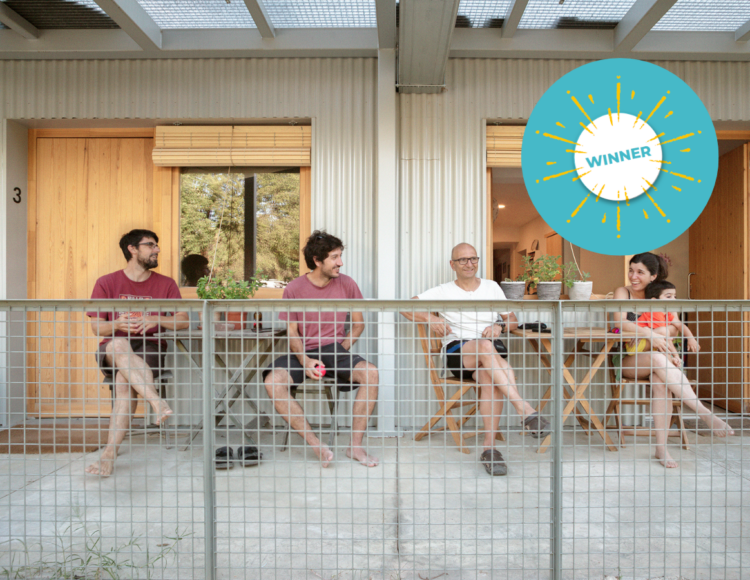
This project was a winner in the European Responsible Housing Awards 2025 under the ‘More than a roof – supporting communities of equal opportunities’, organised by Housing Europe, the International Union of Tenants and DELPHIS.
Organisations: Sostre Cívic
Goals
Sostre Cívic seeks to redefine access to housing through a non-speculative cooperative model based on the right of use. Its goal is to ensure long-term affordability, promote social inclusion, and advance environmental sustainability. By fostering self-managed communities and partnering with municipalities to build on public land, the initiative offers a systemic alternative to speculative real estate markets.
The project pursues three main objectives:
- Guarantee affordable housing for people at risk of exclusion, including youth, older adults, low-income households, and individuals with disabilities.
- Build democratic, self-managed communities grounded in mutual support and participatory governance.
- Develop environmentally responsible homes following nearly Zero Energy Building (nZEB) standards.
Through these aims, Sostre Cívic advances a housing model that is equitable, resilient, and rooted in collective ownership
Context
In Catalonia, a deep housing crisis has unfolded over the last two decades. Between 2000 and 2020, rental prices surged by 101.7% while wages remained stagnant. Spain’s public housing stock stands at less than 1%, far below the EU average of 4%. As a result, housing insecurity and social exclusion have intensified: more than 370,000 people have been evicted in Catalonia in the past 15 years.
A speculative real estate market dominated by investment funds and private landlords has exacerbated the problem, especially in urban centers like Barcelona, where gentrification has displaced long-standing residents. Public policies have failed to provide lasting solutions or adequate support for vulnerable groups.
In response, Sostre Cívic emerged as a pioneering cooperative housing initiative. It tackles the core issues of unaffordable housing, market speculation, and community displacement by offering:
- A long-term, stable alternative based on collective, non-profit ownership
- Legal models that safeguard public interest, such as 75-year surface rights on public land
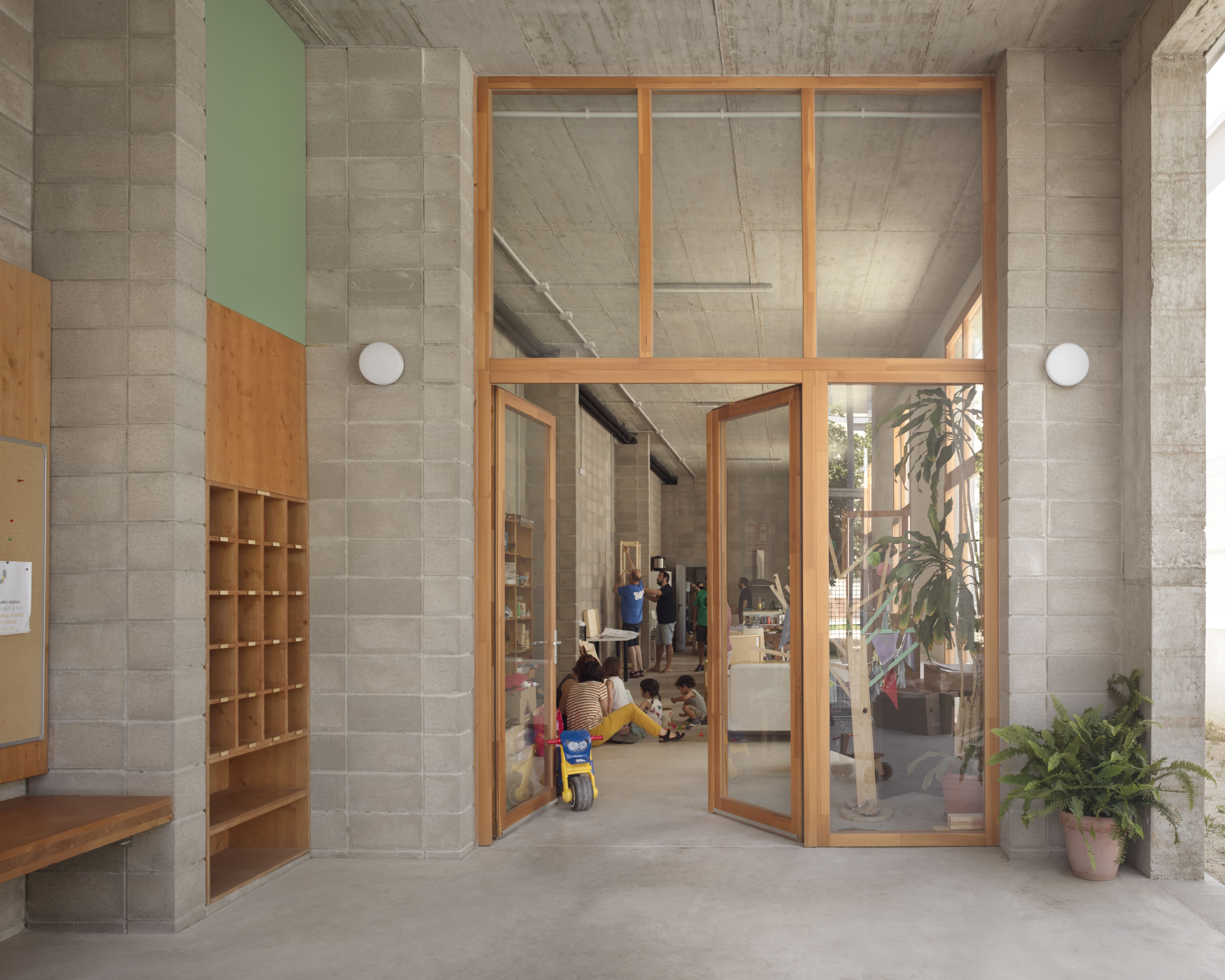
- Inclusive, community-led development that restores housing as a social right
What is innovative about this project?
Sostre Cívic’s approach disrupts the traditional market-driven housing paradigm by centering collective ownership, democratic management, and ecological design. Its innovations include:
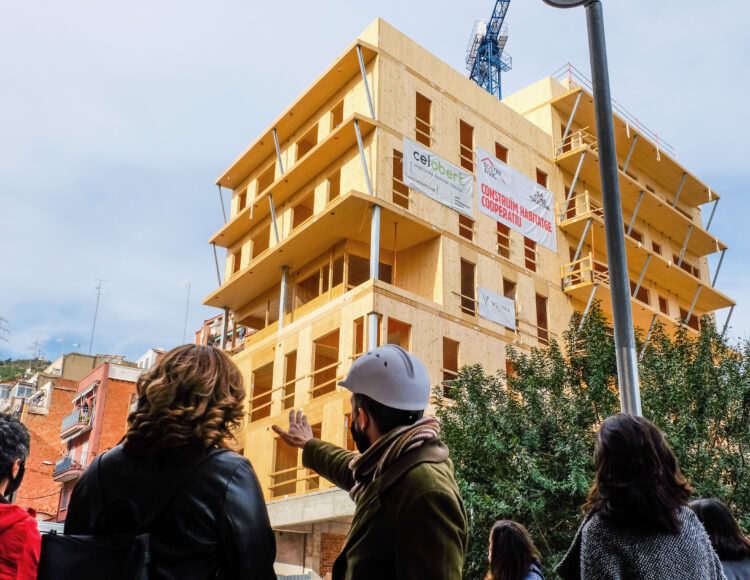
- Right-of-use ownership: Residents co-own and manage their homes through cooperatives, with no right to sell for profit, ensuring permanent affordability.
- Public-community collaboration: Projects are developed on public land via long-term (75-year) agreements, maintaining housing as a public asset.
- Environmental design: Homes are built to nZEB standards, integrating passive climate systems, renewable energy, and sustainable materials—cutting CO₂ emissions by up to 80%.
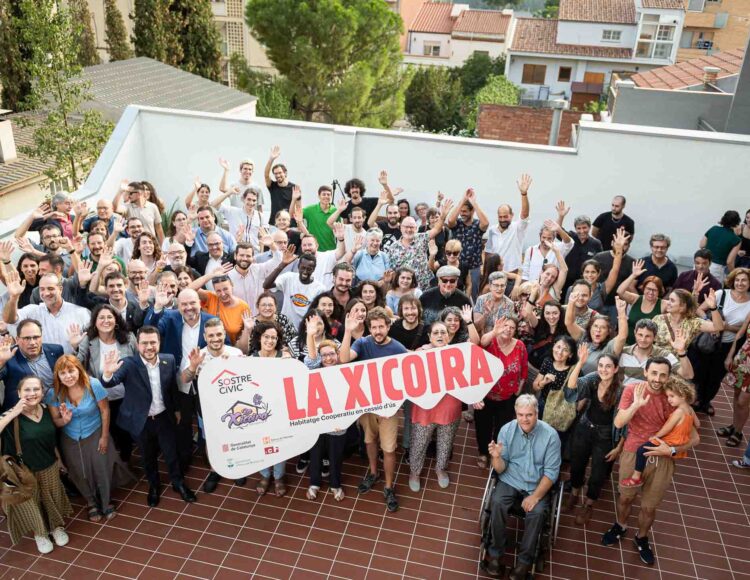
- Inclusive governance: All residents participate in decision-making and self-management, building cohesive and empowered communities.
This model enables affordability without relying on subsidies, prioritizes social mix and inclusion, and lays the groundwork for replication in diverse local contexts.
Interventions
To implement and scale its model, Sostre Cívic has developed a robust toolkit combining participatory, legal, financial, environmental, and technological instruments:
Participatory Governance and Community Engagement
- Co-design workshops allow residents to shape housing design and shared spaces.
- General assemblies and working groups enable democratic decision-making and cooperative management.
- Surveys and feedback mechanisms assess resident needs and sustainability goals.
Legal and Institutional Tools
- 75-year surface rights agreements with municipalities ensure long-term public benefit and affordability.
- Right-of-use model removes housing from speculative markets, securing lasting access for residents.
Financial Instruments
- Blended financing strategies combine member equity, social banking loans, and public/EU funds (including Next Generation EU).
- Pre-construction viability assessments ensure economic sustainability of each project.
Environmental and Technological Tools
- nZEB-aligned architectural standards reduce energy use and operational costs.
- Digital platforms support transparent governance, financial management, and inter-cooperative coordination.
Replication and Scaling
- The model is adaptable to both rural and urban settings.
- Partnerships and cooperative networks across Europe foster knowledge exchange and model replication.
Together, these tools ensure the long-term resilience and adaptability of the Sostre Cívic model.
Impact
- 350+ cooperative homes are in development, with over 1,000 residents expected by 2026.
- Residents pay 25–40% lower monthly fees than market rates, ensuring affordability and economic stability.
- All homes follow nZEB standards, achieving up to 80% CO₂ emission reductions.
- 100% of residents are involved in decision-making and cooperative management.
- €31 million loan secured from the Council of Europe Development Bank supports project expansion.
- Inclusive communities built with a social mix of youth, seniors, low-income families, and people with disabilities.
- Public land is safeguarded through 75-year agreements, maintaining it as a social asset.
- The project is already inspiring replication in other European regions.
- Challenges addressed
- Regulatory gaps: Public frameworks are still adapting to cooperative housing models.
- Access to capital: Cooperatives face funding limitations compared to traditional developers, but have overcome this through diversified partnerships and financial innovation.
- Despite these challenges, Sostre Cívic has proven that cooperative housing is a viable, scalable, and transformative response to the housing crisis—anchoring housing in rights, not speculation.
Lessons learned
- The financial model is innovative, blending resident contributions, social banking, and EU funding without relying on state subsidies.
- It ensures full resident participation, with 100% involved in decision-making and cooperative governance.
- Sostre Cívic is a replicable, scalable model that promotes long-term affordability and sustainability at local and national levels.
- The use of public land for cooperative housing breaks away from speculative practices, offering a transformative approach for Spain.