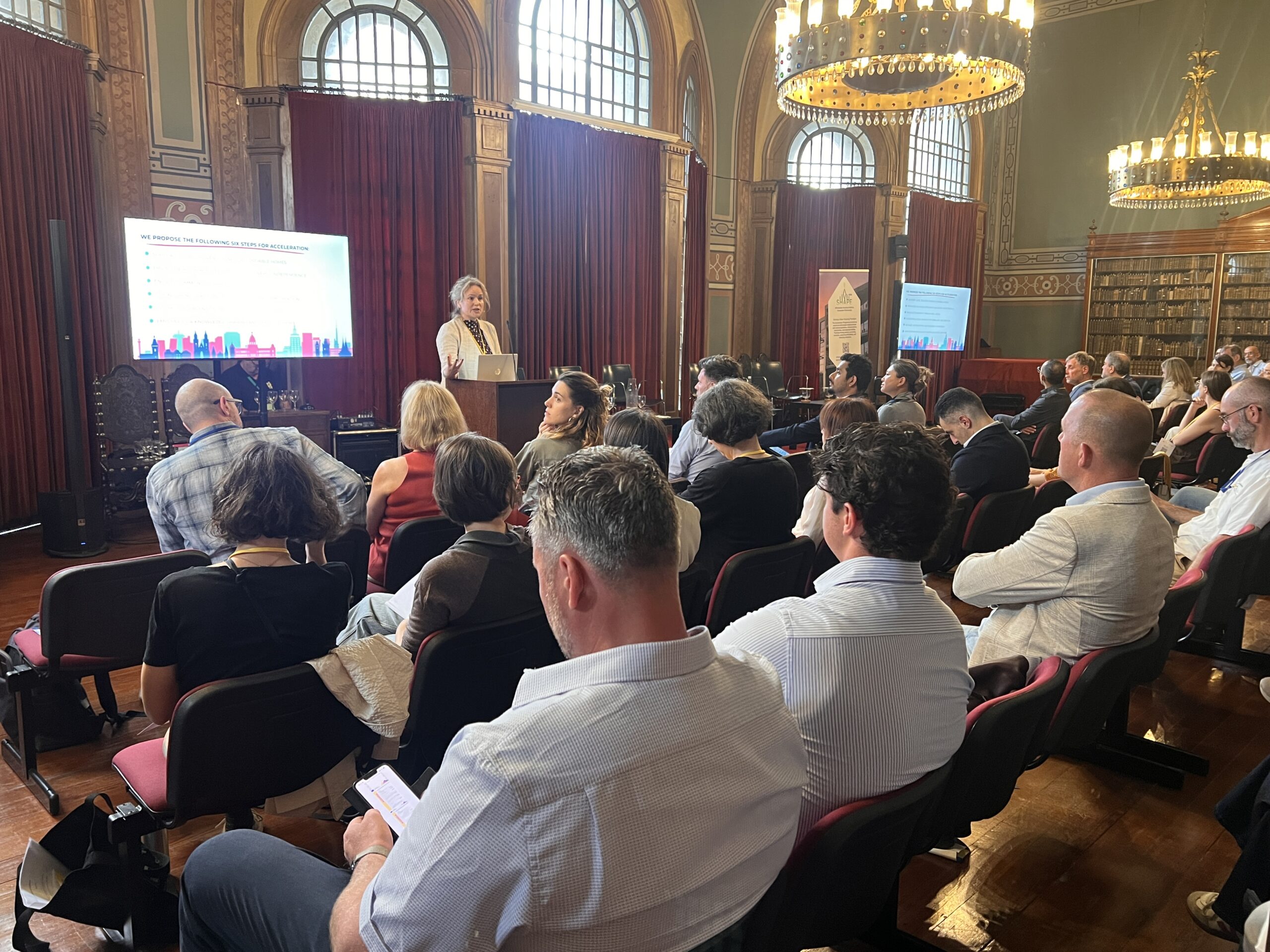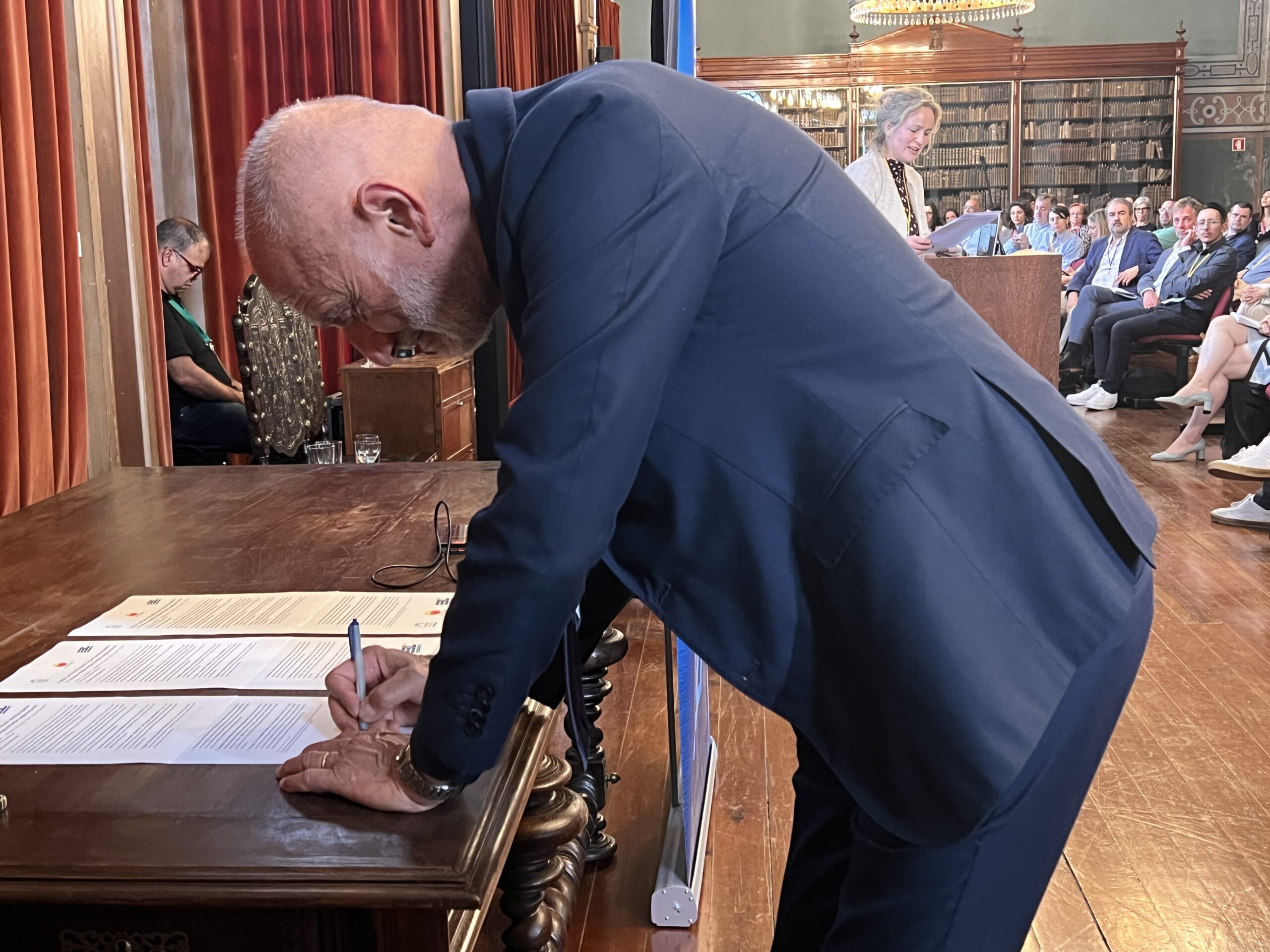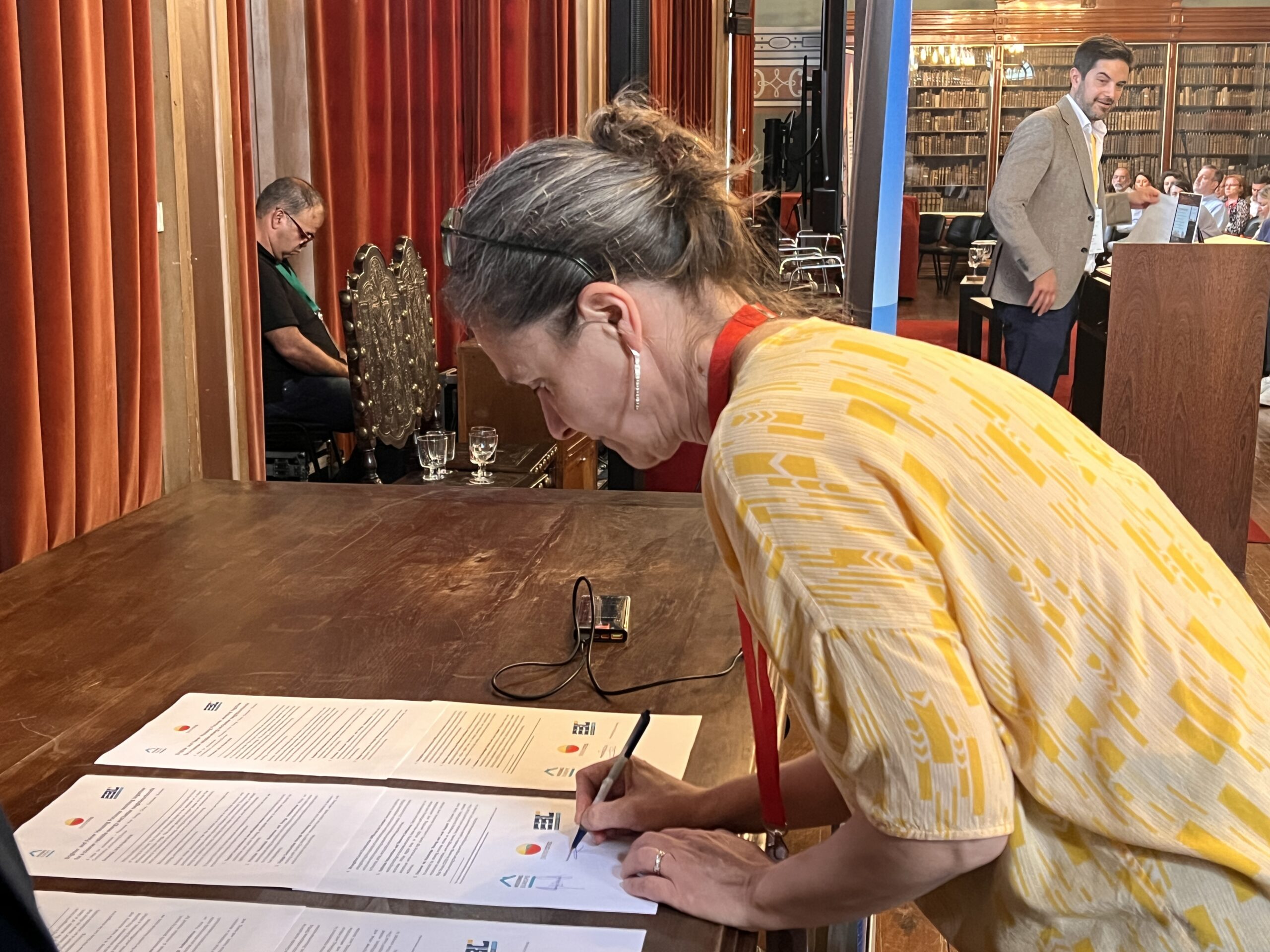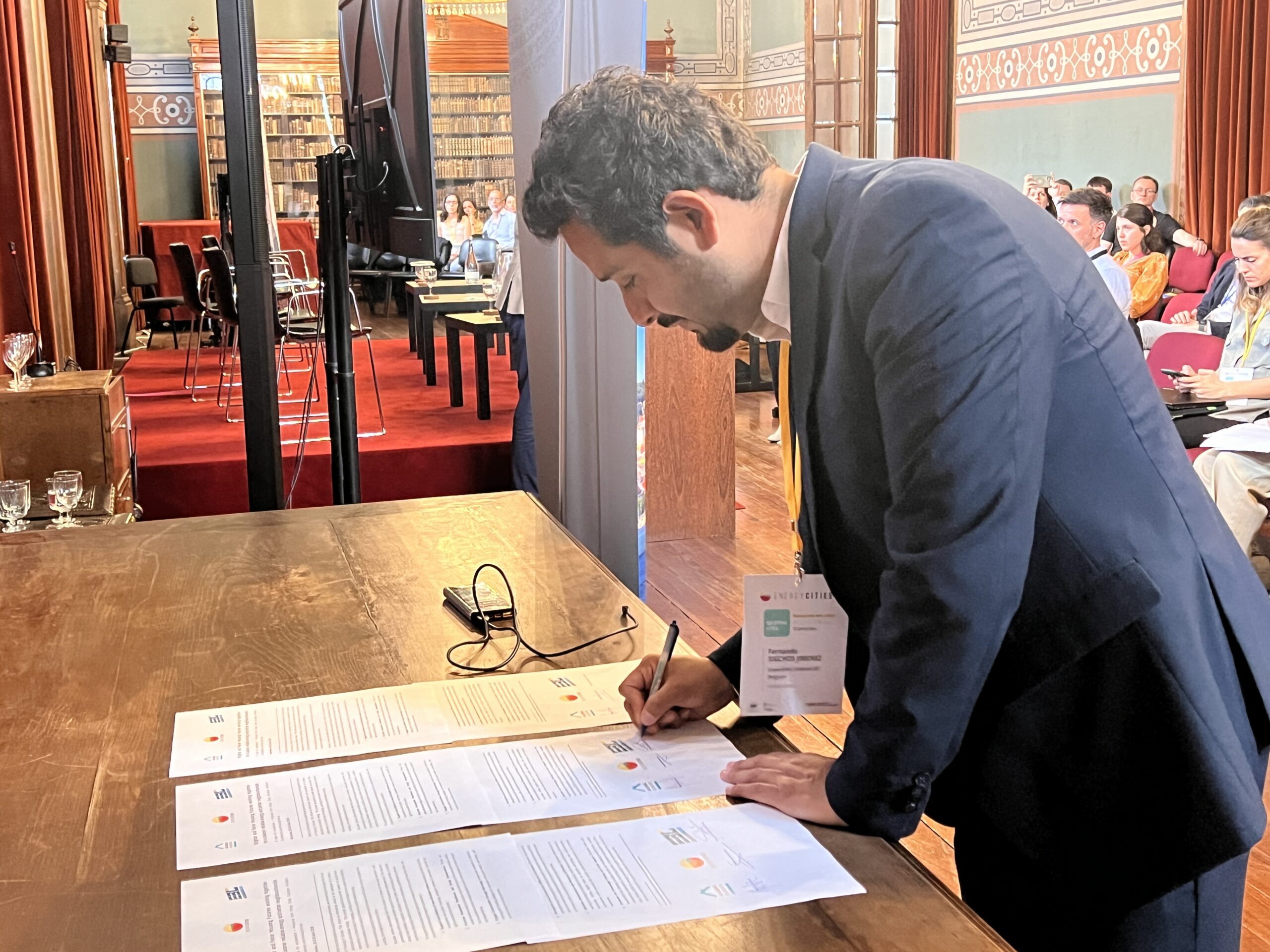
Housing Europe, alongside Energy Cities and the European Builders Confederation, has presented six accelerators showing how Europe can work together for cleaner, reliable energy and better neighbourhoods at a time of housing pressure, rising energy costs and geopolitical uncertainty. The vision was presented in the Portuguese town, Guimarães on April 28 during the Affordable Housing Initiative Days.
Brighter and Fairer Housing Futures: working together for a cleaner reliable energy and better neighbourhoods
6 steps for acceleration – Proposals from Energy Cities, European Builders Confederation, and Housing Europe
Within the Affordable Housing Initiative partnership, we are working to change the future of Housing in Europe. This future is intrinsically linked to the available of a clean, affordable and reliable energy. The current geopolitical context leaves no doubt that dependency on fossil fuels for heating, cooling and transport is an undeniable liability which exacerbates social exclusion driven by unaffordable housing.
We have started a growing movement which shows how this future can be changed one building, one neighbourhood at a time.
Success stories demonstrate that the solution is rooted in the local economy and partnerships with a people-centred approach focused on empowerment. This requires strong local delivery capacity, including robust cities and housing providers, a skilled workforce, financially viable local construction companies, and efficient processes.
To support this locally rooted approach and respond to the current fossil fuel crisis, we propose the following six steps for acceleration:
Support local delivery of new affordable homes especially provided by social, cooperative and public housing, in collaboration with the local construction ecosystem, alongside renewal and renovation inspired by[i] lighthouse district projects;
Prioritise Household Resilience and Energy Independence Focus on decentralised energy production and mobility plans that are economically viable for households and technically feasible for local implementation to reduce fossil-fuel dependency.
Engage Communities through Well-being Involve local residents in decision-making with funding designs for renovation that place health, well-being, and social inclusion as top priorities.
Strengthen Local Construction SMEs and Job Creation Generate local jobs by strengthening the capacity of small and medium construction enterprises (SMEs) which are vital to maintaining value for money and innovation. Ensure their access to finance, skills, and public procurement opportunities.
Optimise Interventions and Resource Sufficiency Optimise interventions in existing buildings to facilitate circularity, foster resource sufficiency, and reduce land-take. Utilize digital tools to simplify permitting and administrative procedures while ensuring high quality, sustainability standards, and climate resilience.
Empower via Knowledge Sharing and Local Support Empower cities and households by sharing success stories on managing touristification, market imbalances, speculation, and energy poverty. Establish and support local One-Stop Shops (OSS) for energy renovation to guide homeowners from concept to delivery, ensuring their long-term funding and operational viability.
[i] For instance, the Aalborg model made of a strong partnership with local businesses, schools, health centre, social housing and construction companies based on a shared vision for the district