This project was a finalist in the European Responsible Housing Awards 2022 under the ‘Going the extra mile in extraordinary circumstances’, organised by Housing Europe, the International Union of Tenants and DELPHIS.
Organisation: City of Prague
Goals
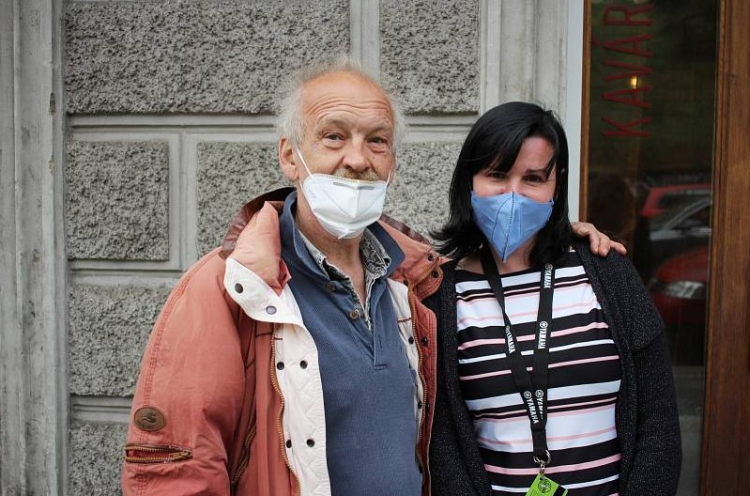
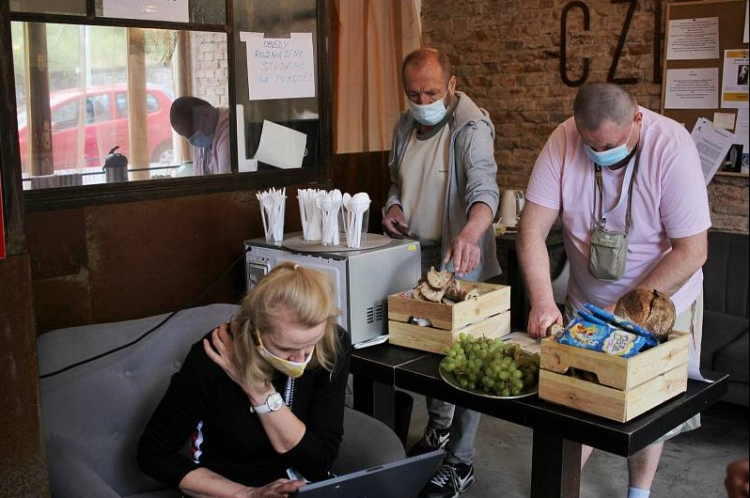
The primary goal of having hotels with humanitarian purposes was to protect homeless people from the deadly coronavirus, to prevent the uncontrolled spread of the virus in the streets of Prague, and to ensure that the health care system is not overloaded. The introduction of daily routine measures in hotels and making testing available for guests and staff were the basic pillar of the coronavirus spread prevention.
In June 2020, the initial objectives of the humanitarian hotel project were reformulated and expanded. The operation of hotels is now more focused on social work with vulnerable hotel guests, where the objective is to make a positive change to the difficult situation people were in and to find long-term housing solutions.
The availability of social and health services,including Covid-19 testing,provides the accommodated persons with greater protection against both the risk of infection and the health care needed in the case of infection.
Context
At the beginning of the Covid-19 pandemic, the capital city of Prague and social service providers were forced to address the issue of providing accommodation capacities for the homeless people that would comply with the epidemiological requirements. Due to the high risk of the spread of Covid-19, the operation of winter hostels was put on hold in March 2020, making the substitute of hostels and available beds even more necessary.
After building an isolated tent city as a first response, the City of Prague explored the options of using public property and university dorms, which did not prove feasible. The third and best option was to launch tender procedures for hotels. In the spring of 2020, a total of 6 humanitarian hotels with a total capacity of 353 people were contracted. As of 20 September 2021, 217 people were accommodated in the 4 remaining operating humanitarian hotels.
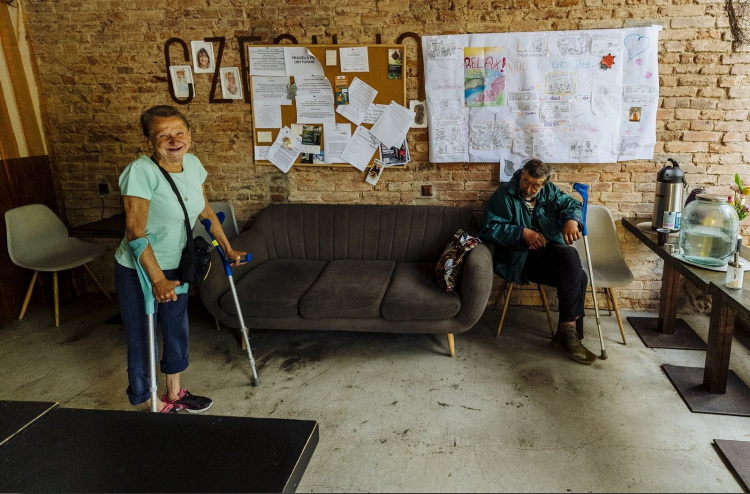
The highest priority in terms of placement was given to people who have had symptoms of Covid-19 but have not yet tested positive. The second priority group was the elderly. The third priority group was seriously ill people, whose health problems increased the risk of mortality.
Operation and running of humanitarian hotels from a financial and organisational perspective
The first month of operation of the 6 humanitarian hotels was fully financed by the City of Prague, allowing already vulnerable guests to find a shelter without having to contribute financially. Subsequently, there was a change and a gradual transition to the financing model, where the city was paying only the reservation fee to the hotel owners and part of the costs started being reimbursed by the guests through social benefits or their own means.
Occupancy of humanitarian hotels
The interest in humanitarian hotels was very high and it was easy to fill the accommodation capacity. One problem in the early stages was that due to high demand, coming from people who were not eligible to access other types of accommodation. The solution was to improve the selection protocols. As time was passing, about a quarter of the guests left the humanitarian hotels as they had found a solution, others lost their place because of long-term absence and in some cases because of violation of the hotel rules.
Humanitarian hotels in the context of the spread of Covid-19
Regulatory measures for sanitary protection and hygiene have been introduced in the humanitarian hotels. Measures outside the scope of operation of hotels were established in cooperation between non-profit organisations, the municipality, and the medical rescue services. As part of the winter measures 2020/2021, three Covid hotels were also established, which were specifically designed for individuals who had to be isolated or quarantined.
Humanitarian hotels and people´s well-being
Humanitarian hotels represent a specific type of short-term housing, which can be classified as something between asylum housing and private-market housing. They make it possible to carry out social work with people who were experiencing homelessness but offer a higher degree of freedom than usual, which is why they have been considered as a better alternative. Nevertheless, these hotels represent a temporary solution.
Social work in humanitarian hotels
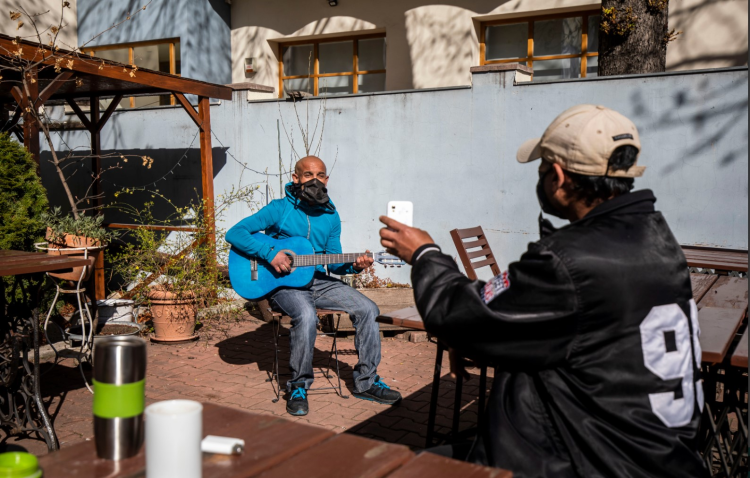
The way of conducting social work is specific for each hotel and dependent on the know-how of the organisation in charge. The challenges that have been addressed the most were concerning people’s housing status, work possibilities, finance, physical and mental health.
Humanitarian hotels and their impact on long-term solutions
Compared to hostels and night shelters, there is a slightly greater emphasis on solving long-term problems in hotels, although interviews with guests show that staying in hotels contributes to the long-term solution of their problems very individually.
What is innovative about this project?
This is the first time such a project is implemented in the Czech Republic. All elements were implemented from scratch in a very short time. In addition, the first phases of the project took place under difficult conditions of pandemic measures and shortage of human resources.
To further improve the concept, the following elements would be needed: support social workers to learn more about individual planning in the long term, balance the social workforce in terms of number of vulnerable people per social worker, communicate well in advance the steps to be considered, develop homelessness policy, eliminate potential uncertainty regarding the end of the project.
Additional measures should aim at greater transparency of the payment system. It is also possible to connect the humanitarian hotels with other the Municipal Rental Agency or the Contact Point for Housing which provide housing support.
Interventions
The main tool of the project was the opportunity to provide guests with social assistance and individual planning in a stable accommodation environment.
Impact
Overall, the project seems to be a positive initiative to be continued. The rate of COVID-19 infection among homeless residents has never exceeded the one of the Czech Republic overall. The placement of homeless people in humanitarian hotels has directly contributed to the lower mobility of accommodated persons in public spaces and public transport, thus reducing the risk of uncontrolled spread of coronavirus among this target group. This demonstrates its contribution to reducing the negative effects associated with long-term homelessness (theft, addiction) and thus leads to increased security in the city and improved public space.
An evaluation was carried out, the aim of which was to identify and assess the impact of the project. Three areas can be identified in which hotel stays contribute to the long-term solution of homeless’ problems:
- reduction of negative effects associated with long-term homelessness (theft, addiction, deteriorating health)
- building social and work habits that the client loses on the street or
- a stepping stone for clients who do not need any other support besides a place to stay.
The strengths are that the service has no threshold, being available even to the most vulnerable people. There is also the possibility of systematic and long-term work with the target group (assistance with getting social benefits, individual planning, ensuring health care needs, etc.) and ocial workers.
Weaknesses include uncertainty about the duration of the project, unclear continuation of the target group and social workers, the solution is costly and offers a limited scope of reporting on the fulfilment of individual plans and generally the ability to track changes in the target group in some areas (e.g., work, health). The biggest concern is the loss of political support for the implementation of the project.
We see opportunities in providing capacity building opportunities to social workers and how they could cope with cases taking place in residential services; raising awareness about other existing tools that are provided by the city and existing housing support (Municipal Rental Agency, Contact Point for Housing, etc.); liaising them with other specialised services, such as mental health care, addiction treatment, etc.
Lessons learned
- Innovative project: completely new idea in providing accommodation (housing) for homeless people.
- Prevention of the spread of the virus by protecting homeless people from Covid infection.
- The strength of this project is that the service has no threshold.