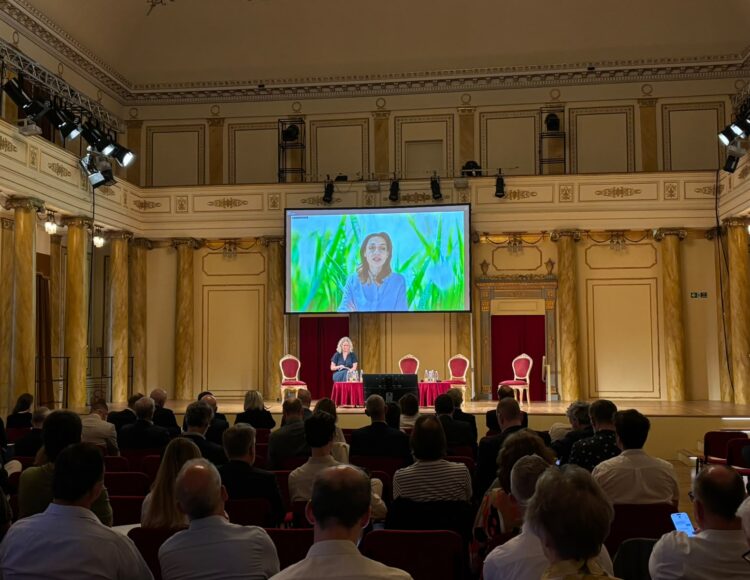
At Housing Europe’s Annual Conference, co-organised with Italy’s public housing federation FEDERCASA and ATER Trieste, one of the country’s oldest public housing authorities, housing providers, financiers and policymakers explored the ingredients of a brighter housing future from West to East. What emerged was a series of revealing contrasts.
In the Netherlands, social housing providers with more than €100 billion in assets say they are losing the capacity to build because they are taxed on profits they are not allowed to make. In Flanders, the waiting list for social housing is longer than the social housing stock itself. Croatia is trying to bring 600,000 vacant homes back into use in a country of just 3.5 million people. Denmark continues to finance affordable housing through a revolving fund that has recycled repayments into new homes for more than a century, while Germany warns that bringing all existing housing to the highest energy standards could cost trillions of euros and is effectively impossible to finance.
Spain challenged the idea that markets alone can deliver housing outcomes, insisting that “markets allocate resources, not rights”. Finland offered a reminder that even a housing model built over half a century can be undone by political change.
The examples came from different housing systems, different political traditions and different parts of Europe, but pointed out that we have moved to the phase in which it is time to focus on preserving or building housing systems capable of keeping homes affordable, sustainable and accessible long after they have been built. From Trieste, a picture emerged of what those systems might look like.
The ingredients of a brighter housing future
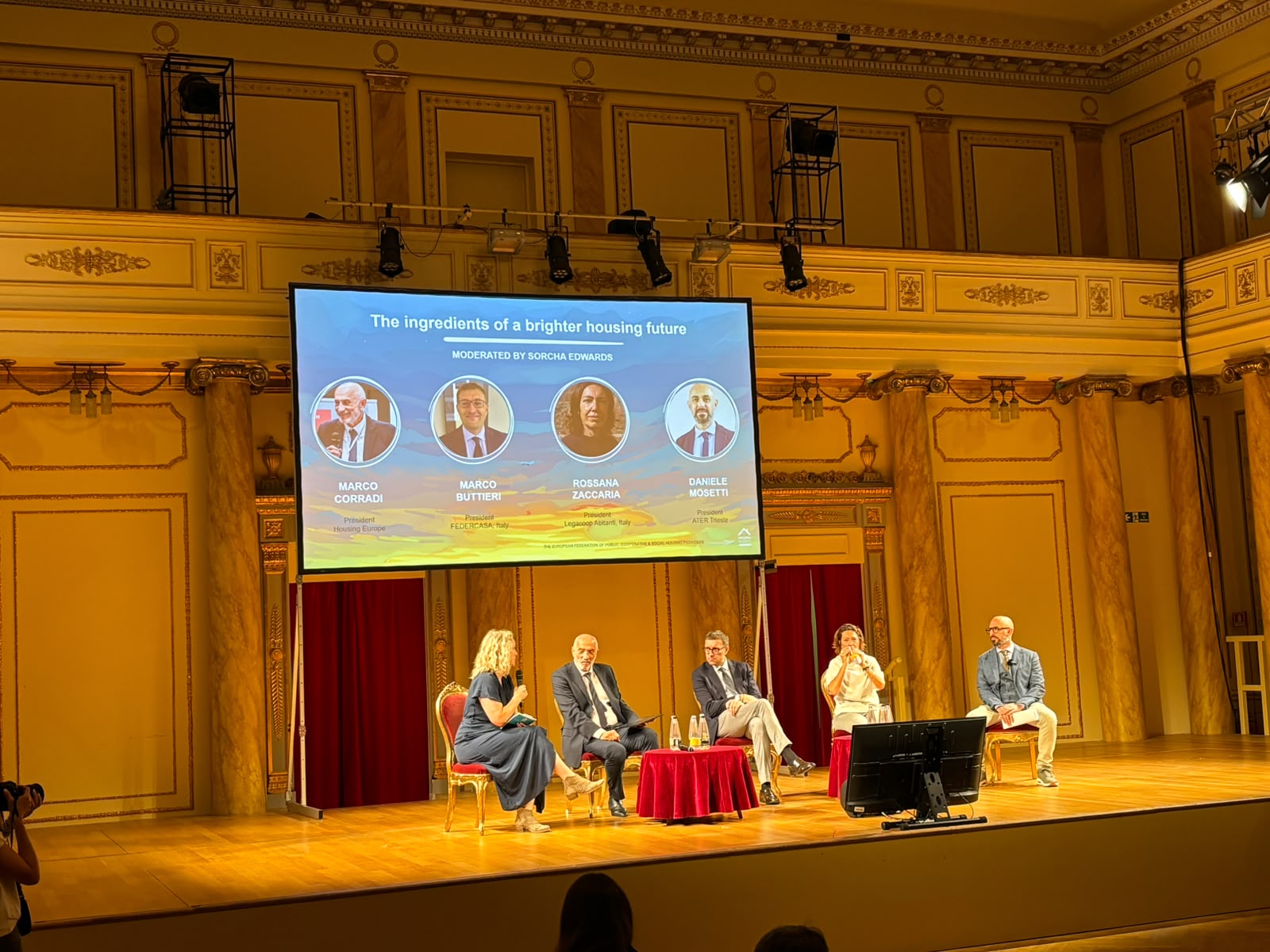
The opening session set the tone with Marco Corradi, President of Housing Europe, described a housing crisis affecting every EU country, weakening competitiveness and making it harder for people to build stable personal and professional lives. The answer, he argued, lies in redefining the idea of home as a shared European objective rather than a purely national concern. Italian housing leaders used the occasion to raise concerns about the implementation of Italy’s national housing plan. Rossana Zaccaria, President of Legacoop Abitanti, warned that social housing providers and cooperatives risk being sidelined unless EU and national funding come with clear governance requirements and affordability conditions. Without them, housing programmes risk becoming investment vehicles rather than instruments of social policy. For Daniele Mosetti, President of ATER Trieste, the challenge is equally political. “No country can solve the housing crisis alone,” he said, calling for a shared European vision that recognises housing as “a political good”,
Keynote address
“Supply and demand? I wish it was that simple,” Irene Tinagli, Chair of the European Parliament’s HOUS Committee said. Housing, she argued, is no longer a challenge confined to major metropolitan areas. The crisis has spread across Europe, while demand has become increasingly fragmented. Different groups face different barriers, requiring different policy responses.
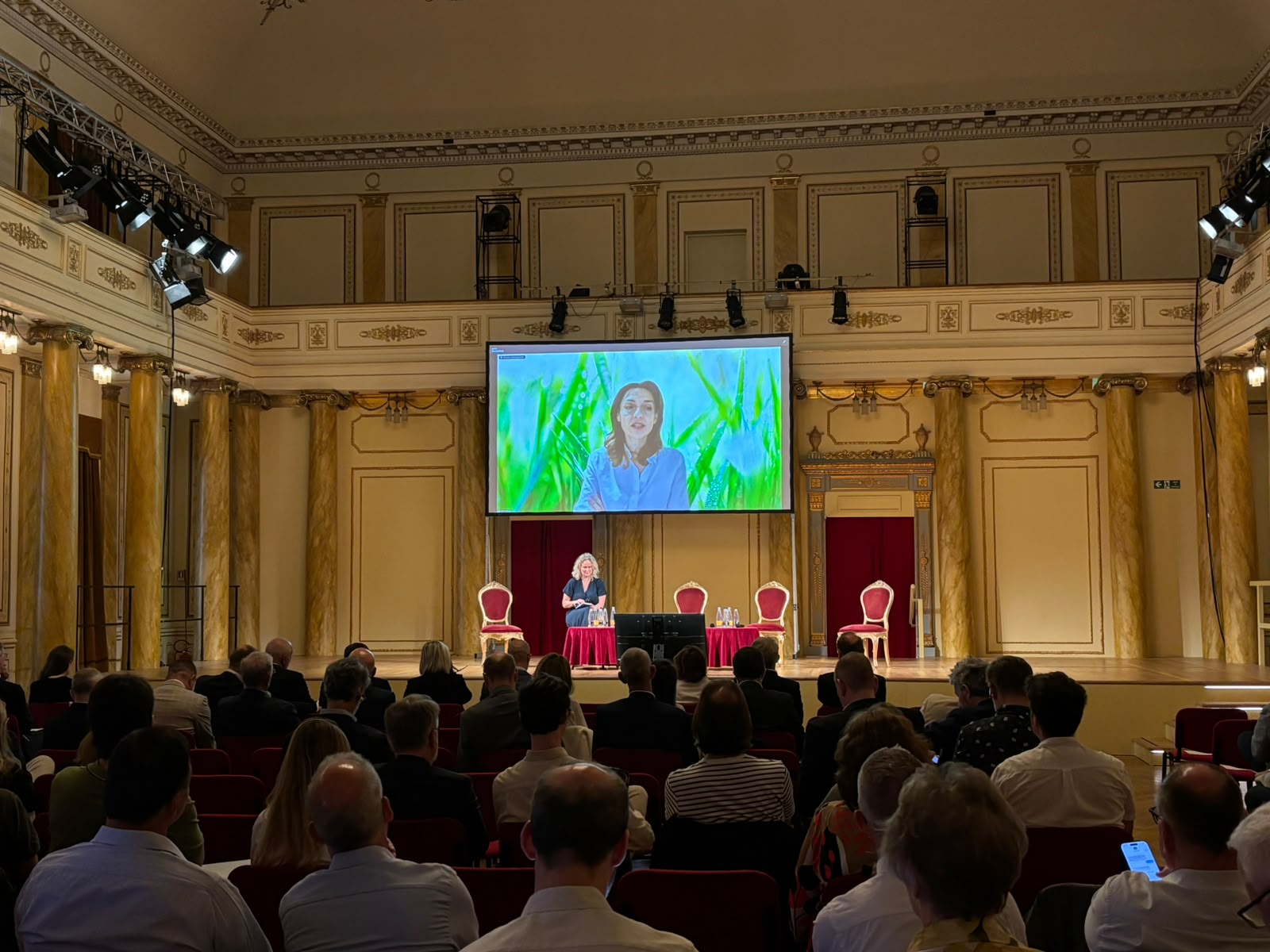
“The problem is we stopped doing housing policies,” she insisted and warned against reducing success to housing output alone. Building another 3,000 or 5,000 units will not solve a crisis shaped by demographic change, privatisation, shrinking public stocks and growing inequality. Housing policy must remain rooted in local realities, with the EU providing support, coordination and financing.
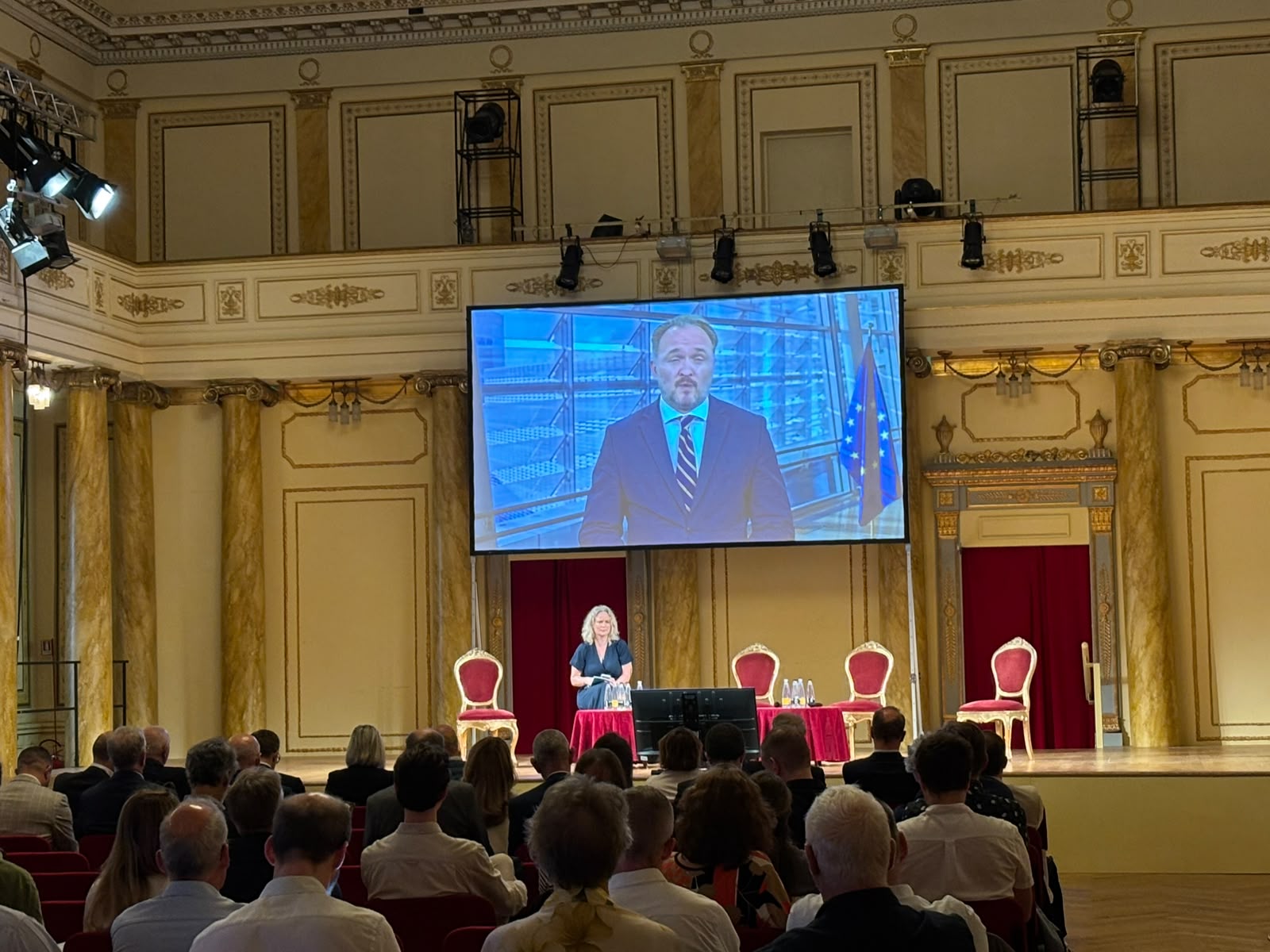
In a video message, Commissioner Dan Jørgensen outlined plans for an Affordable Housing Act, a simplification package and a European Housing Alliance designed to help local actors exchange solutions and expertise. Former Italian Prime Minister Enrico Letta linked housing directly to European cohesion, arguing that the “freedom to stay” should become a pillar of the future Single Market.
Accelerating housing delivery and recovering empty homes with the community in mind
The Dutch experience became one of the conference’s most cited examples. According to Liesbeth Spies, President of Aedes, the Netherlands is still dealing with the consequences of a political decision taken two decades ago, when policymakers concluded that the country’s housing system was “sufficient”. Today, annual social housing delivery has increased from 16,000 homes in 2022 to 25,000 last year. A national agreement targets 30,000 new social homes annually, supported by legislation requiring every new development to include at least 30% social housing.
However, ambition is running into financial constraints. “The law is there, but investment capacity is needed,” Spies said. Housing associations collectively manage assets worth more than €100 billion, but inflation, rising interest rates and taxation are reducing their ability to invest. “We pay taxes on profits we are not allowed to make.” For Spies, the lesson extends beyond the Netherlands. Stable cooperation between governments and housing providers matters as much as funding itself.
Slovenia is pursuing a different path. A legislative package backed by €100 million annually aims to support the delivery of 20,000 public rental homes by 2035. The Director of the Housing Fund of the Republic of Slovenia Črtomir Remec acknowledged that elections have introduced uncertainty about future priorities. What gives him confidence is not politics but institutions. Slovenia’s national housing fund, established 35 years ago, has survived changes of government and remains central to plans to double the share of public rental housing from 4% to 8% in a decade.
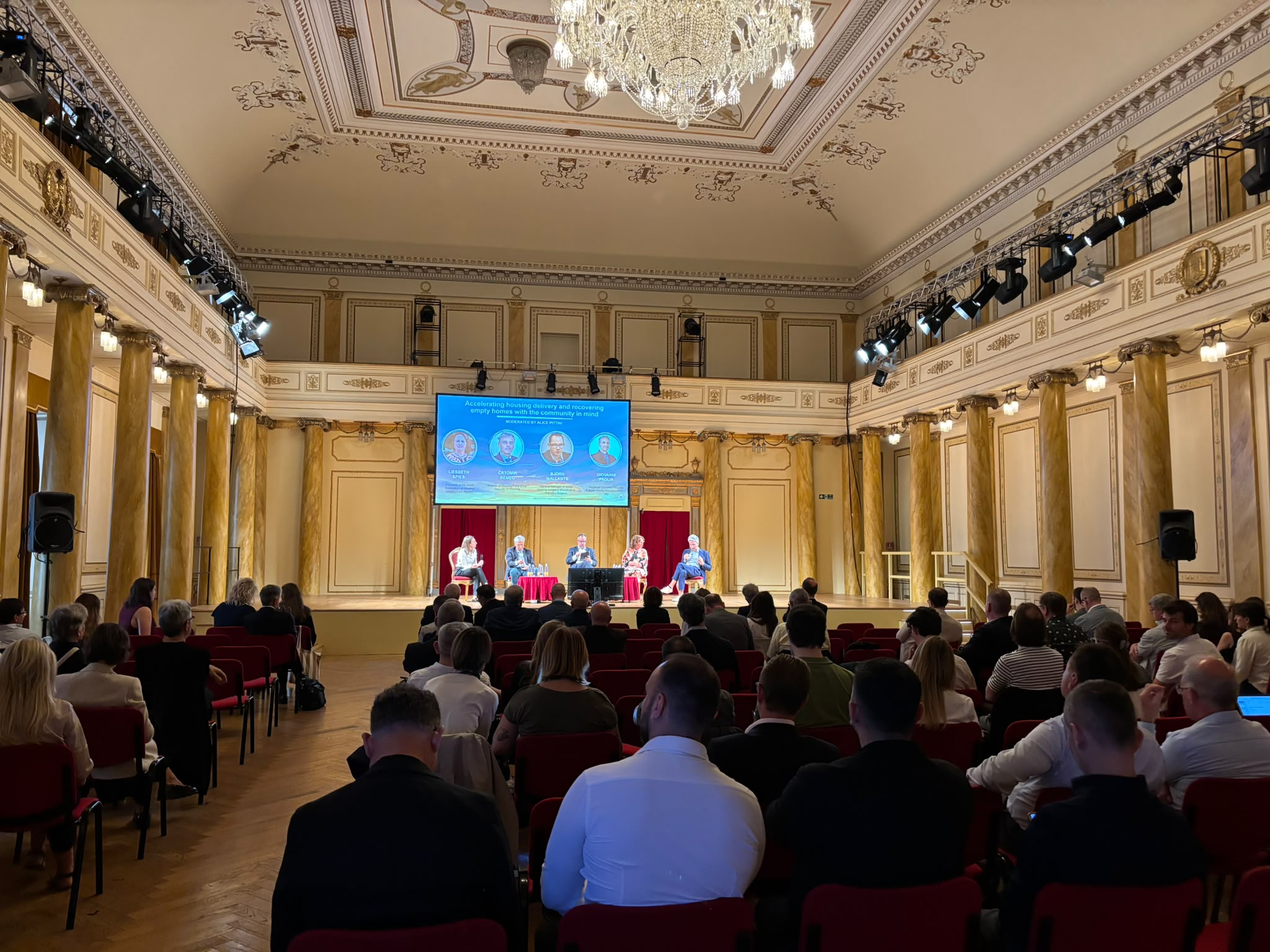
In Flanders, the scale of unmet demand was captured in a single statistic. “The waiting list is longer than the entire stock.” Björn Mallants, General Manager of Woontrots, said his organisation alone must add 2,000 homes and renovate another 2,000 within 15 years. Rising land prices and local resistance to higher density continue to slow progress, even as municipalities face growing pressure to meet social housing obligations.
For Giovanni Paglia, Regional Councillor for Housing Policies in Emilia-Romagna, the answer also lies in combining public leadership with long-term finance. The region has secured a €200 million loan from the European Investment Bank to support a programme that combines renovation, regeneration and new construction. The objective is ambitious – around 4,000 affordable homes offered at approximately half the market rent. Paglia stressed that public authorities must play a more active role in shaping housing markets rather than merely responding to them. Municipalities are being encouraged to make land available, while the programme aims to create a stock of affordable rental housing that remains accessible over time rather than disappearing into the private market. The first 1,600 homes are expected to come on stream in the near future, making Emilia-Romagna one of the largest regional affordable housing initiatives currently underway in Italy.
Shielding tenants from the energy crisis and reducing CO₂ through renovation and local energy production
The discussion on renovation revealed growing concern about the cost of Europe’s energy transition.
Özgür Öner of Germany’s GdW argued that current decarbonisation debates often underestimate the scale of the challenge. Referring to estimates running into trillions of euros, he warned that bringing Europe’s entire existing housing stock to the highest energy performance standards is effectively unaffordable. Upgrading every building to class A, he suggested, is neither realistic nor necessary. A more differentiated approach combining renovation with cleaner heating systems would deliver better results at lower cost. “There is a mismatch between the expertise of housing providers and politicians looking for quick solutions.”
France’s social housing sector is pursuing rapid electrification to protect tenants from future fuel-price shocks, increasingly positioning itself also as an energy actor. Remy Vasseur of the French Union of Social Housing (USH) described how providers are accelerating electrification to shield tenants from future fossil fuel price shocks while simultaneously investing in local renewable energy production. One of the sector’s newest initiatives is the Alliance of Social Housing Providers for Renewable Energy, launched by USH in late 2025. The initiative brings together social housing organisations to develop solar projects, share expertise and increase the sector’s energy independence. The objective is to reduce emissions and to create a more stable and affordable energy system for tenants.
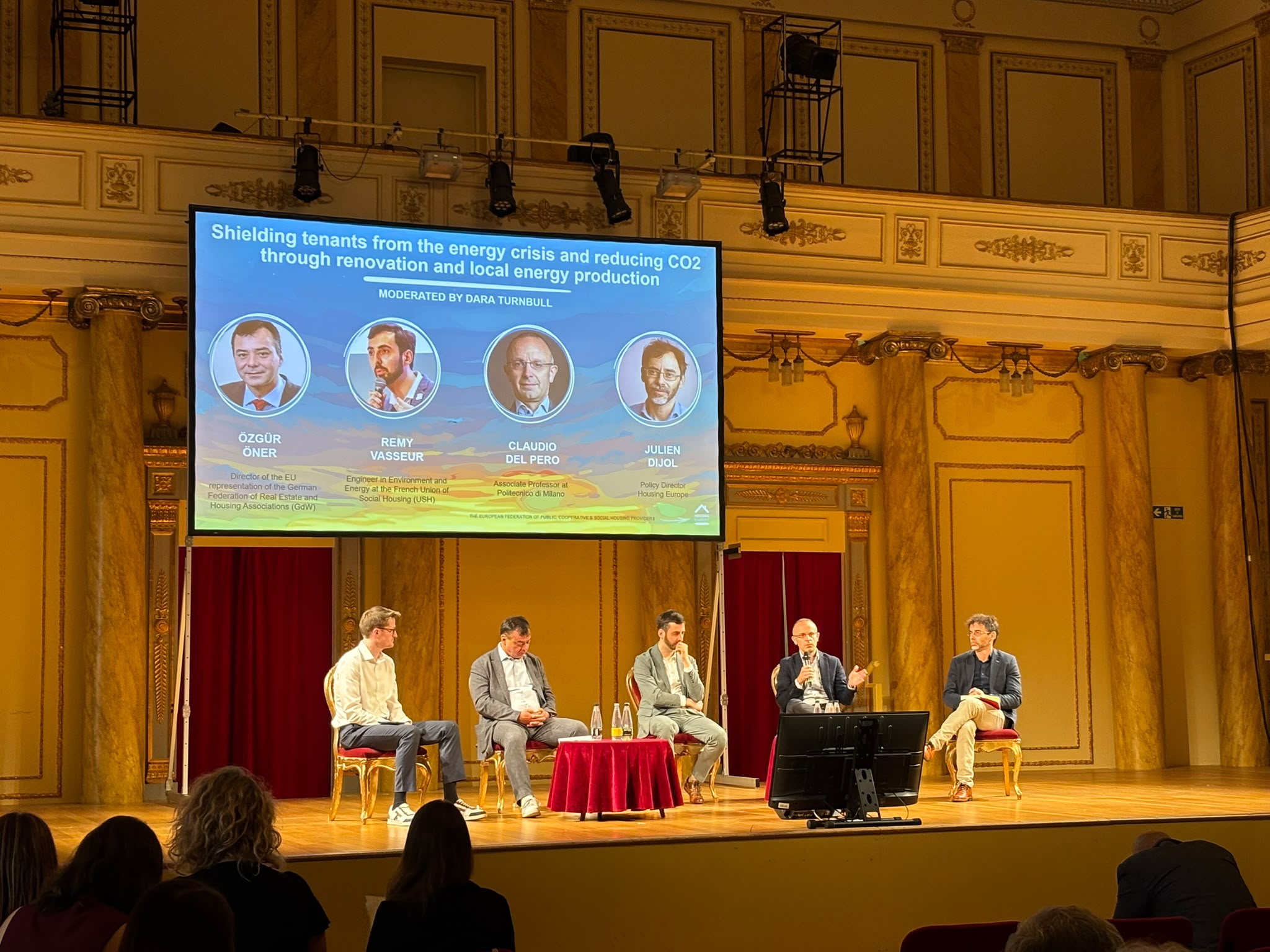
Vasseur nevertheless cautioned against universal solutions. The costs and benefits of renovation, electrification and energy generation are distributed differently between landlords and residents, depending on local circumstances and building types. “One size doesn’t fit all,” he said, adding that flexibility will be essential if decarbonisation is to remain socially affordable.
Claudio Del Pero from Politecnico di Milano, the person behind our EU projects Re-Skin and HEART in the recent past, touched upon prefabricated façade panels and decentralised heat pumps that can be installed with minimal disruption to residents while achieving payback periods of less than fifteen years without subsidies. The approach seeks to tackle one of the sector’s biggest bottlenecks, namely the speed and cost of renovation. By industrialising parts of the process and shifting work from construction sites to factories, housing providers can reduce labour requirements, shorten renovation times and improve quality control. Del Pero underlined that Europe will struggle to meet its climate objectives if renovation continues to rely exclusively on traditional construction methods. To him, future renovation programmes must increasingly account for climate resilience, indoor comfort and the ability of buildings to cope with more frequent heatwaves and extreme weather events. Social housing providers, he suggested, are uniquely positioned to test and scale these innovations because of the size of their portfolios and their long-term ownership model.
Julien Dijol, Policy Director at Housing Europe, said the sector is increasingly moving from isolated renovation projects towards industrial-scale delivery. He pointed to Build Up Speed, a European initiative bringing together housing providers, cities, builders and manufacturers to accelerate deep renovation through standardisation, skills development and industrialised construction methods. Their goal is to shorten renovation timelines, reduce costs and address workforce shortages that continue to constrain delivery across Europe. He also linked the debate to the joint declaration presented by Housing Europe, Energy Cities and the European Builders Confederation in Guimarães earlier this year, which called for cleaner and more decentralised energy systems capable of strengthening both Europe’s resilience and household energy independence. For housing providers, Julien reminded, renovation is a climate policy issue but increasingly a question of affordability, energy security and social stability.
The investments that lock in affordability for decades
If one concept dominated the financing debate, it was the revolving fund.
Bent Madsen, CEO of Denmark’s federation of non-profit housing providers B.L., described a model that has supported affordable housing for more than a century. When housing associations repay loans, the money flows into a national building fund and is reinvested into other housing projects. “The money stays in the system,” Madsen explained in a single sentence.
Today, around one million people live in Denmark’s non-profit housing sector. The model allows resources generated by the sector to remain within the sector, financing renovation, construction and neighbourhood improvements without relying exclusively on new public spending. Madsen’s recommendation was straightforward – European funds should be used to seed similar systems rather than finance isolated projects.
The European Investment Bank broadly and Tanguy Desrousseaux argued that successful housing systems depend on much more than capital. Strong urban planning, national development banks, experienced housing providers and stable regulation explain why some countries consistently outperform others. He said that “we need financing models that reach scalability.” He pointed to examples where Recovery and Resilience Facility grants have been combined with EIB lending, including a €700 million programme in Portugal, to create leverage far beyond the original investment. “Banks provide loans, not equity,” he reminded participants.
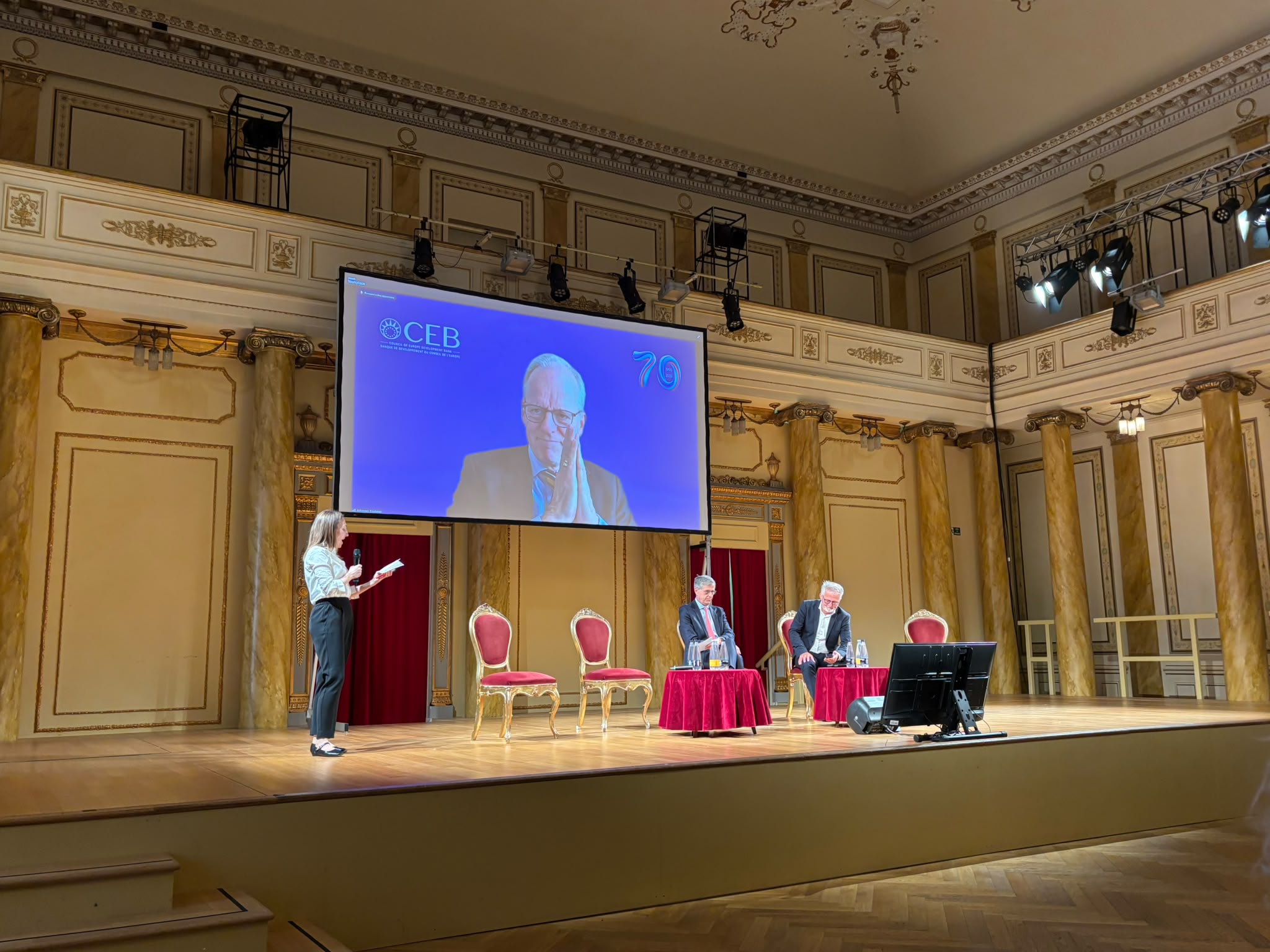
Johannes Böhmer of the Council of Europe Development Bank highlighted partnerships with InvestEU that are helping smaller municipalities and social actors reach vulnerable groups, including migrants, homeless people and survivors of gender-based violence. He explained that many local authorities face housing challenges that are too small to attract large-scale investors yet too complex to solve without external support. One of the key roles of development banks, he said, is therefore to aggregate projects, reduce risk and connect local initiatives with long-term financing.
Böhmer also stressed the importance of technical assistance alongside capital. Many municipalities and non-profit providers have viable housing projects but lack the expertise or administrative capacity to prepare them for investment. Helping local actors build pipelines, structure projects and navigate financing mechanisms is becoming just as important as the financing itself.
Rebuilding a country and a housing system
Ukraine’s reconstruction provided some of the conference’s thought-provoking reflections.
Croatia’s Sanja Jerković brought a longer historical perspective to the discussion. Drawing on the country’s experience of post-war reconstruction and, more recently, the rebuilding effort following the devastating earthquakes in Zagreb and Petrinja, she stressed that housing policy cannot be separated from institution-building.
Croatia has invested around €4.8 billion in reconstruction, but the process has reinforced a lesson that extends beyond disaster recovery – rebuilding homes is often easier than rebuilding trust, administrative capacity and functioning housing systems. The experience exposed the importance of clear governance structures, coordination between levels of government and procedures capable of delivering assistance quickly while maintaining public confidence.
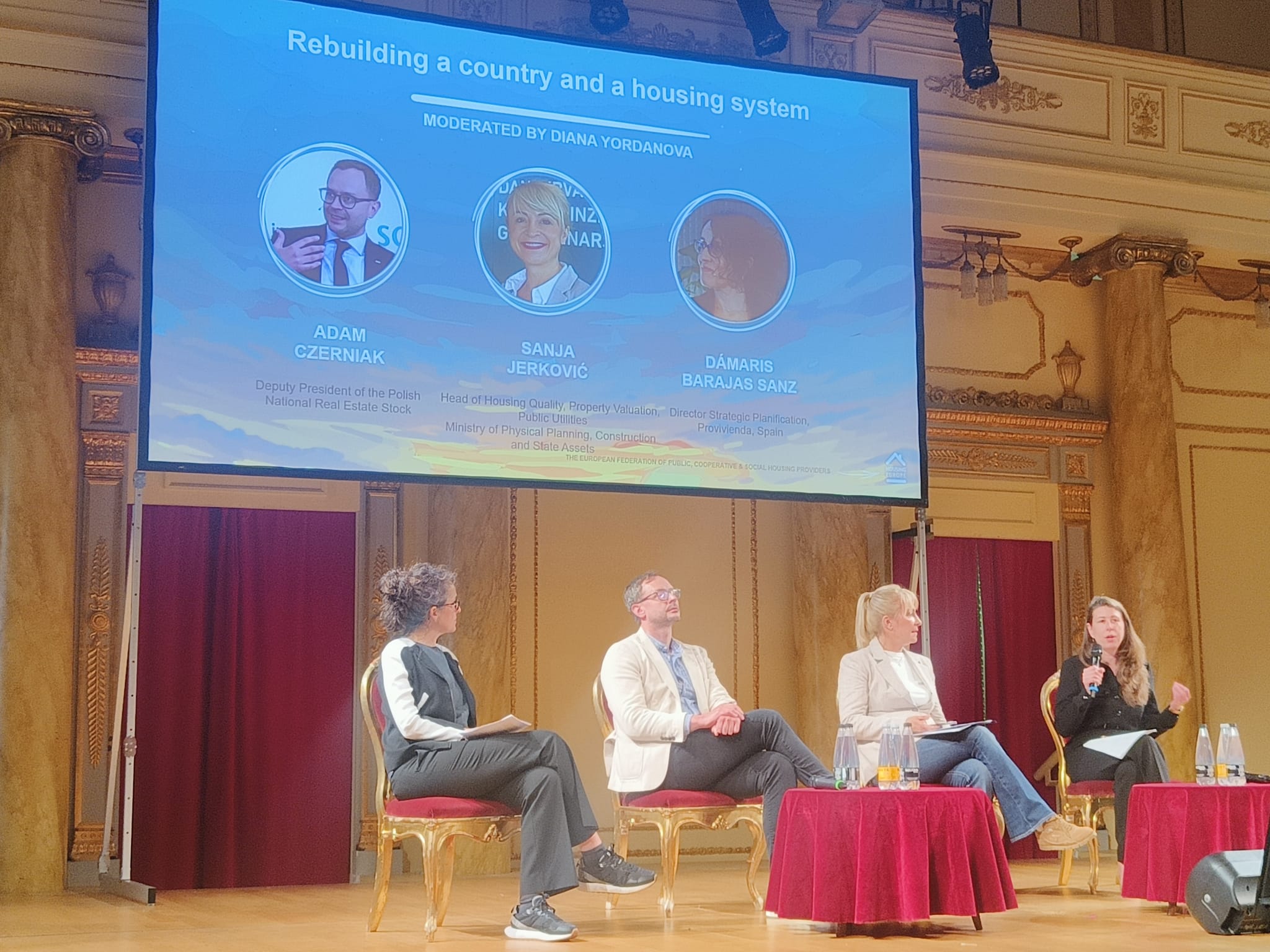
Today’s challenge is different but related. While affordability has become an increasingly pressing issue, Croatia also has an estimated 600,000 vacant dwellings in a country of just 3.5 million people. Rather than focusing exclusively on new construction, the government is trying to mobilise existing stock through taxation of vacant and short-term tourist accommodation, incentives for long-term rentals and schemes allowing owners to lease homes to the state. More than 2,000 owners have already expressed interest.
Adam Czerniak of Poland’s National Real Estate Resource described reconstruction as a balancing act between urgency and long-term planning. The danger, he argued, is repeating mistakes that become embedded for generations. Warsaw’s post-war reconstruction offers a cautionary example as in the rush to modernise, parts of the city were redesigned around roads and traffic rather than people’s needs.”Increasing supply only is not the answer.” Instead, Czerniak advocated transparent cost-rental models, strong supervision and clear communication from day one. Reconstruction should be an opportunity to build better systems, not simply replace buildings.
From Spain, Dámaris Barajas Sanz of Provivienda described Spain’s gradual efforts to develop a clearer framework for social and affordable housing providers in a country where the sector has historically lacked the recognition and scale seen in parts of Northern and Central Europe. “Markets allocate resources, not rights,” she said, adding that housing should be treated as social infrastructure rather than simply another market good. In her view, Europe’s housing crisis has exposed the limits of relying exclusively on market mechanisms to deliver affordable homes, particularly for vulnerable households and those excluded from homeownership.
Drawing on Provivienda’s experience, Barajas Sanz highlighted the importance of regulatory frameworks that provide certainty for mission-led housing providers while allowing them to grow over time. Just as physical infrastructure requires long-term investment, social housing systems require institutions capable of surviving political cycles and providing continuity across generations.
Rebuilding a housing system, she suggested, is also relevant to countries seeking to create stronger affordable housing sectors from relatively weak starting points. In that sense, reconstruction can be institutional as much as physical.
Social housing and cooperative models crossing borders
Cost-rental housing emerged as one of the conference’s recurring themes. Austria’s Bernd Riessland described a system where roughly one-third of new housing is delivered under regulated conditions designed to preserve affordability while maintaining competition across the wider market. His message centred on conditionality as public support should come with clear rules on governance, funding and reasonable returns. Housing providers should be encouraged to “build to stay, not to leave.”
Ireland’s Donal Mc Manus, leading the Irish Council for Social Housing described cost-rental as an emerging tenure capable of delivering 75,000 homes, drawing heavily on lessons from Austria. Newer systems, Donal said, should take advantage of European funding while adapting proven models to local conditions.
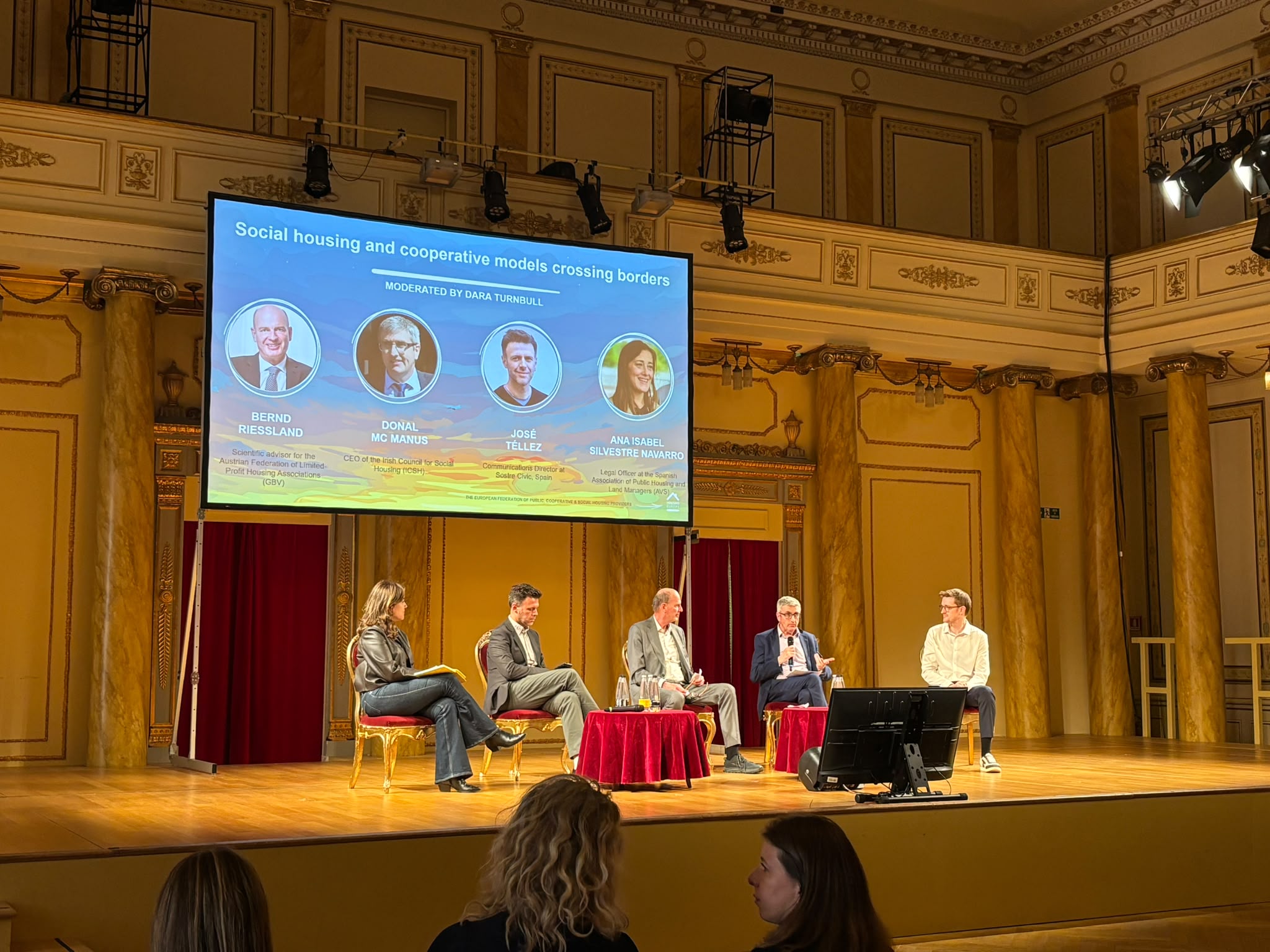
Spain’s cooperative housing movement offered another perspective. José Téllez of Sostre Cívic described a model built around collective ownership and democratic governance, inspired by examples in Denmark and Uruguay. He warned against reducing housing debates to supply alone. “A narrative focusing solely on additional provision of supply without distinction of providers is dangerous.” In his view, the type of provider matters because it determines whether affordability is preserved or gradually lost over time.
The politics of housing attention and how a European Affordable Housing Plan can sustain focus
The final discussion focused on a question that lingered throughout the conference – what happens if housing falls out of fashion politically before the crisis is resolved?
For Jouni Parkkonen, CEO of Finland’s KOVA, the answer lies not only in political commitment but also in protecting the financial architecture that makes affordable housing possible. Finland’s housing system was built over decades through broad cross-party consensus, dedicated financing mechanisms and long-term investment vehicles. Today, however, even mature systems are not immune to political change. Recent reforms, including the integration of Finland’s previously off-budget housing fund into the state budget, have fuelled debate about how affordable housing investment is treated during periods of fiscal pressure. “Continuity is about protecting the system, not resisting change,” he said, warning that housing systems can be weakened when the institutions underpinning them are gradually altered.
Daniel Ryšávka, Director of the Czech State Investment Promotion Fund (SFPI), echoed the need for long-term thinking. Housing should increasingly be treated as productive infrastructure rather than a short-term budgetary cost. While homes can take years to plan and deliver, the institutions responsible for financing them must operate across electoral cycles and political transitions. The challenge for policymakers is therefore not only to launch new programmes, but to create frameworks capable of sustaining investment and public confidence over time.
Representing the European Commission, Matthew Baldwin, Head of the Housing Task Force, outlined the tools currently under preparation, including the future Affordable Housing Act, a pan-European investment platform and the European Housing Alliance. Among the most significant announcements was the intention to integrate housing more systematically into the European Semester, the EU’s annual cycle of economic and fiscal coordination. For many participants, this could prove a turning point. Housing has long been treated as a social issue sitting at the margins of economic governance. Bringing affordability, housing supply and investment conditions into the Semester would place housing much closer to the centre of EU economic policymaking and provide a mechanism for maintaining attention beyond individual political mandates.
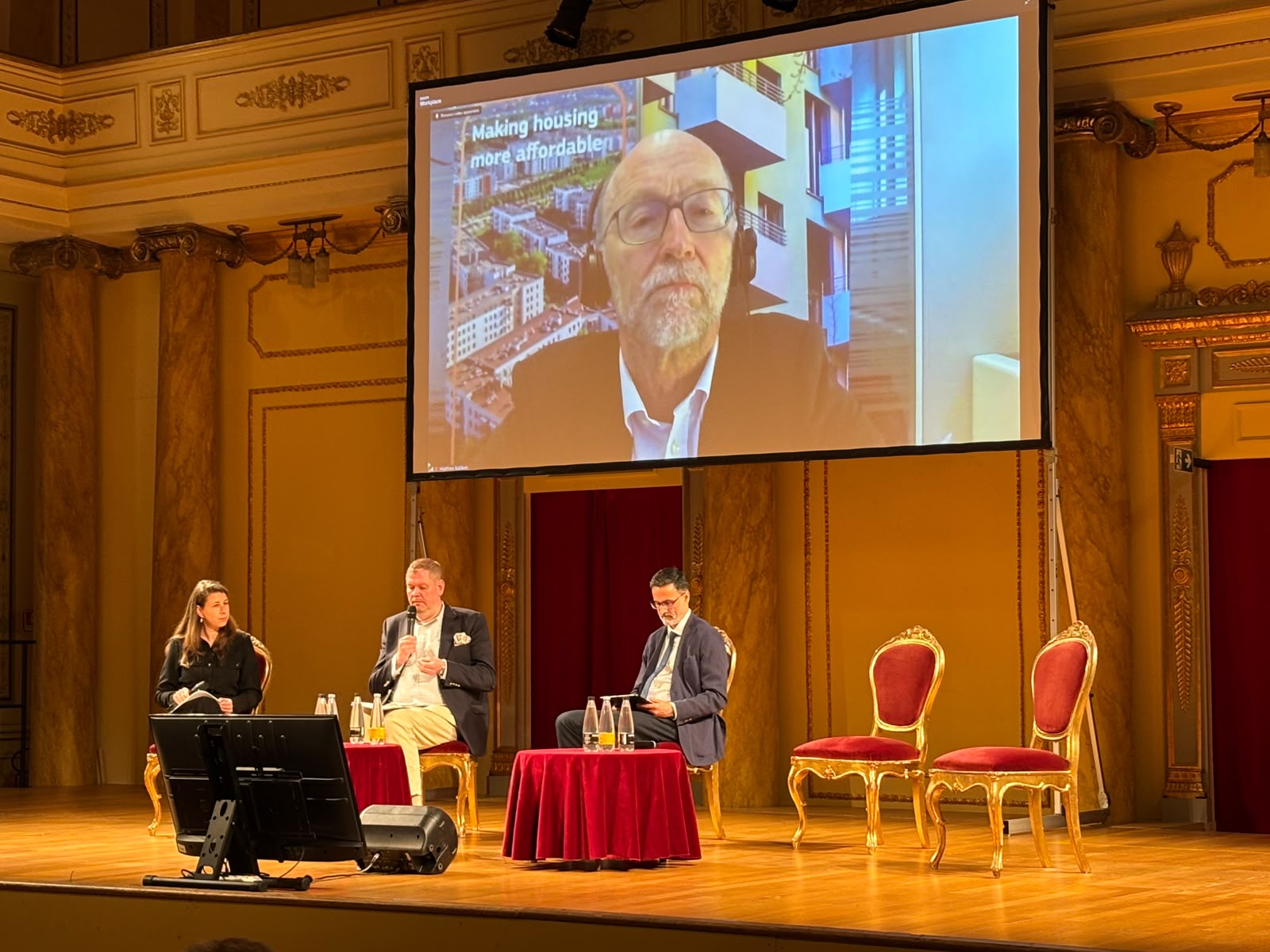
The discussion also touched on a question raised repeatedly throughout the conference, whether affordable housing should be treated differently within European fiscal frameworks. From Dutch housing associations struggling with declining investment capacity despite managing assets worth more than €100 billion, to Denmark’s revolving fund that continuously reinvests repayments into new homes, speakers repeatedly returned to the idea that housing should be recognised as essential infrastructure rather than current expenditure. Baldwin suggested that the debate is evolving, reflecting a broader shift in Brussels towards recognising the economic, social and strategic value of affordable housing investment.
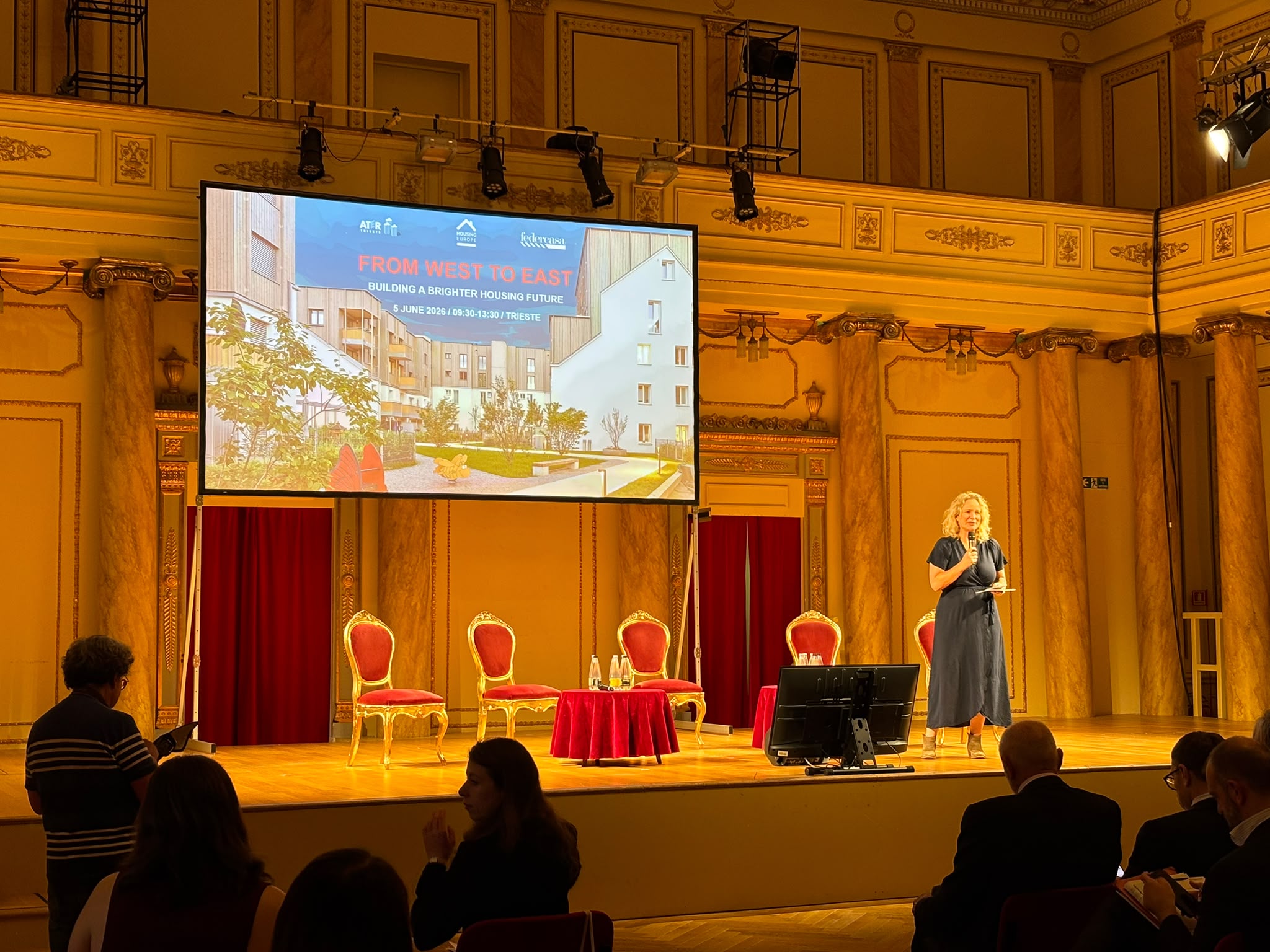
Housing has secured a place on the political agenda, our Secretary General Sorcha Edwards summarised. The real work now on a brighter housing future is whether the European Affordable Housing Plan can translate that attention into institutions, financing mechanisms and governance frameworks capable of surviving changes in government, economic downturns and shifting political priorities.
