Residential construction was at its lowest level in a decade last year, while the European Investment Bank estimates that Europe needs one million additional homes and five million renovations every year.
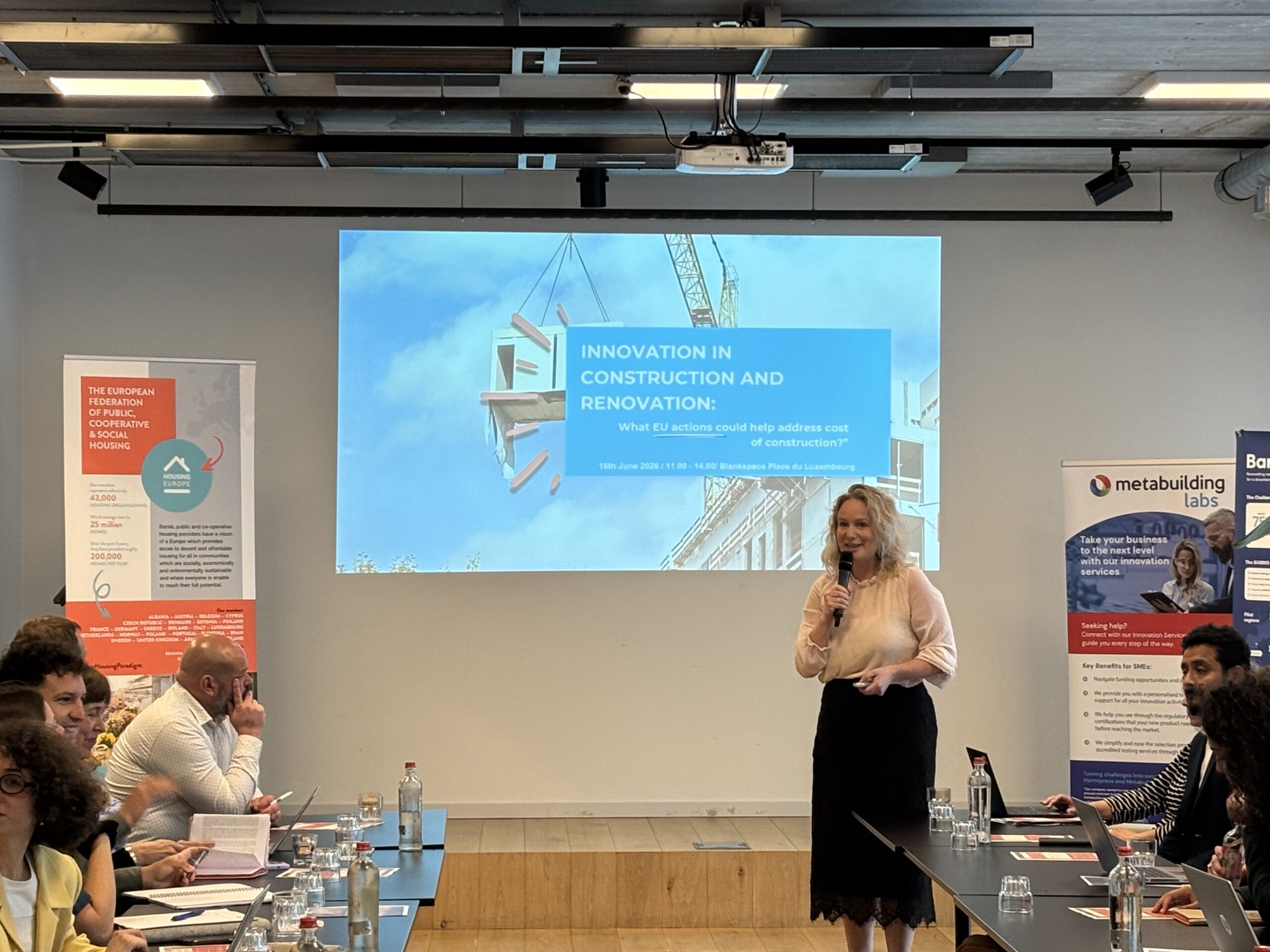
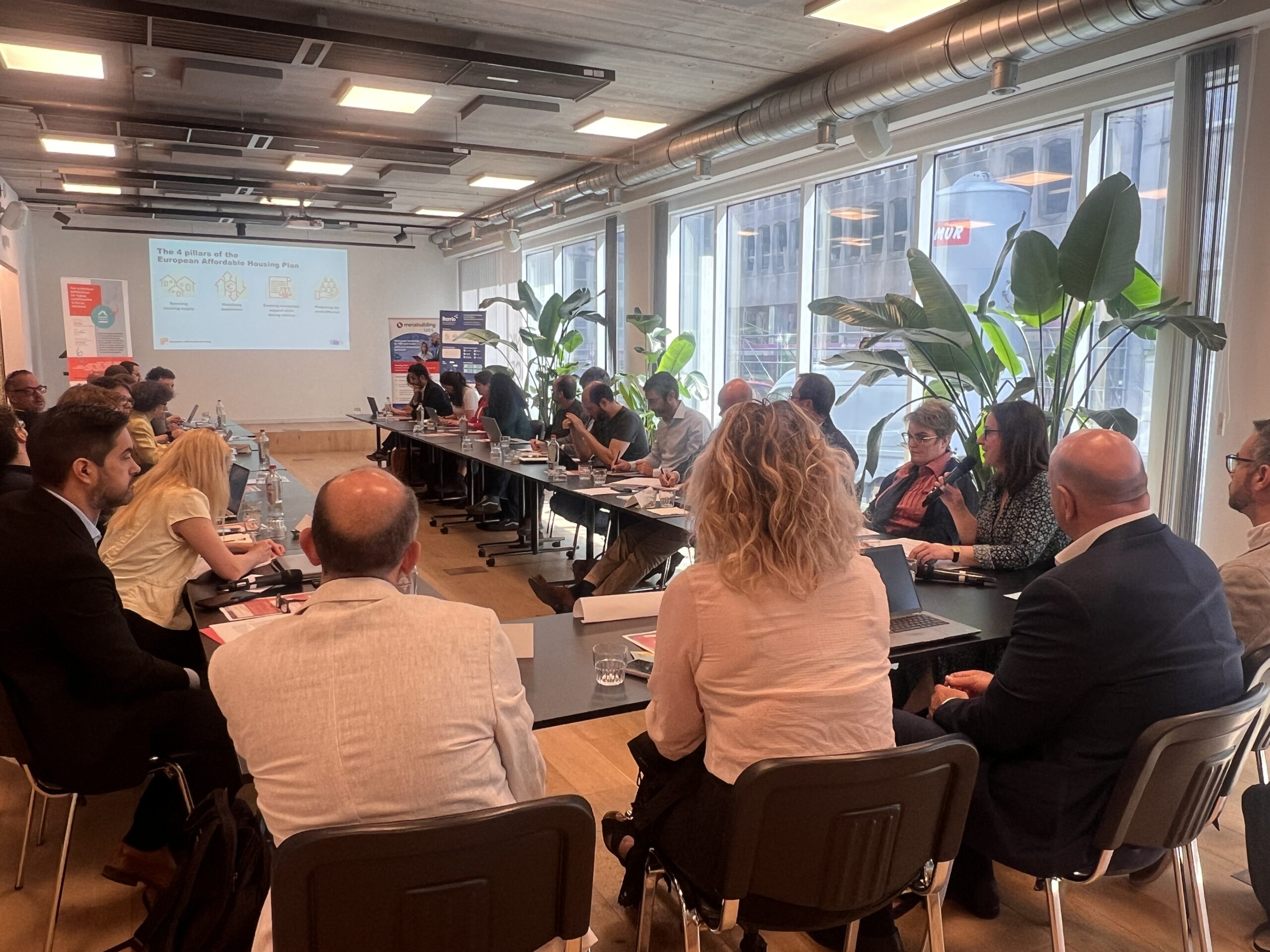
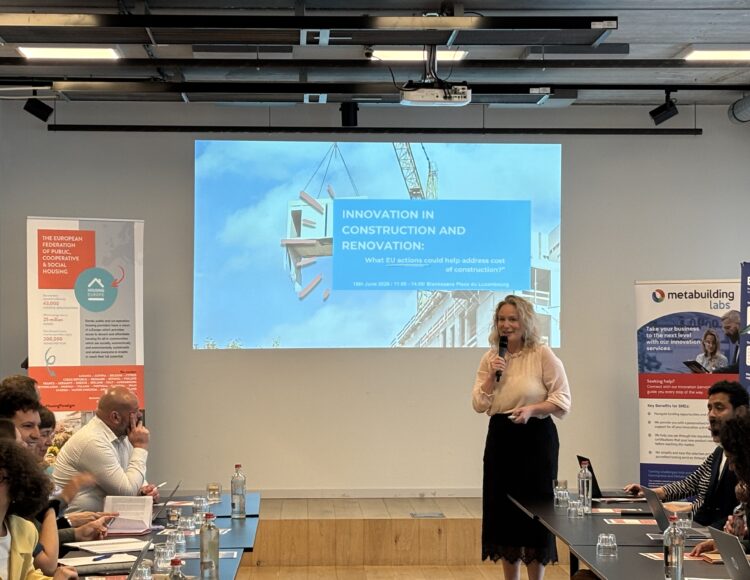
That was the paradox at the heart of a Housing Europe discussion bringing together policymakers, limited-profit housing providers, SMEs, innovators and industry representatives to explore what role the EU can play in reducing construction costs.
Not everyone in the room agreed on everything, but three themes emerged repeatedly. Long-term finance and fragmented housing markets remain the biggest barriers to scaling renovation; innovative construction methods work best when accompanied by common standards that allow solutions to spread across borders; and public procurement should reward long-term value and innovation rather than simply the lowest upfront cost.
30–50% of Europe’s social housing stock could be suitable for industrialised renovation
The discussion also highlighted that public, cooperative and social housing providers have not been waiting for perfect conditions.
Despite the pandemic, the war in Ukraine, the energy crisis and rising construction costs, renovation rates in the sector increased from 1% in 2020 to 1.5% in 2024. Around 370,000 homes were renovated over that period, reducing energy consumption by an average of 28%.
Industrialisation is increasingly part of that story. Public, cooperative and social housing providers in France, Germany, the Netherlands, Sweden and Flanders are deploying prefabricated façades, roofs and insulation systems. Germany delivered 5,000 prefab homes between 2019 and 2023, the Netherlands 7,000, while around 80% of construction in Sweden already relies on prefabrication.
Housing Europe estimates that 30–50% of Europe’s social housing stock could be suitable for industrialised renovation. That is why we brought together EU-funded initiatives already moving the needle on industrialised renovation.
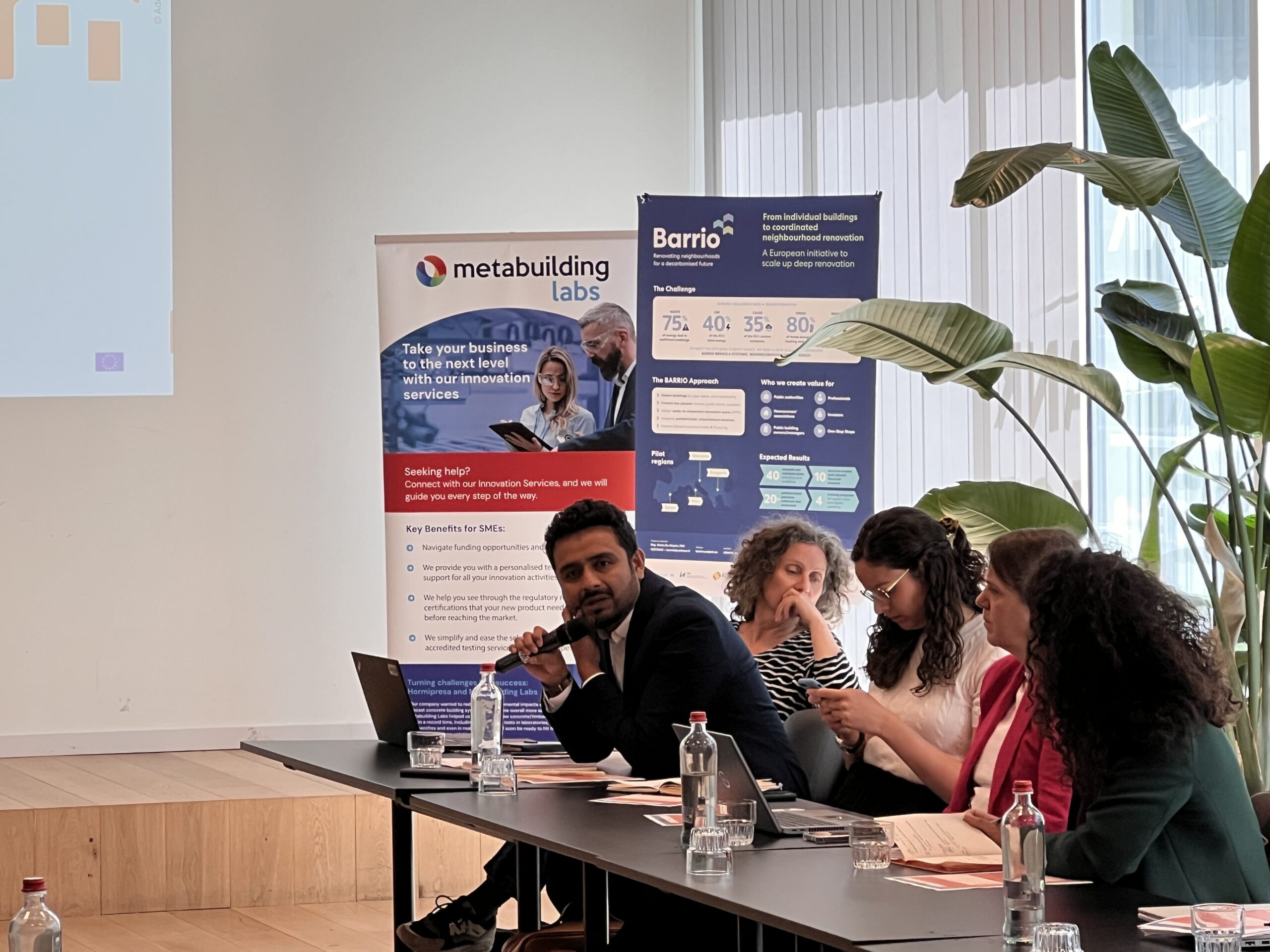
BARRIO is working on one of the sector’s biggest challenges, fragmentation. By aggregating renovation demand at neighbourhood level, the project aims to create the scale needed for industrialised renovation, helping housing providers bundle projects, coordinate investments and attract supply chains that would otherwise struggle to engage with smaller, isolated renovation programmes.
Metabuilding Labs focuses on innovation and market access. Through a network of around 750 testing and certification services across 13 countries, it helps SMEs validate new products and technologies under the principle of “test once, sell everywhere”, reducing the time and cost required to bring innovative construction solutions to multiple European markets.
BuildUPspeed concentrates on the practical deployment of industrialised deep renovation. The project has demonstrated how prefabricated and standardised approaches can reduce time spent on-site by around 50%, minimise disruption for residents and help housing providers deliver deep energy renovations more efficiently. Despite these advantages, industrialised renovation still represents less than 10% of renovation activity today, underlining the challenge of moving from successful pilots to large-scale deployment.
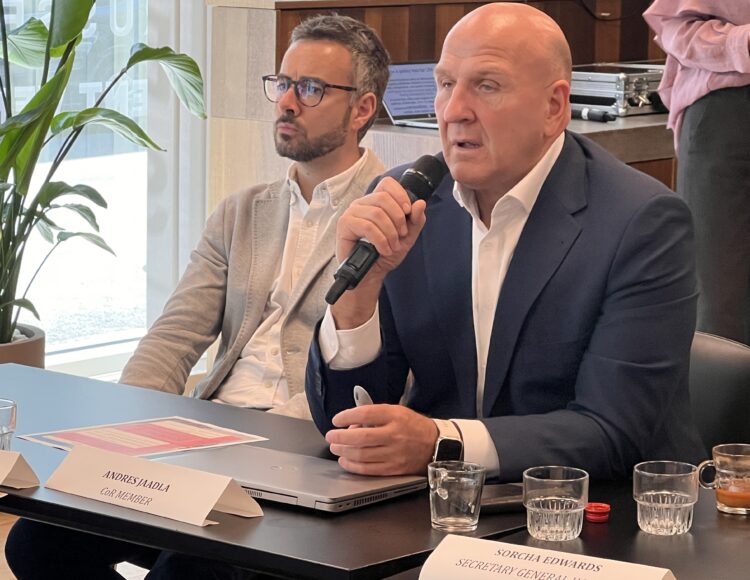
Andres Jaadla, Chair of Estonia’s Cooperative Housing Association and a member of the European Committee of the Regions, presented the country’s renovation model that upgrades buildings to energy class A while allowing residents to remain in their homes. The approach combines digital building models, prefabricated elements, heat pumps and solar panels into a single renovation process and reuses materials.
The next barrier is not technology
For Housing Europe Secretary-General Sorcha Edwards, the construction challenge is also a societal challenge. Existing homes have a climate impact, affordability pressures continue to grow, and Europe needs more renovation, conversion, infill development and vertical extension alongside new construction. She also added that the sector continues to play a counter-cyclical role when markets slow down, reinvesting returns through limited-profit models at a time when rising construction and financing costs are affecting providers. To her, industrialisation is part of the answer, not as a silver bullet, but as an approach already being deployed in several European countries to improve productivity, quality and affordability.
Pablo Gutierrez Velayos (DG GROW) outlined work on the European Strategy for Housing Construction, which aims to simplify and digitalise the construction ecosystem, improve access to primary and secondary materials, strengthen value chains and support innovation in a sector responsible for 35% of EU waste generation.
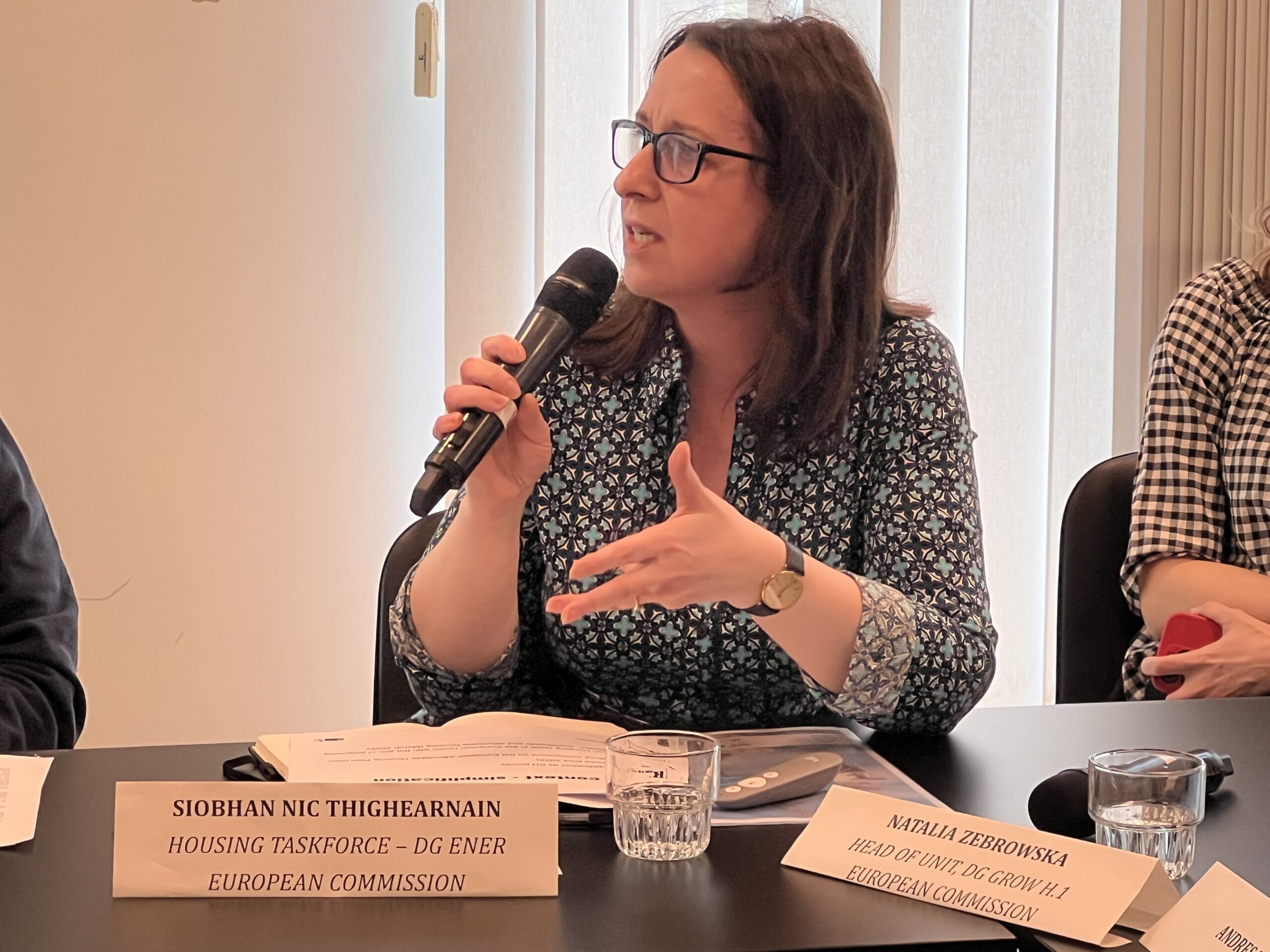
Simplification emerged as a major theme throughout the discussion. As Siobhan Nic Thighearnain from the Housing Task Force noted, simplification is anything but simple. The Commission is examining how a wide range of legislation, from environmental impact assessments and air quality rules to building performance and financial regulation, interacts with housing delivery. Feedback from more than 710 experts suggests that local planning, zoning and permitting rules are often as significant an obstacle as EU legislation itself.
Philippe Moseley, from the Cabinet of Commissioner Dan Jørgensen, stressed that simplification should help deliver housing faster and more efficiently, not lower environmental or social ambitions. Affordability, sustainability and quality, he said, should advance together. “You can’t have an affordable house if the energy bills are unaffordable.”