As Europe’s housing crisis continues to reshape cities, communities and daily life across the continent, Housing Europe launched a new Lunch Club series in Brussels in 2025 to create space for open exchange between policymakers, housing providers, researchers and practitioners. Organised under Chatham House rules, the sessions brought together voices from across the sector to reflect on some of the most pressing questions facing housing in Europe today: how to ensure affordability, how to plan for changing housing needs, and how to deliver more homes in increasingly constrained urban environments.
Across the three Lunch Clubs organised between July and September, one message consistently emerged: Europe’s housing challenges can no longer be addressed through fragmented or short-term responses. Affordability, climate adaptation, land use, financing and social cohesion are deeply interconnected, requiring new forms of cooperation and long-term investment in public, cooperative and social housing.
Housing in Europe: affordability, supply and long-term investment
The first Lunch Club, hosted in July at the House of the Dutch Provinces, focused on the structural nature of Europe’s housing crisis and the growing imbalance between housing needs and current investment patterns. Participants reflected on how, over recent decades, many governments have increasingly relied on housing allowances and income support measures, while long-term capital investment in affordable housing has declined.
The exchanges highlighted how housing affordability pressures are now affecting a growing share of Europeans, alongside rising overcrowding, homelessness and energy poverty. Contributors stressed that housing shortages are not only a social emergency, but also a growing risk for economic resilience and democratic stability. Affordable, good-quality homes in inclusive neighbourhoods were repeatedly described as a foundation for stronger and more cohesive societies.
The conversation also challenged simplistic assumptions around supply and affordability. While increasing supply alone will not automatically reduce housing costs, participants agreed that underinvestment and insufficient construction continue to deepen the crisis. Many pointed to the importance of combining new construction with renovation, adaptive reuse and better use of existing stock, while ensuring that homes remain affordable over the long term through non-profit and revolving housing models.
The session additionally reflected on the rapidly evolving European policy context, including the establishment of a dedicated European Commissioner and taskforce for housing, the work of the European Parliament’s Special Committee on the Housing Crisis, and discussions around new EU financial instruments for affordable housing investment. For many participants, these developments signal an important shift: housing is increasingly recognised not as a marginal issue, but as a central European challenge with social, economic and environmental implications.
Understanding housing needs in the era of the green transition
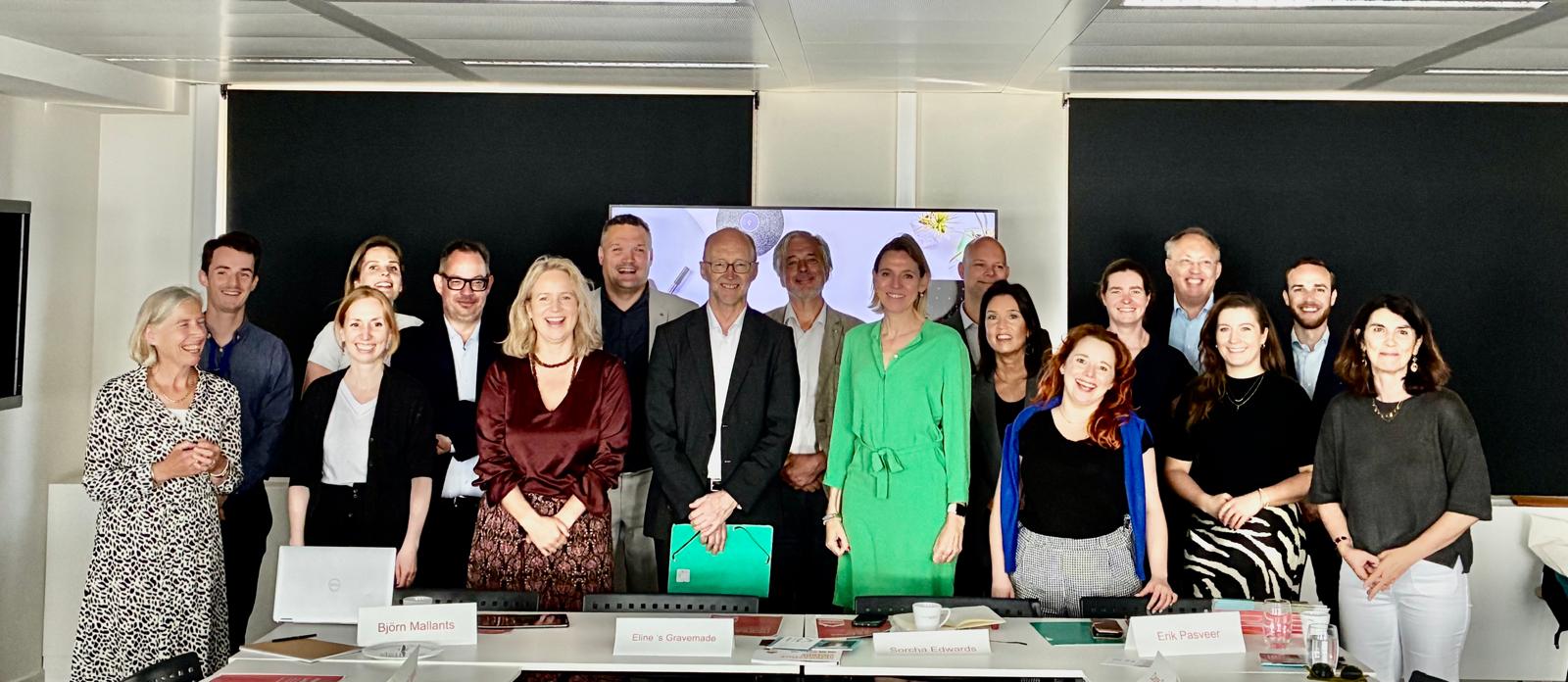
The second Lunch Club, organised in September with the support of Union sociale pour l’habitat (France), explored how climate change, demographic shifts and evolving lifestyles are reshaping housing needs across Europe. The discussion highlighted growing recognition that traditional forecasting tools — often based primarily on population and economic growth — are no longer sufficient to understand the realities housing systems will face in the coming decades.
Participants reflected on how climate impacts, including heatwaves, floods and changing migration patterns, are likely to alter both the geography and nature of housing demand. At the same time, shrinking household sizes, ageing populations, remote work and changing family structures are transforming expectations around housing size, location and adaptability. These overlapping transitions are making housing planning far more complex, while also reinforcing the need for more flexible and resilient housing systems.
A recurring point throughout the discussion was that housing needs cannot simply be equated with market demand. Contributors stressed the importance of developing new indicators capable of integrating affordability, energy performance, suitability, under-occupation and carbon emissions into future housing planning frameworks. Public, cooperative and social housing providers were identified as particularly well placed to support this transition, thanks to their ability to manage and adapt housing stock over the long term.
National perspectives from France, Germany, the Netherlands and Brussels illustrated the scale of the challenge. Many housing providers are already struggling to reconcile climate obligations with affordability constraints, while renovation costs and financing gaps continue to grow. In Brussels alone, participants noted that renovation rates would need to quadruple to meet climate targets, while available funding remains far below estimated needs. The discussion therefore repeatedly returned to the importance of stronger European support mechanisms and financial frameworks capable of enabling climate action without undermining affordability.
Land policies for liveable cities
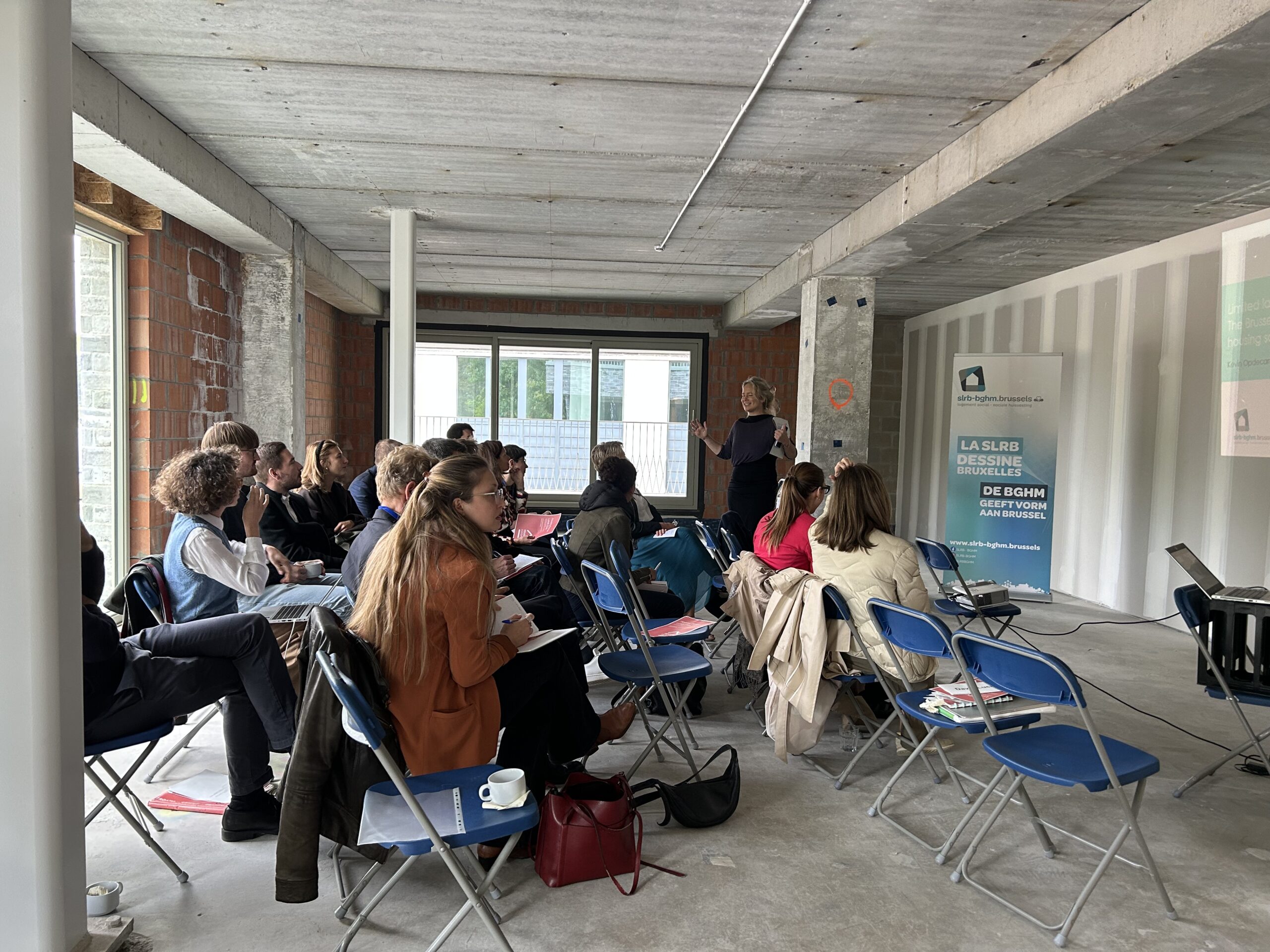
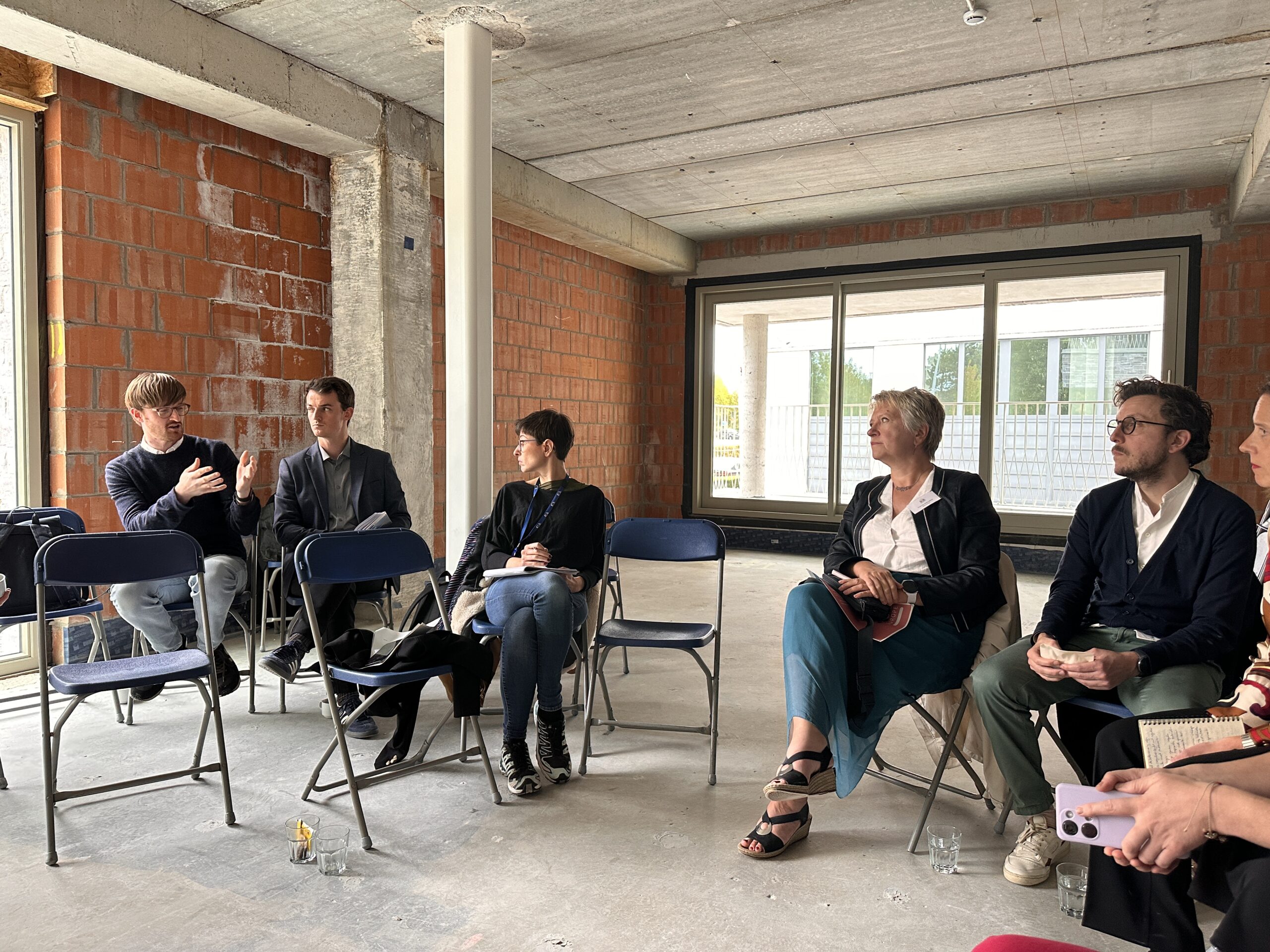
The final Lunch Club in September, organised together with the Société du Logement de la Région de Bruxelles-Capitale (SLRB), focused on land policies, urban densification and adaptive reuse strategies in increasingly land-constrained cities.
The session included a visit to a redeveloped office building in the Bordet area of Brussels, transformed into 80 affordable homes through a turn-key project acquired by SLRB following planning approval. The project illustrated how office-to-housing conversion and circular construction approaches can help deliver affordable homes while reducing land consumption and reusing existing structures and materials. Shared amenities and strong public transport accessibility also demonstrated the importance of thinking beyond individual buildings and considering the wider urban environment.
The broader discussion reflected growing pressures facing cities across Europe, where demand for affordable housing continues to rise while land availability, permitting delays and construction costs increasingly constrain delivery. Participants exchanged experiences on how public actors are adapting by turning toward hybrid delivery models combining adaptive reuse, densification and stronger collaboration with private developers. Turn-key acquisition models were highlighted as one way to accelerate delivery despite growing technical and financial complexity.
The exchanges also underscored the financial realities facing many affordable housing providers. Rising costs, limited public budgets and difficulties accessing long-term financing continue to slow down delivery, particularly for innovative and circular projects. Many participants called for stronger EU-level de-risking mechanisms and more flexible regulatory frameworks capable of supporting investment at scale. At the same time, contributors stressed that social housing should be fully integrated into the urban fabric and indistinguishable from private housing in terms of quality, architecture and liveability.
Taken together, the three Lunch Clubs reflected a broader evolution in Europe’s housing debate: from short-term crisis management toward longer-term thinking on affordability, climate resilience, land use and investment. While many of the solutions discussed — from adaptive reuse and district-level renovation to new financing approaches and revised planning tools — are already emerging across Europe, participants consistently highlighted that scaling them will require stronger public leadership, closer cooperation across sectors and sustained investment in public, cooperative and social housing.