During Housing Europe’s Working Committees, our Research Coordinator, Dara Turnbull discussed our ongoing work of empowering energy communities in social and cooperative housing in Belgium, Slovenia, and Italy within the EU project SocialNRG.
What emerged from the meeting is a quite similar diagnosis – renewable energy communities are not a mainstream tool in social housing but they could be.
Where there is a will, there is a way – and the way seems to be more enabling conditions, such as financial support, clear and less restrictive legislation, as well as more technical capacity to design and run these systems. The landscape is quite fragmented.
In Sweden, public housing providers are actively developing energy communities, with early indications that they can reduce stress on the electricity grid by balancing local supply and demand. The business case is emerging, and research is underway to quantify wider system benefits. However, even here, implementation is described as complicated, requiring providers to navigate regulatory frameworks that were not designed for collective, local energy sharing.
In Germany, the challenges are more structural. According to GdW, policymaking still focuses on individuals or small groups, rather than entire districts or multifamily buildings. This creates a paradox – if a housing provider supplies energy, even just across the street, it risks being treated as a full energy utility, with heavy regulatory obligations. A temporary exemption following a ruling by the European Court of Justice has offered some relief, but only for a limited period. There are also market design issues. The ability for tenants to switch energy contracts within 24 hours, while beneficial for consumer choice, undermines the stability of collective models. Energy communities depend on long-term participation, however, residents can leave as soon as a cheaper offer appears. German providers estimate that at least 50% of tenants would need to stay committed for these models to remain viable, something current rules do not guarantee.
In Portugal, the barriers are less about resources and more about structure. With abundant solar potential, shared energy systems should be an obvious fit. At the same time, providers, such as Gebalis, report high upfront costs with uncertain returns. At the same time, it remains unclear whether housing companies can formally be part of an energy community, or even act as the community itself.
Elsewhere, progress is taking different forms. In France, social housing providers have started to organise collectively forming what participants described as a “coalition of the willing” to move projects forward despite regulatory ambiguity. And in Italy, alongside Sweden, more enabling legislative frameworks have allowed energy communities to gain a foothold.
The European Energy Communities Action Plan was cited as a step in the right direction, for many in the room, the urgency is already here.
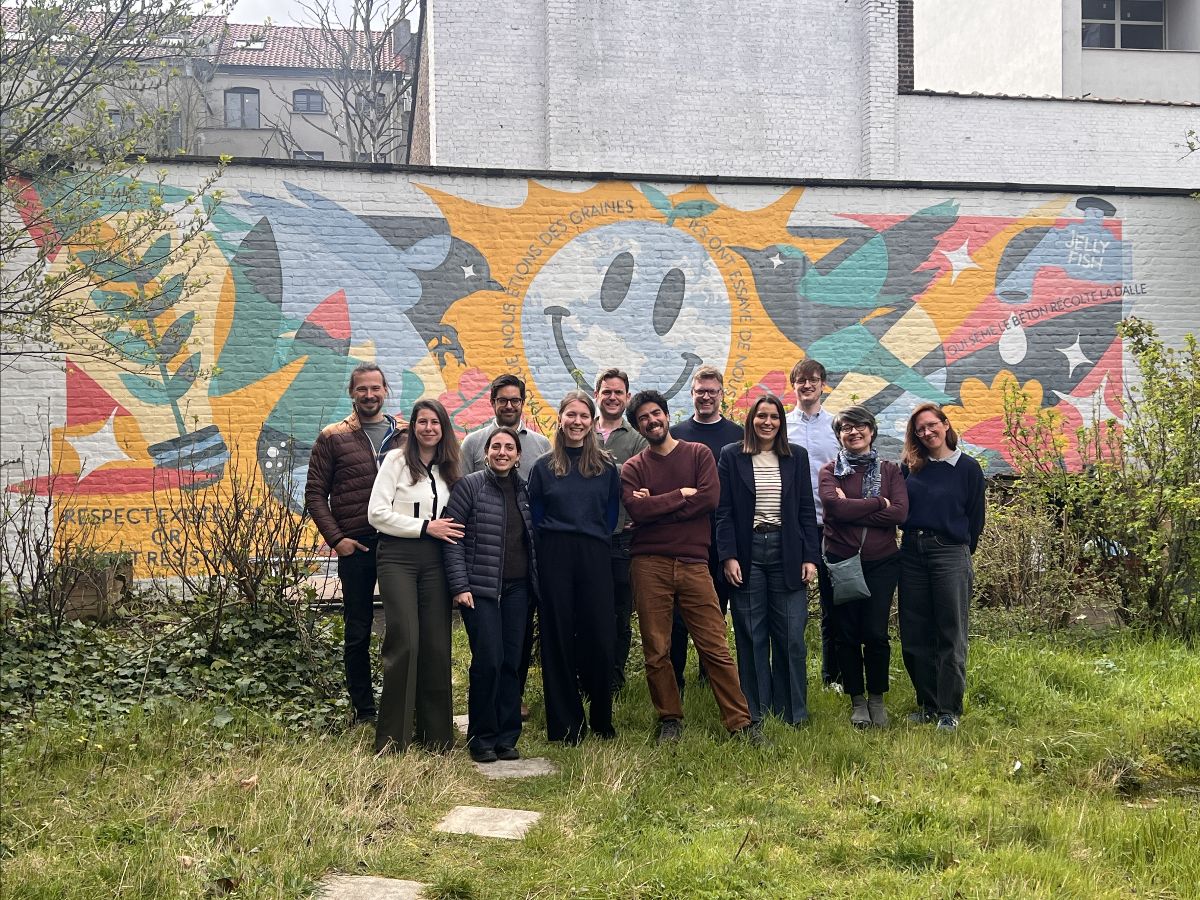
This week, the SocialNRG team also met in Brussels to discuss the progress made on empowering energy poor households.