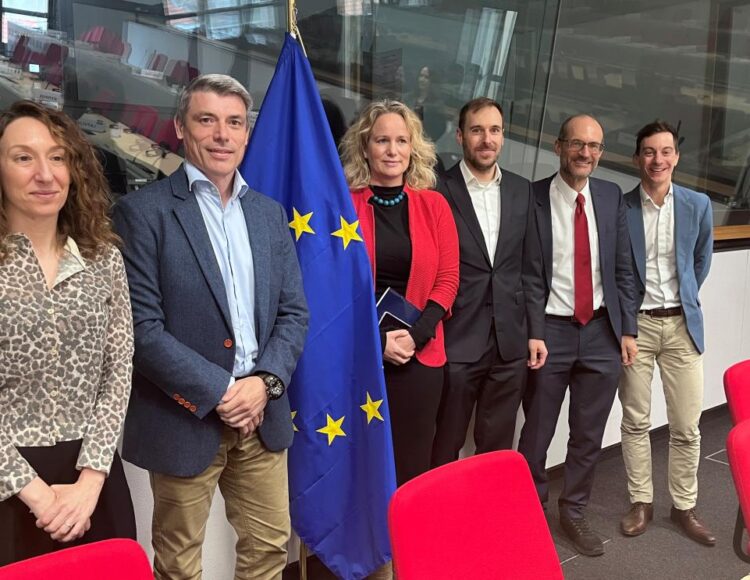
Affordable housing is often discussed in terms of construction targets or funding gaps. Yet a workshop jointly organised by the European Commission’s Affordable Housing Task Force and Housing Europe highlighted another essential ingredient: strong municipal housing ecosystems.
Across Europe, municipal housing companies provide an essential safety net while helping to stabilise local housing markets, maintain social mix and deliver long-term affordability. The discussions showed that success depends not only on investment, but on professional housing organisations, predictable legal frameworks and financing systems that allow providers to plan for decades rather than electoral cycles.
As Housing Europe’s Research Director Alice Pittini noted, one of the strengths of municipal housing companies is their professional management. Legally independent housing organisations provide continuity over time, enabling long-term investment strategies regardless of political changes. She also highlighted land policy as one of the strongest tools available to local authorities, allowing municipalities to shape affordable housing supply through zoning and strategic land management.
The examples shared during the workshop demonstrated how these principles translate into practice.
Vienna remains one of Europe’s best-known examples. More than half of the city’s two million residents live in affordable housing, while Wiener Wohnen manages around 220,000 municipal homes across 1,800 housing complexes. Nearly 80% of the population is eligible for affordable housing, helping maintain social mix and avoiding the stigma often associated with narrowly targeted systems. The city complements this with around €500 million of annual investment, supported by a revolving financing model and long-term land policy. As the Vienna representative reminded participants: “Housing has and is always considered a human right.”
While municipal housing systems differ widely across Europe, they consistently rely on the same foundations: professional housing organisations, stable legal frameworks, strategic land policy and long-term financing. Bremen’s municipal housing company Gewoba combines public ownership with operational independence, allowing it to secure financing from regional development banks, the European Investment Bank and commercial lenders while keeping average rents at around €7 per square metre. Sweden’s network of 170 municipal housing companies benefits from CommunInvest, a cooperative investment bank that provides municipalities with lower borrowing costs, while joint procurement has reduced construction costs by an estimated 20–25% and already delivered around 11,000 homes through standardised designs. In the Czech Republic, advisory work with the European Investment Bank identified the potential to unlock up to €5 billion in financing from existing municipal housing assets through stronger balance sheets and professional asset management.
These long-term approaches are becoming increasingly important as construction and financing costs continue to outpace rental income across much of Europe. Participants agreed that without predictable financing instruments and stable regulatory frameworks, even well-managed housing providers face growing difficulties in delivering new affordable homes.
Beyond the different national systems, participants converged on one important message: affordable housing cannot rely on isolated projects or short-term funding programmes. It requires institutions that can preserve affordability over generations. As one speaker put it, “Financial stability and social responsibility are not contradictory.”
The discussion also identified clear priorities for European action. Stable legal frameworks, practical state aid rules, revolving financing mechanisms, dedicated public investment institutions and stronger municipal land policies all help create the certainty needed for long-term investment. Combined with professional housing organisations, these foundations allow municipalities not only to respond to today’s housing crisis but to build resilient housing systems capable of serving future generations.