This project was a finalist in the European Responsible Housing Awards 2022 under the ‘Going the extra mile in extraordinary circumstances’, organised by Housing Europe, the International Union of Tenants and DELPHIS.
Organisation: Co-operative Housing Ireland
Goals
The objective of the project was to provide homes, in sustainable communities, for families displaced by the Syrian Refugee crisis. This had to be a rapid response as there was an immediate need for accommodation. The project had a two-pronged approach. Firstly, working in partnership with the Irish Red Cross through a ‘pledge programme’ and secondly partnering with Irish Local Authorities (Municipalities) in the provision of housing.
Goals:
- Respond to a global humanitarian crisis;
- A rapid response to the housing need of displaced persons;
- Developing strong and lasting relationships with key stakeholders in the provision of housing;
- Providing affordable homes in sustainable communities;
- Partnering in the design and implementation of a unique delivery method of homes in an emergency.
Context
Ireland had committed to relocating and resettling up to 4,000 persons as part of the Irish Refugee Protection Programme (IRPP). IRPP is a programme delivered by the Department of Justice and Equality. Almost seven million people have been forced to flee their country since the outbreak of war in 2011 and around the same amount of people remain displaced within the country itself.
Ireland was faced with an acute housing crisis at the time, and appropriate accommodation was difficult to source and make available. Co-operative Housing Ireland (CHI) supported the identification and preparation of suitable homes for refugees using its expertise as a housing NGO and knowledge of the Irish housing landscape.
The initiative saw the co-operation of stakeholders at every level, from international organisations such as the United Nations (UN), to national institutions such as the Irish Government, to local authorities operating within towns and counties across Ireland, to the Irish public pledging accommodation within their own homes.
The scope of the initiative involved housing hundreds of refugees and stakeholder engagement at all levels. CHI took on the responsibility to:
– Play a key role in helping to rehome hundreds of people arriving in Ireland.
– Support the UN, the Irish government, including local authorities, and the Irish Red Cross in the implementation of their Irish Refugee Protection Programme.
– Work with local authorities to provide housing for refugees within CHI’s own housing stock and in the rapid provision of additional CHI stock.
– Use our expertise in housing as an Approved Housing Body to inspect and improve accommodation available outside of CHI’s stock.
– Match refugees with hosts based on their needs and collaborate with players in the private rental market to access homes in the most in-demand areas, which were often in city centres.
Our involvement and contribution to these endeavours centred on our expertise as one of the largest Approved Housing Bodies in Ireland where we acted and advised on the:
– Management and Assessment of Pledges
– Negotiation of Rental agreements in the private rented sector
– Direct provision of housing
CHI used its extensive knowledge of the housing landscape in Ireland to advance the project by balancing this off Ireland’s own housing crisis and competing needs. Co-operative Housing Ireland’s response was twofold, firstly, it partnered with the Irish Red Cross (IRC) in managing a national accommodation pledge programme and secondly, it partnered with Local Authorities (Municipalities) in the direct provision of housing.
Partnering with the Irish Red Cross
CHI was responsible for:
– The rapid acquisition of housing in sustainable communities.
– Managing the co-ordination, with relevant state bodies, of families moving from emergency accommodation into their new homes.
– Signposting families to community support programmes.
– Managing tenancies.
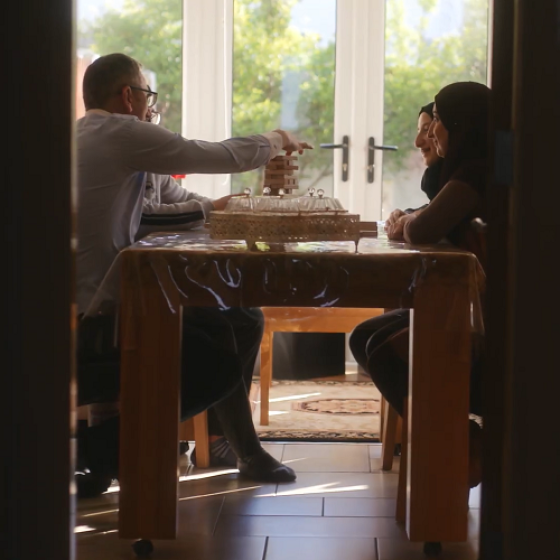
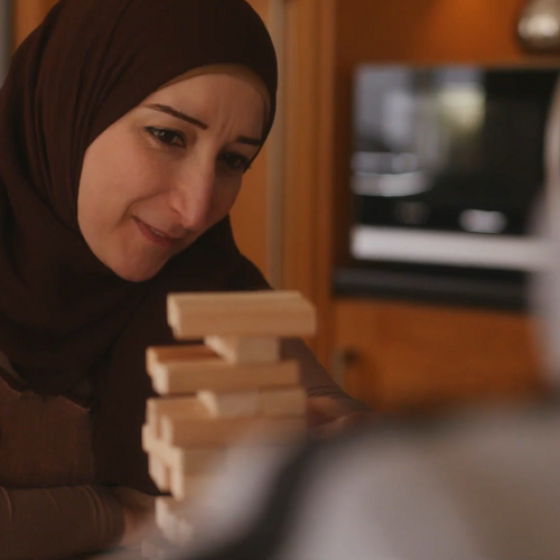
– A ‘snapshot’ of this project was featured as part of the BBC StoryWorks Series which included Mustafa and his family.
What is innovative about this project?
There were several unique innovations as part of this initiative that could be replicated in the event of similar crises occurring in the future. The nature of the project required a rapid response and co-operation between agencies, ensuring that they shared their knowledge and expertise to support those affected.
Rapid response to the crisis
This required organisation to co-operate with each other to achieve the best possible outcome with resources available.
Partnering with organisations
A level of trust and rapport among organisations and a willingness to learn and work with each other was quickly established. To that end, a unique interagency agreement was entered between CHI and the IRC. This saw CHI lending its knowledge of the housing sector to support the housing of people entering Ireland from the crisis.
One-off project, never seen before
This project is unique in that CHI had never collaborated with other organisations in a crisis scenario. Its knowledge as an organisation working within the housing sector was paramount to ensuring the initiative’s success.
Futureproofing the initiative
CHI links in with other organisations expert in the area to ensure its new Members from the initiative have the support they need to integrate into society.
Interventions
The nature of the crisis was such that a rapid response was necessary. To that end, a unique interagency agreement was entered between CHI and the IRC to provide housing management services in respect of the assessment and management of pledges of accommodation from the Irish public. As part of this agreement, CHI was given agency to use its expertise in housing on behalf of the Irish Red Cross.
Responding effectively to the crisis necessitated the creation and sharing of tools among stakeholders at every level. The development of the online portal to handle submissions regarding accommodation was critical in the process overall, and CHI utilised the intel provided there to assess the suitability of accommodations in the foremost.
Throughout the country, there was an emergency response from local authorities to provide resettlement support to families for a period of at least 18 months. Although CHI has partnered with many local authorities over its near 50-year existence, the initiative required a more urgent response from all stakeholders. The housing of Syrian refugees within CHI’s own housing stock in Co. Wexford is testament to this response and commitment to solution-based initiatives with lasting impact. It is also a hallmark of the partnership between CHI and local authorities to provide sustainable housing solutions for those in need, and in particular, those affected by crisis.
Impact
The key success of this initiative is the assistance of the global community of which Ireland is a part of, showing a solidarity of response within our own borders to those affected by a conflict outside of their control.
CHI worked in collaboration with many stakeholders at national and local level to achieve this. Our partnership with the IRC enabled us to provide a full suite of social and physical supports to families and single people in the sourcing and provision of suitable housing and matching accommodation geographically based on refugees self-identified needs.
The impact of the project was measured by the number of pledged projects by Irish Citizens and the number of homes provided in response to the Syrian Crisis. As a result of this collaboration and sharing of expertise, a total of 830 accommodation pledges were made by the Irish public as part of this initiative. 165 Vacant Properties were identified nationally, with 665 beds offered to Syrian people seeking refuge within Ireland.
In addition to this, CHI and the IRC have identified the evolving needs of refugees as they integrate into Irish society and have formulated a plan of action to future-proof their accommodation needs through existing housing supports offered within Ireland.
Lessons learned
- Holistic way to deal with a short notice emergency.
- Developing strong and lasting relationships with key stakeholders in the provision of housing in order to face the global humanitarian crisis.
- A great initiative to connect private landlords with refugees.
- Providing affordable homes in sustainable communities with the aim of promoting social cohesion and integration of the upcoming families.