This project was a finalist in the European Responsible Housing Awards 2025 under the ‘Going the extra mile for safe and sound neighbourhoods’, organised by Housing Europe, the International Union of Tenants and DELPHIS.
Organisation: Framtidenkoncernen
Goals
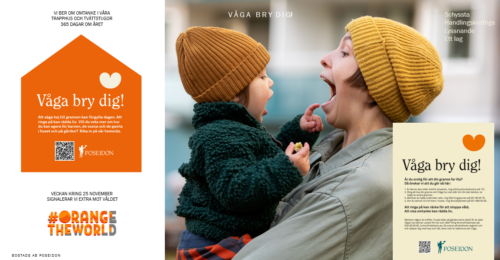
Violence—particularly domestic violence—is a critical public health issue across Europe, often hidden behind closed doors. It disproportionately impacts women and children, erodes community trust, and has lasting effects on well-being. Framtidenkoncernen, Sweden’s largest housing group, responded by launching the Våga bry dig (“Dare to Care”) safety framework in 2019, aiming to promote vigilance, empathy, and action across all levels of society.
The 2024 edition of the initiative took shape through the Young Summer Staff Against Violence Programme, designed to:
- Empower employees and tenants to recognise and safely act on signs of domestic violence or social distress
- Mobilise youth as agents of civic courage, addressing both peer violence and declining community engagement
- Cultivate a long-term culture of care and shared responsibility, reinforcing safety within residential environments
The goal was to equip young people with real-life leadership skills and a mindset of care—during their summer work placements and far beyond.
Context
Framtidenkoncernen is working to ensure that by 2025, no neighbourhood in Gothenburg is classified as “particularly vulnerable” by the Police Authority. With 150,000 tenants and 1,300 employees, the organisation combines its mission of providing quality housing with a broader commitment to community resilience and well-being.
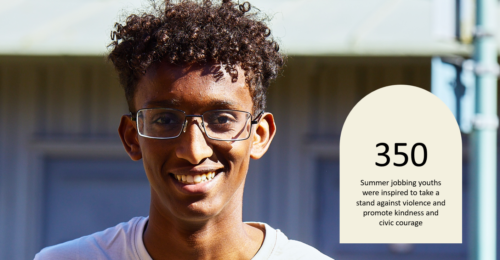
Violence and isolation are increasingly pressing issues, especially among young people. Each year, the organisation provides summer jobs for around 1,000 youths aged 16–18, often their first employment experience. Recognising the potential of this moment, the 2024 initiative focused on training approximately 350 summer staff to understand, detect, and act safely against violence.
This approach builds on Framtidenkoncernen’s year-round infrastructure:
- Daytime housing and environmental teams (7:00–16:30)
- “Super Housing Management” safety patrols (15:00–23:00)
- 24/7 domestic violence and emergency response from the sister company Störningsjouren
Safety messages are consistently reinforced across communal areas—entrance halls, laundry rooms, websites, apps, and tenant magazines—reminding all residents and staff of their role in promoting a secure and compassionate environment.
What is innovative about this project?
The Young Summer Staff programme offers a holistic, multi-level model for violence prevention:
- Youth as community leaders: Young people were trained not just as temporary staff, but as ambassadors of civic courage in their workplaces and neighbourhoods
- Three-tiered training system:
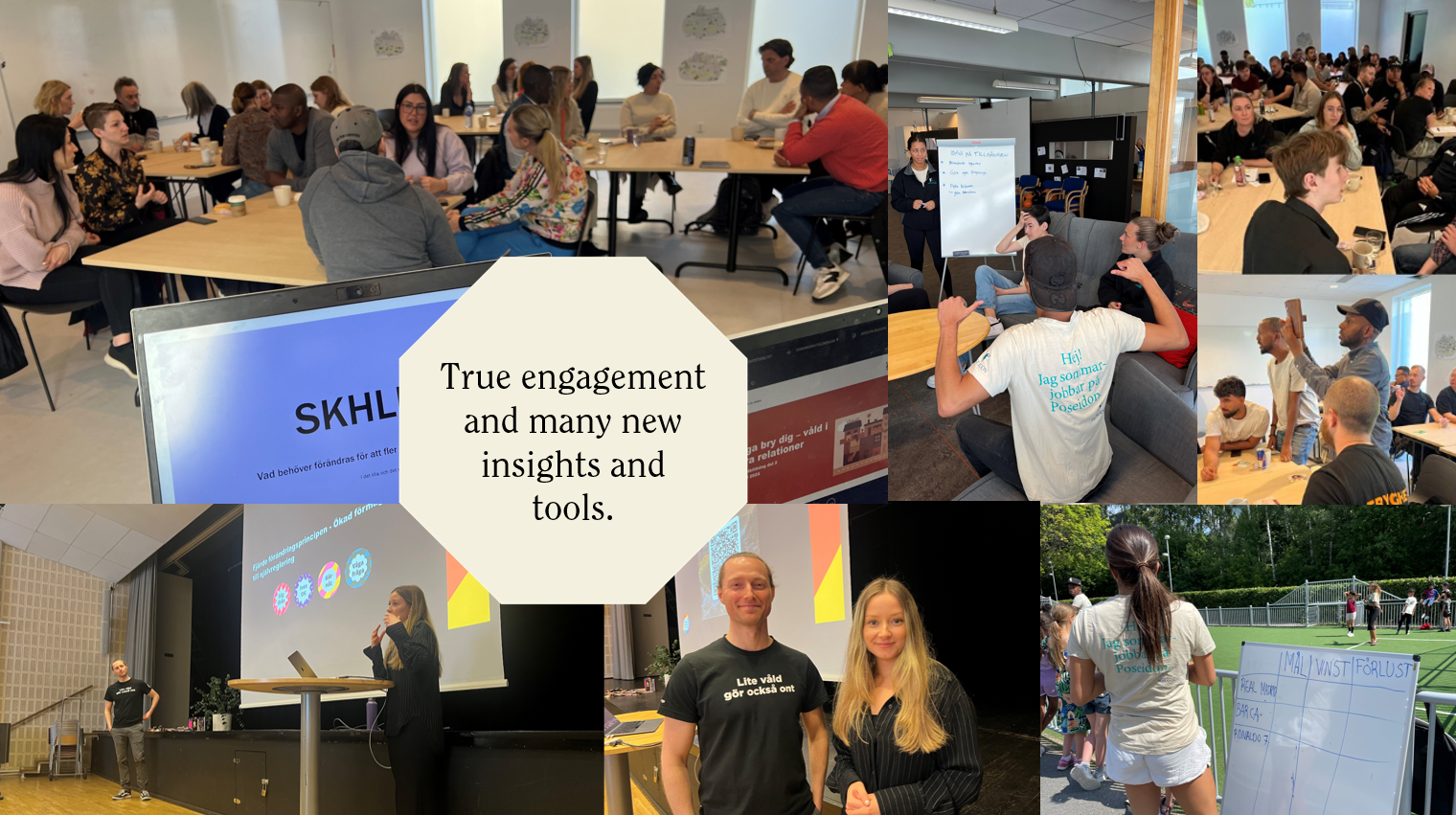
- Phase 1: 30+ senior staff (from development and security teams) received in-depth training on violence, trauma, and safe intervention
- Phase 2: Supervisors and safety staff (30+) received equivalent training, preparing them to mentor and support the summer staff
- Phase 3: All 330+ youth received an induction focused on the Dare to Care framework, their community role, and practical principles like respectful engagement, vigilance, and early intervention
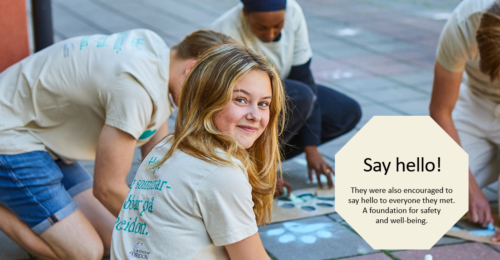
The programme also emphasised small but powerful behavioural cues, like greeting neighbours, as essential tools for building safer, friendlier environments. This approach is deeply embedded in the group’s values and grounded in the Poseidon subsidiary’s ethos.
The initiative is further distinguished by:
- A tested and scalable curriculum in violence prevention (Grundutbildning i Våldsprevention)
- Cross-sector collaboration with the Gothenburg Social Services
- Alignment with the overarching Dare to Care framework, making the youth initiative a seamless part of a long-term community strategy
Plans are already in motion to expand the programme in 2025 to reach up to 1,000 young staff annually.
Interventions
The programme drew on several key resources and methodologies:
- The Dare to Care Framework (established 2019)
- A 365-day model of neighbourhood care and awareness
- Offers guidance on safe intervention and resource access
- Communicated through visible, repeated messaging in physical and digital community spaces
- Tiered Training Rollout
- Key personnel (social, security, and development roles) received in-depth training
- Supervisors were equipped to coach and support youth staff
- Summer staff were trained in civic engagement, social awareness, and peer leadership
- Partnerships and Coordination
- Training co-delivered with the City of Gothenburg Social Services
- Engagement of internal subsidiaries: Poseidon, Störningsjouren, Familjebostäder, Bostadsbolaget, and Gårdstensbostäder
- Values-led Onboarding
- Training reinforced the power of simple daily actions: saying hello, recognising distress, reporting appropriately
- Framed as part of each youth’s personal and professional development
Impact
- Trained and empowered 350 youth in violence prevention, trauma awareness, and civic responsibility
- Safer community dynamics:
- Greater trust and communication between tenants, staff, and young workers
- Improved response to early signs of harm or vulnerability
- Organisational growth:
- Strengthened internal culture of care, collaboration, and accountability
- Boosted confidence and competence across staff roles
- Youth insights from post-training feedback:
- “Violence isn’t just physical—now I understand the full picture.”
- “This will help in my future career working with young people.”
- “I’ve learned how to act without reacting emotionally.”
- “I’ve gained confidence, tools, and a deeper understanding of others.”
- “Dare to care.”
- Scalable model: Programme to be expanded in 2025, with the goal of training up to 1,000 summer staff annually
Lessons learned
- The jury praised the program’s thoughtful training, focus on soft behaviours like greeting neighbours, and its powerful combination of youth empowerment, violence prevention, and community-building.
- They highlighted its innovative approach, strong partnerships, and long-term scalability as a model for social impact and sustainability.