This project was a finalist in the European Responsible Housing Awards 2025 under the ‘Building strategic alliances, fostering community participation’, organised by Housing Europe, the International Union of Tenants and DELPHIS.
Organisation: Wooncoöperatie De Warren
Goals
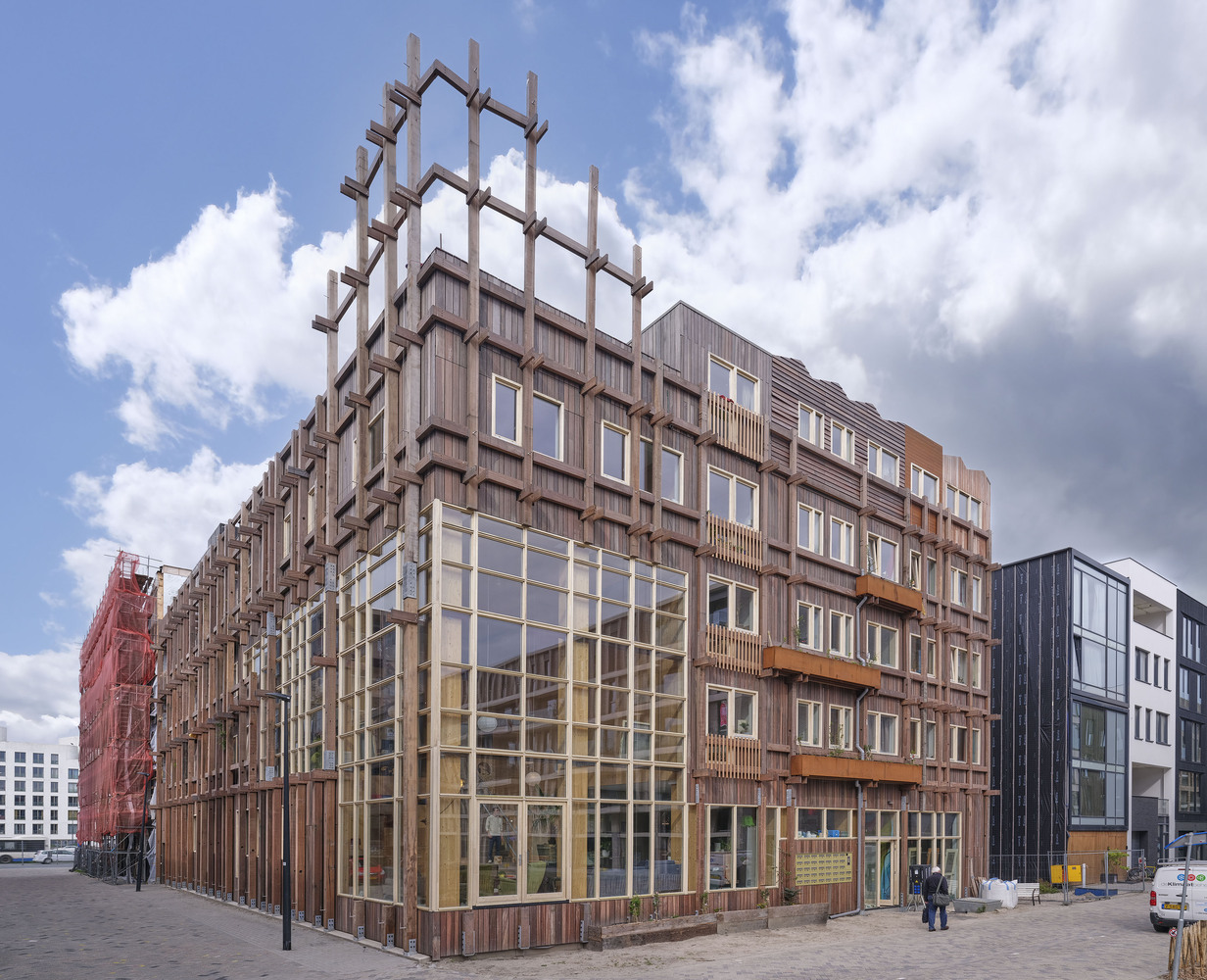
De Warren is a pioneering cooperative housing project initiated by a collective of 50 young Amsterdammers who won a municipal tender in 2018. Residents collectively designed, built, and now manage the building themselves. The project centers around three key pillars:
- Social Connection: Extensive shared spaces (30% of the building) foster community interaction, reduce loneliness, and enhance neighborhood relationships through events and workshops.
- Affordability: Maintaining rents 20-40% below market rates, eliminating profit incentives, and ensuring long-term affordability through cooperative ownership.
- Sustainability: Implementing sustainable design, materials, and energy systems, directly benefiting residents by reducing living costs and environmental impact.
Context
Introduced in the Netherlands’ Housing Law in 2015, housing cooperatives emerged as an alternative model in a market dominated by private investors and rising rents. Responding to Amsterdam’s severe housing affordability crisis, De Warren became the city’s first cooperative housing project, exemplifying a sustainable alternative to traditional profit-driven housing. Amsterdam aims for cooperative housing to make up 10% of its housing stock by 2040. De Warren serves as a successful model, showcasing long-term benefits of collectively owned housing.
What is innovative about this project?
As Amsterdam’s first self-built cooperative housing initiative, De Warren introduced innovative practices:
- Legal Innovations: Developed cooperative ownership structures compliant with Dutch housing regulations.
- Financial Innovations: Created alternative financing models enabling resident-driven affordable housing.
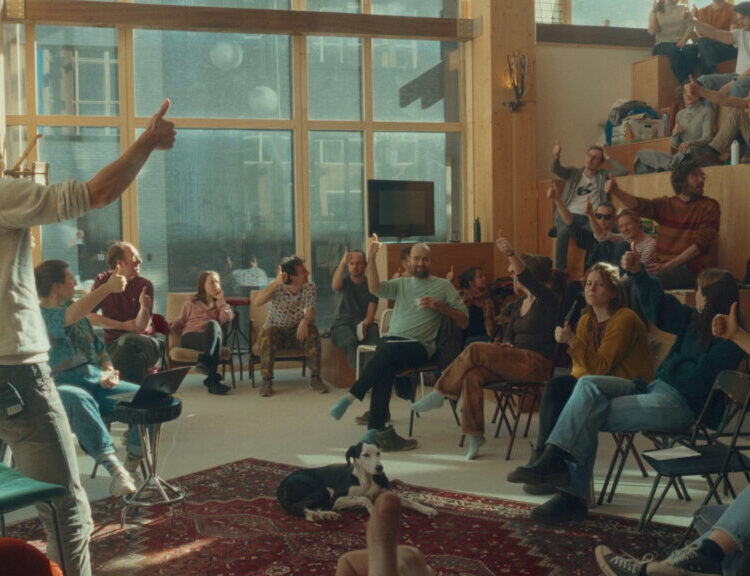
- Governance Innovations: Implemented democratic, holacratic decision-making ensuring inclusive and effective management.
- Sustainability Innovations: Used ecological construction methods, recycled and circular materials, renewable energy (geothermal heating via energy piles, solar power from 200 solar panels), and high insulation standards.
- Social Innovations: Designed comprehensive shared spaces promoting community building and interaction through a central ‘Machu Picchu’ staircase and versatile communal areas.
These innovations are thoroughly documented and publicly available for future cooperative housing initiatives.
Interventions
- Cooperative Business Case: Financial framework aligning rental income with mortgage obligations to maintain affordability.
- Collaborative Design Method: Inclusive co-design process involving all 50 future residents, ensuring collective ownership and responsibility.
- Decision-Making Frameworks: Structured democratic processes enabling efficient collective management.
- Sustainability Trade-Off Game: Tool assisting residents in balancing ecological impacts against practical and financial feasibility.
- Conflict Mediation Strategies: Techniques for resolving disputes and maintaining community harmony.
- Resource Sharing Research: Studies on communal facilities, shared goods, tools, and vehicles, enhancing community cohesion.
- Community Formation Tools: Network analysis for optimizing resident compatibility and building a cohesive community.
Impact
- Social Cohesion:
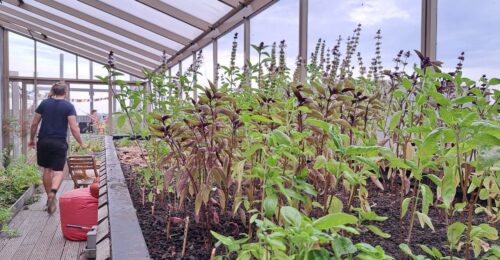
- 800m² of diverse shared spaces including an auditorium, multifunctional rooms, children’s playroom, music studio, meditation space, greenhouse, rooftop terrace, and shared kitchens.
- Cultural programming and workshops benefiting both residents and the broader neighborhood (cinema nights, music events, affordable dinners).
- Affordability:
- Rental rates consistently 20-40% below the market value, ensuring sustainable affordability over time.
- Sustainability:
- Utilization of 330m³ of sustainably sourced and recycled wood, storing over 285,000 kg CO₂.
- Energy-neutral operation through 200 solar panels and geothermal energy piles.
- Extensive reuse of building materials, significantly reducing waste.
- Establishment of a rich ecosystem within the building’s green façade, enhancing local biodiversity.
- Policy Influence and Recognition:
- Influenced municipal housing policies, inspiring more than 15 cooperative housing projects in Amsterdam.
- National recognition across various media platforms and academic research.
- Recipient of awards including the Amsterdamse Nieuwbouwprijs, Amsterdamse Architectuurprijs, honorary mention BNA Architectuurprijs, and Ammodo Architecture Award.
Lessons learned
- The jury praised De Warren for redefining housing through collective ownership, sustainability, and affordability.
- Its resident-led design, renewable energy systems, and innovative governance model make it a compelling alternative to speculative real estate.
- It’s a groundbreaking concept with high replicability potential, especially in cities facing similar affordability and land use challenges.