This project was a finalist in the European Responsible Housing Awards 2025 under the ‘More than a roof – supporting communities of equal opportunities’, organised by Housing Europe, the International Union of Tenants and DELPHIS.
Organisations: WBV-GPA / Wohnbauvereinigung für Privatnagestellte gemeinnützige Gesellschaft mit beschränkter Haftung
Goals
Lebenscampus Wolfganggasse reimagines inclusive urban living through an intergenerational, community-based housing model. Developed by two non-profit housing associations, the project integrates housing, education, social care, and sustainability in a “living campus” designed to meet diverse life circumstances.
Key objectives:
- Inclusive, intergenerational housing: Provide affordable, adaptable homes for single and separated parents, youth, and residents with specific support needs.
- On-site support services: Integrate social care, youth welfare, and vocational training into the housing environment, ensuring accessibility for vulnerable groups.
- Affordability: Offer SMART apartments with enhanced subsidies and cost-based rents to support low-income and single-income households.
- Community-building: Facilitate resident participation through move-in support, shared spaces, and ongoing co-governance.
- Social inclusion and flexibility: Accommodate diverse family models with customizable layouts and community-oriented amenities.
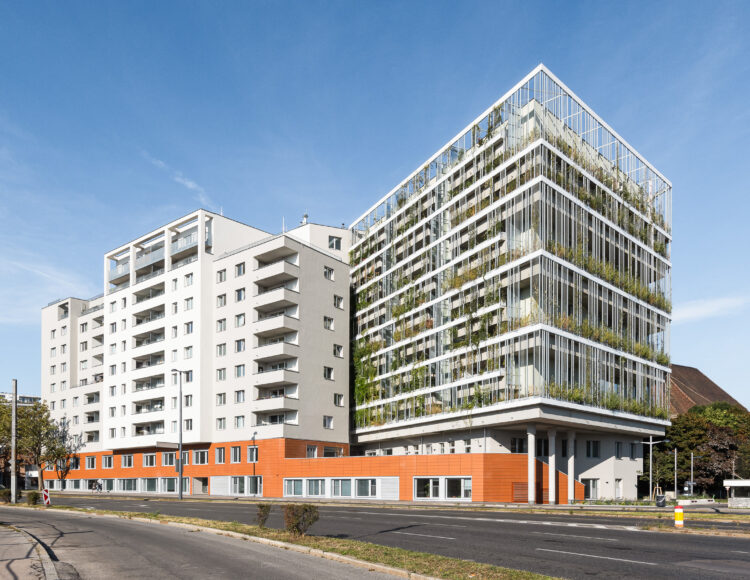
- Sustainable urban renewal: Reuse a former tram depot using energy-efficient design, green façades, and strong public transport links.
Context
The Lebenscampus project revitalises a formerly underutilised tram depot in Vienna’s 12th district, transforming it into a hub for affordable and inclusive living. Though Vienna is known for its strong social housing tradition, emerging social needs—like transitional housing, flexible layouts for separated families, and on-site support—have outpaced traditional models.
The project was shaped by several contextual challenges:
- A shortage of inclusive, affordable housing, particularly for single parents and youth leaving care, who often lacked options with supportive services.
- Fragmented access to education and social care, which limited opportunities for vulnerable groups to stabilise their lives.
- The absence of community-focused urban regeneration in many new housing developments, resulting in social fragmentation.
- A broader need for integrated, resilient urban models that respond to both climate challenges and social inequalities.
Lebenscampus responds with a unique combination of housing, care, and empowerment infrastructure—all within one physically and socially connected environment.
What is innovative about this project?
Lebenscampus Wolfganggasse presents a new standard for multi-dimensional social housing. Its innovations span design, operations, affordability, and digital integration:
- Flexible housing solutions: Cluster apartments, sliding partitions, and guest units support evolving family needs and reduce isolation.
- Integrated support services: Co-location of housing with ÖJAB’s vocational training, Neunerhaus social care, and MA 11 youth welfare services ensures wraparound, real-time support.
- Adaptive affordability: SMART units with “Superförderung” reduce upfront costs; rents are calculated on a cost-based model to reach a wide income range.
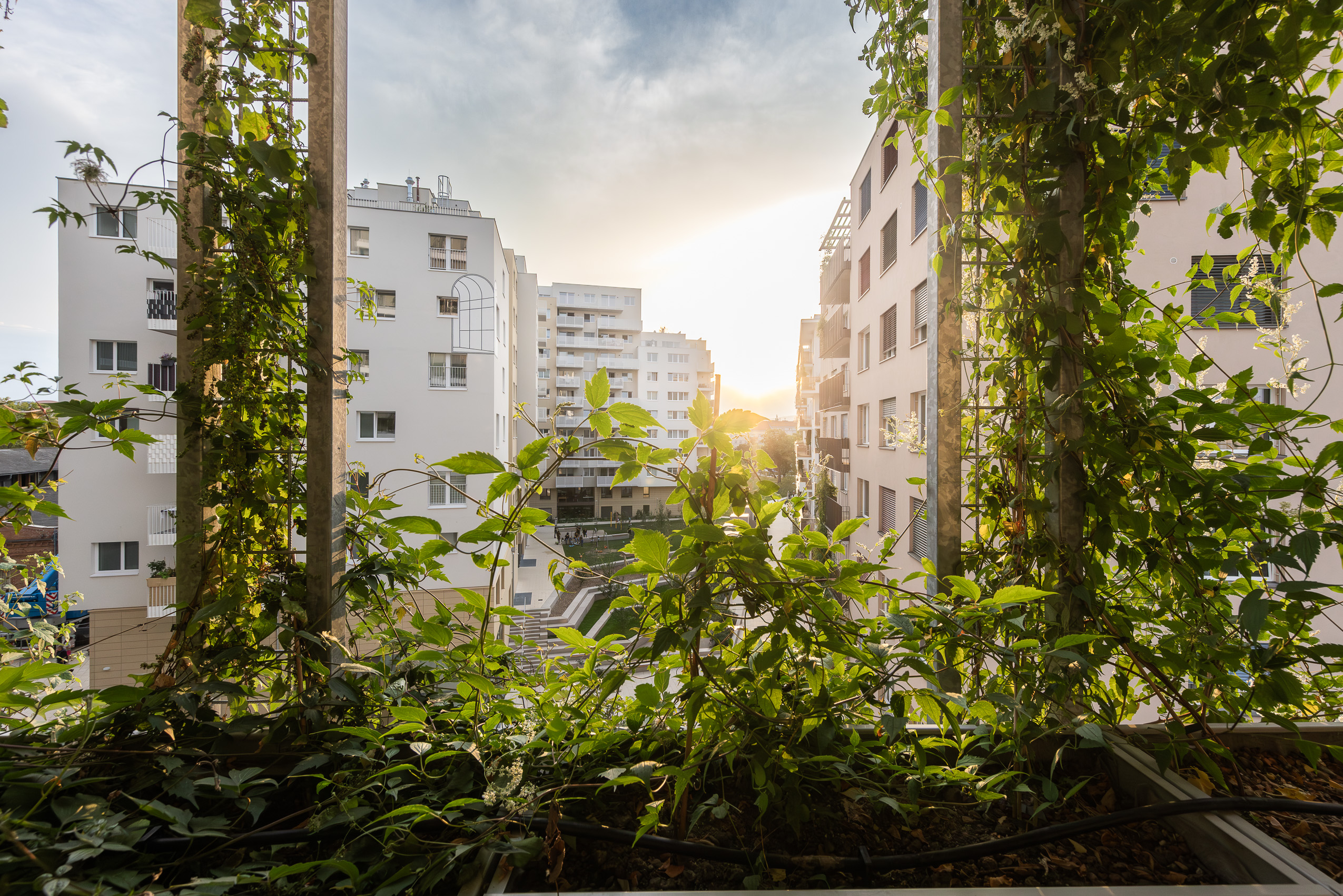
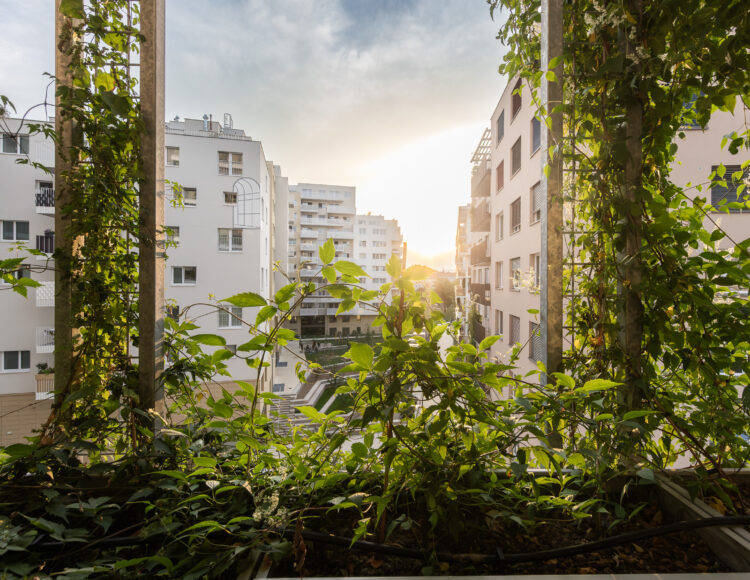
- Sustainable construction: Green façades, rooftop gardens, and energy-efficient design enhance climate resilience and align with city-wide environmental goals.
- Digital community infrastructure: DigiGrätzl—an online platform—fosters communication, feedback, and event coordination among residents and project stakeholders.
- Operational co-creation: Move-in facilitation, tenant councils, and co-design workshops ensure that residents shape their living environment from the start.
The model not only bridges housing and services but also reshapes how affordability, community, and equity are delivered in urban development.
Interventions
A diverse toolkit underpins Lebenscampus Wolfganggasse’s success, blending digital tools, participatory planning, and structural innovation:
Physical and Legal Tools
- SMART apartments with enhanced subsidies (“Superförderung”) and cost-based rents.
- Flexible apartment designs that adapt to evolving household compositions.
Social and Support Infrastructure
- On-site vocational training (ÖJAB), transitional housing (Neunerhaus), and youth services (MA 11).
- Professional move-in support and service access from day one, ensuring residents are equipped to thrive.
Participatory Design and Governance
- Co-design workshops with future tenants, NGOs, and social workers to shape layouts and communal features.
- Resident-led governance structures, including tenant councils and feedback loops for shared space management.
Digital Tools
- DigiGrätzl platform enables real-time communication between residents and management, supports event coordination, and allows idea exchange on community use of shared spaces.
Sustainability Measures
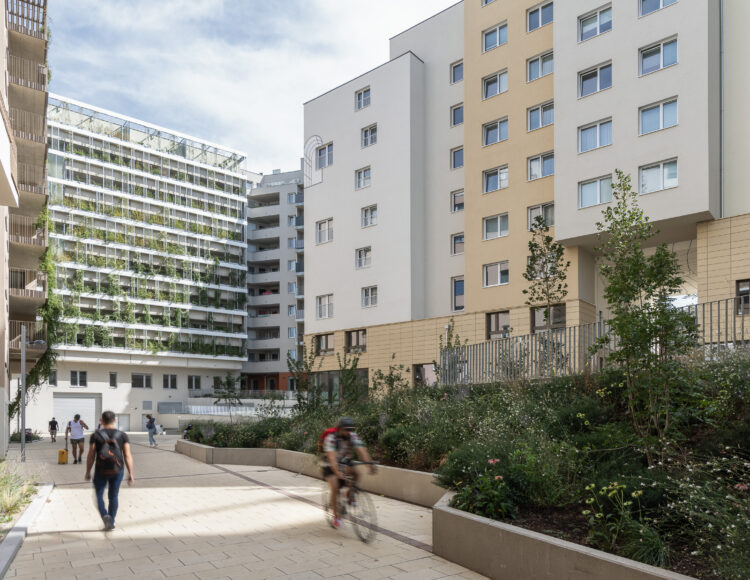
- Green roofs, courtyard landscaping, and bike infrastructure promote low-carbon living and climate resilience.
- Adaptive reuse of a historic tram depot adds cultural continuity to social innovation.
Together, these tools create a housing ecosystem where architectural, social, and digital components are fully aligned.
Impact
- High demand and stable tenancies among single parents, youth, and vulnerable groups confirm successful targeting and retention.
- Coordinated service delivery leads to tangible outcomes: successful transitions from homelessness, improved access to youth welfare, and job placements.
- Resident engagement is continuously monitored through surveys and community workshops, fostering a strong sense of belonging and co-ownership.
- Environmental performance tracked through energy consumption and green space use, reinforcing the project’s climate adaptation goals.
- Financial sustainability maintained through ongoing evaluation of cost-based rents, subsidies, and maintenance practices.
Benefits to Stakeholders and Society
- Residents: Affordable housing, integrated support, and flexible layouts enhance stability and reduce social isolation.
- City of Vienna: A model for equitable urban development that meets social, environmental, and policy goals.
- Service providers and NGOs: Increased reach, improved outcomes, and efficient co-location of resources.
- Community at large: Revitalised urban area, reduced inequality, and strengthened local networks.
Lebenscampus Wolfganggasse demonstrates how collaborative, socially focused design can respond to complex urban needs—offering a replicable path toward inclusive housing in European cities.
Lessons learned
- Highly innovative response to changing demographics, especially supporting single-parent households with integrated services.
- Smart units with “Superförderung” lower entry costs, while rent-scaling and service access ensure long-term affordability and inclusion. Combines multiple initiatives (like Housing First) into one holistic, campus-style model addressing complex social needs.
- More comprehensive and forward-thinking than traditional models, meeting all ERHA criteria for innovative housing practices.