This project was a finalist in the European Responsible Housing Awards 2022 under the ‘Building strategic alliances, fostering community participation’, organised by Housing Europe, the International Union of Tenants and DELPHIS.
Organisation: Fondazione Dar Cesare Scarponi Onlus
Goals
“Milano 2035 – The Youth Housing Coalition” was founded to increase the Milanese metropolitan area’s capacity for housing solutions tailored to the needs of young people, increasing the number of 18–35-year-olds who can move to Milan or who already reside in the city , can live independently from their families of origin. It is a network comprising 30 public and private entities: associations, foundations, cooperatives, businesses, and local institutions.
The aim of the project is to support the right to housing at affordable prices for students and workers under 35, offering a new way of living based on sharing and solidarity between neighbours.
Milano 2035 encourages synergies between the youth residences already present, supports practitioners wishing to work on new projects and promotes places for developing and exchanging ideas between young people, practitioners, and institutions. The network offers young people opportunities for active citizenship, individual growth, and development of relationships and skills, while acquiring habits and lifestyles in solidarity and collaboration.
The relevance of creating a coalition is to reinforce the single projects, which were often isolated, share experiences, transfer methodologies of work and become a critical mass to put forward the youth housing issue on the political agenda.
Context
The work and training opportunities offered by the Milanese metropolitan area are many, but the concentration of work and education opportunities is offset by an inadequate and exclusionary housing system and offer of affordable housing
In the early stages of their housing careers, young people tend to live in the private rental sector because it allows a greater flexibility to move and because they have relatively little financial capital to invest in a home of their own. Social rent is rarely available to young people in Italy. Hence young people tend to turn to the private rental sector, where high rents are the norm in various large cities. In Milan, rents are expensive (around 750 euros for a room in a shared house), comparable to those in other European metropolises, although wages are still very low by European standards (traineeship is remunerated with around 500 euro per month and an entry salary 1300 euro for a graduated student).
This makes access to quality housing with affordable rents difficult. Their opportunities are often determined by the degree of economic support their families can give. The city, in this respect, can offer important opportunities for consolidation and development, from which a big part of the youth with great potential is unfortunately excluded.
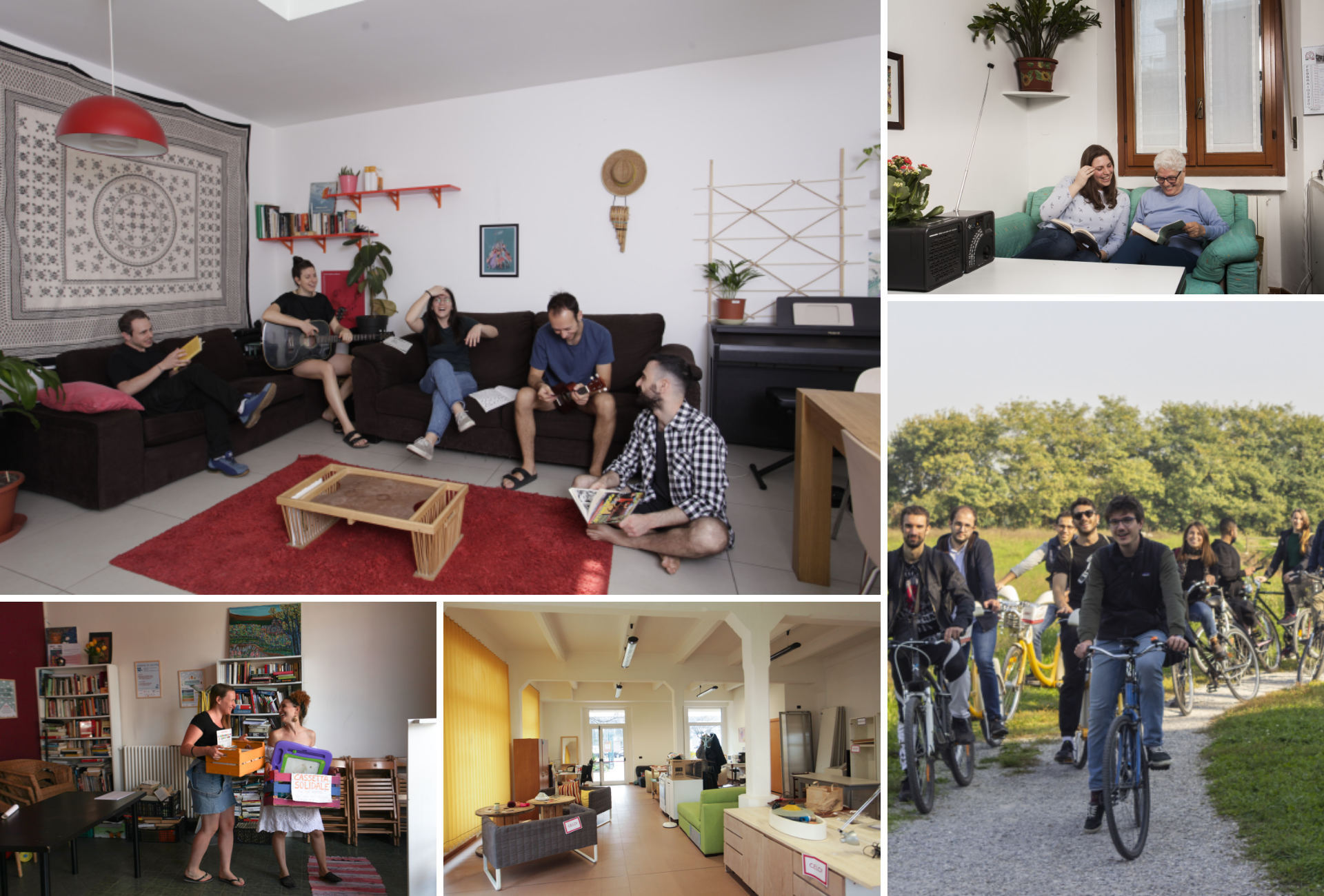
The “Milano 2035 – The Youth Housing Coalition” network has been supported by the Cariplo Foundation’s Welfare in Action programme and is sponsored by the Lombardy Region and Municipality of Milan. It comprises 22 housing projects, divided into individual residences/buildings or spread over other areas, for a total of 300 places. The models vary: youth cohousing, residences that house young people and those with frailties, private accommodation in intergenerational shared housing, and apartments in public housing.
In addition to the provision of housing, Milano 2035 has put into place several other services: a “repair café” for the reuse of furniture and household appliances, promotion and support in volunteering and active citizenship, guidance and advice touchpoints for future landlords and young tenants.
What is innovative about this project?
One of the numerous elements of innovation offered by the Milano 2035 project consists of creating a new system on the national scene, defined by the inclusion in the urban context of specific areas defined as Touch Point.
The Touch Point was conceived and built as a main hub for the network, a place for promoting the scheme and meeting, activating and supporting the inhabitants.
Interventions
The project management uses both “traditional” tools: emails, phone calls, face-to-face and online meetings, as well astools created especially for the purpose, such as:
- The Coalition Table Where different players take part.
- The Action Coordination Group, which coordinates the individual actions and transversal connections to the various project activities.
- The Management Board, in which the project managers of the Dar Foundation, as the lead organisation, take part.
Some tools have been developed that could be useful to replicate the project:
1) definition of “collaborative housing for youth”, with explicit reference to the maximum costs that make it affordable and the specific features that ensure the housing offer is “collaborative”.
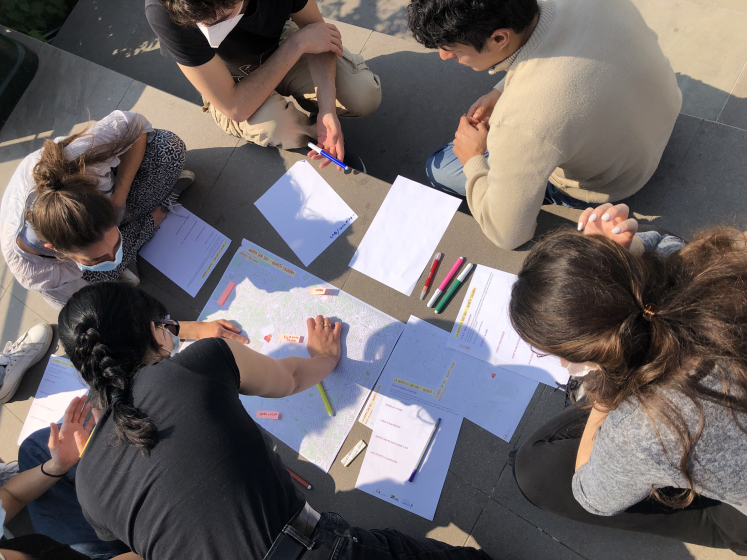
2) collaborative maps of neighbourhoods: with active contribution by the young inhabitants, maps of the neighbourhoods in which the residences are located showing meeting places, and available
3) the catalogue of residences, a publication that provides a summary of the collaborative youth offer present in the Milan metropolitan area, with a description for each residence.
Impact
The project’s impact was measured by quantitative and qualitative indicators.
Benefits to stakeholders: the possibility of being part of a coalition and a larger network, strengthening their position through institutional and sectoral exchanges and public opinion; the acquisition of new professional skills, such as fundraising or management of services at a neighbourhood scale.
Benefits to society: raising awareness in society on housing policies and youth access to housing, facilitating access to information on housing and services, and activation of community areas such as the Touch Points.
Specific benefits for young people: increase in the offer of affordable housing, reduction of living costs (e.g. furniture), and strengthening relationships and engagement.
Success factors:
- Good advocacy results
- Diversification of partners
- Ability of the partnership to identify winning approaches (living and sustainability/intergenerational living/mobilizing vacant accommodation) to promote a new model of living and territorial services
- Ability to review some established models to better respond to needs
- With the Covid-19, the network has demonstrated a solid and effective ability to deal with the emergency resiliently and efficiently
Challenges:
- Bridging the current gap between the project and institutions
- Extending the field of action, with particular reference to the metropolitan area
- Strengthening involvement of private operators, especially property owners
- Increasing the number of Touch Points across the Milanese area
Lessons learned
- The programme aimed to support young people to find affordable homes in a variety of home-sharing/co-housing models.
- Successful effort to put housing for the youth on the political agenda.
- Collaborative maps of the neighbourhood have been realised with the active contribution of the young inhabitants, revealing meeting places, services and points of interest.
- A catalogue of residences, a publication that provides a summary of the collaborative youth offer present in the Milanese metropolitan area
- Explicit reference to the maximum costs that make housing affordable and the specific features that ensure the housing offer is “collaborative”.