This project was a finalist in the European Responsible Housing Awards 2025 under the ‘Management excellence for housing affordability’, organised by Housing Europe, the International Union of Tenants and DELPHIS.
Organisations: Social Rental Agency Thessaloniki – Major Development Agency of Thessaloniki – inter-municipal development agency
Goals
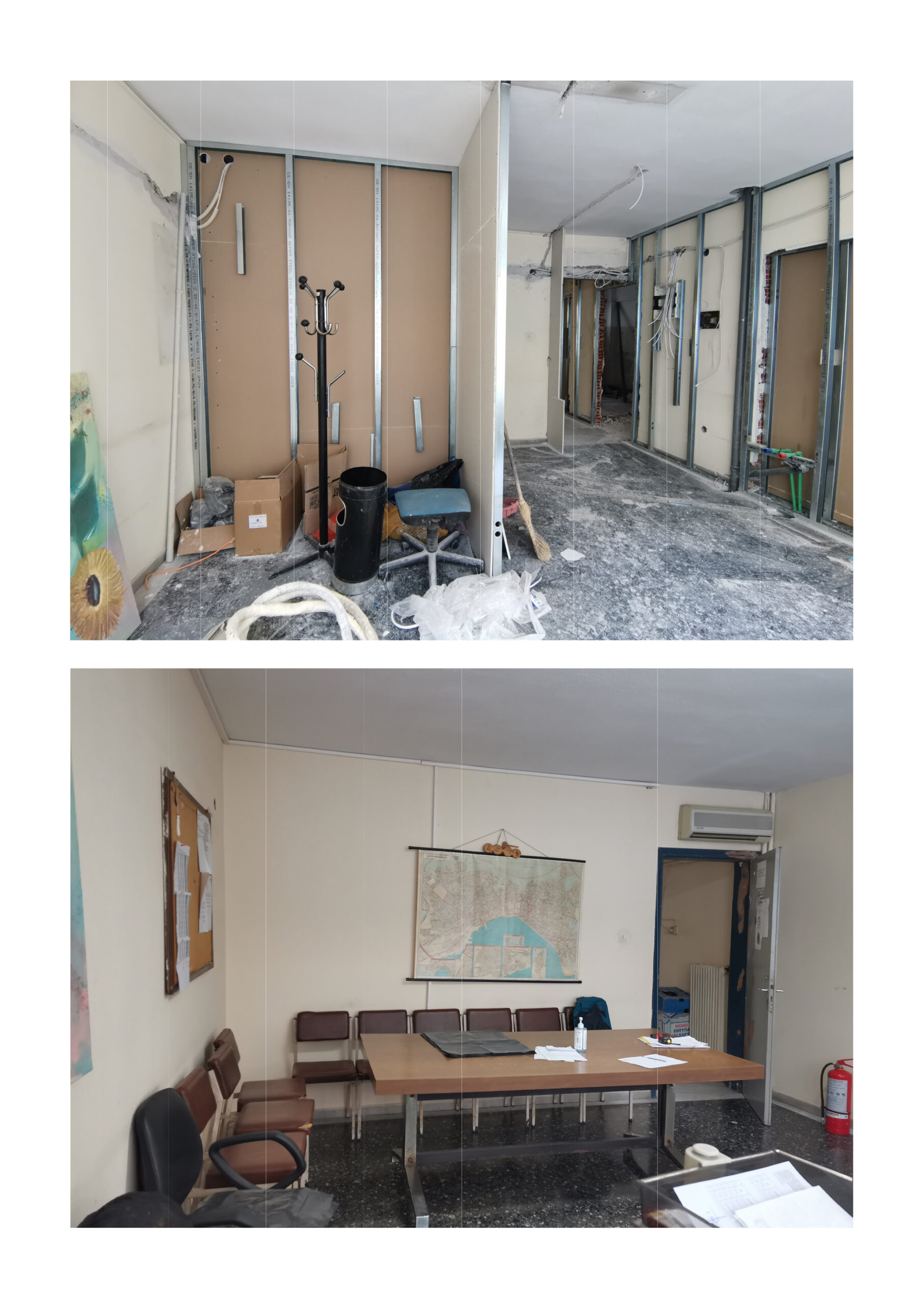
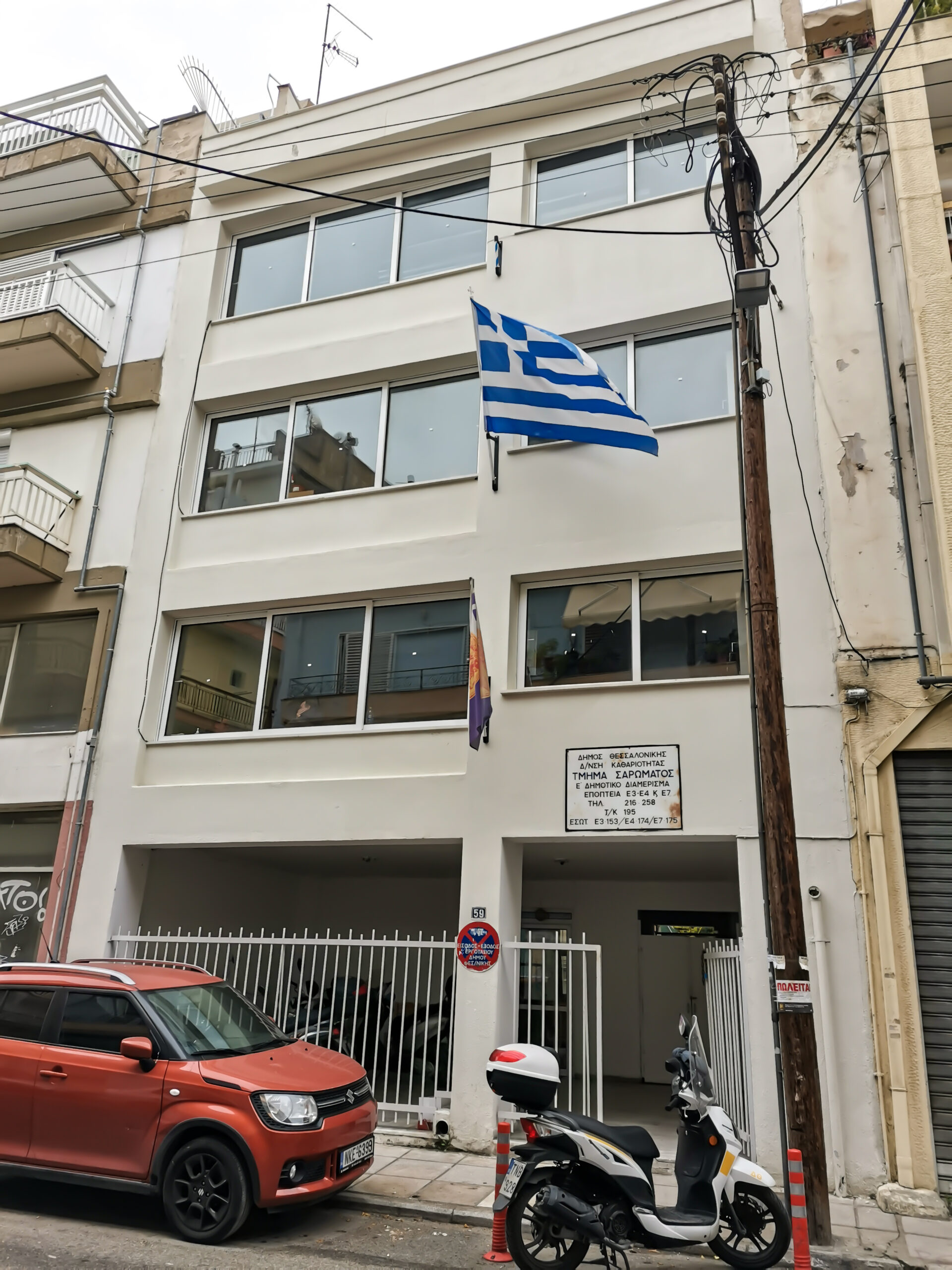
This pioneering initiative in Thessaloniki aims to introduce a public model of social housing in a country with no existing national framework or stock. Led by the newly established Municipal Social Rental Agency (SRA)—the first of its kind in Greece—and implemented in partnership with MDAT (the Municipal Development Agency of Thessaloniki), the project works to develop a replicable model for publicly controlled social housing by renovating long-vacant public properties and renting them to vulnerable households at affordable rates.
Operating within a fragmented national policy context, the project has a dual objective: to demonstrate how municipalities can generate and deliver social housing under public management, and to advocate for regulatory and policy changes that enable this approach to be scaled up nationwide.
Context
Greece stands out in the EU as having no national social housing stock and no overarching housing policy. At the same time, housing exclusion is worsening: according to ELSTAT data, 79.2% of tenants face housing cost overburden, compared to 21.15% of private owners. In the wake of the financial crisis, homeownership dropped by 4%, and among low-income households, housing costs consume up to 90% of disposable income—the highest burden rate in Europe.
In Thessaloniki, this crisis is particularly acute. Rents increased by 65% between 2016 and 2023, while vacancies remain widespread: over 51,000 vacant units exist in the municipality, with 97,164 in the surrounding region. Much of this vacant stock is in public hands, yet remains unused.
To address this, the SRA launched a pilot programme to recover and upgrade publicly owned properties that had stood empty for an average of 15 years. These units are now being repurposed for long-term rental, creating stable housing solutions that also promote social mix and energy efficiency.
What is innovative about this project?
In a policy vacuum, the Thessaloniki pilot represents a breakthrough in both social and institutional innovation. It introduces a municipally driven model for social housing based on long-term public property reuse, while simultaneously proposing structural reforms to unlock national-level support.
The model is designed for replication and already informs Greece’s upcoming national housing strategy under ESF+ funding. It combines hard infrastructure works—such as renovation and energy upgrades—with soft support services and targeted affordability mechanisms. The SRA also works with national ministries to secure legal agreements that guarantee long-term affordability and tenancy rights.
This project has created a practical blueprint for other cities in Greece, using real implementation experience to propose legislative and funding reforms that blend EU resources (ESF+ and ERDF) into cohesive housing delivery.
Interventions
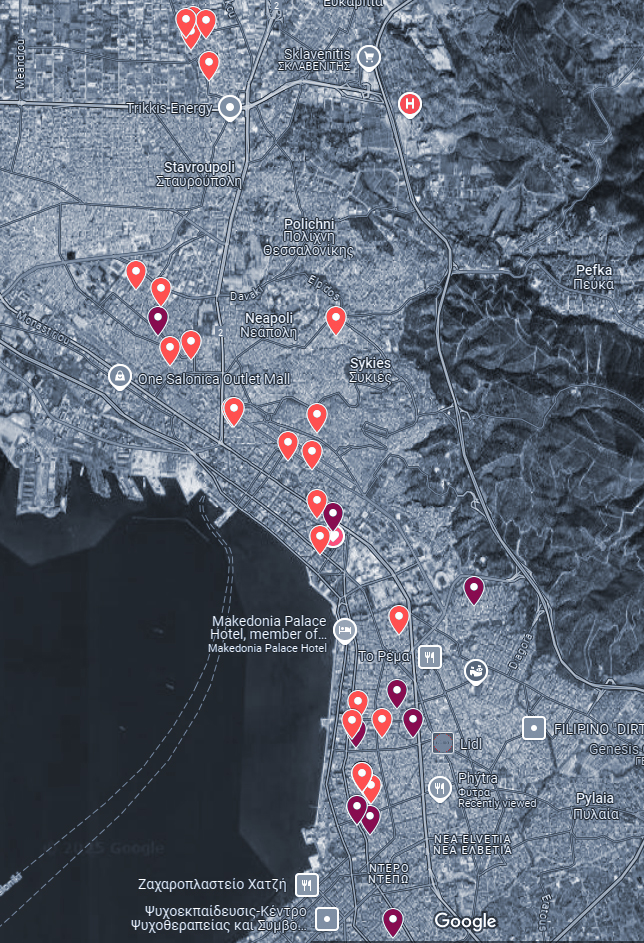
The project is supported by a broad ecosystem of tools, studies, and institutional partnerships developed since 2019. A cornerstone was the Social and Affordable Housing Baseline Study and a vacancy mapping analysis of public housing stock in Thessaloniki. These research tools informed the design of the Integrated Action Plan on Social and Affordable Housing, which was formally adopted by the Municipal Council in 2022.
Implementation is led by the Municipal Social Rental Agency (SRA) in close partnership with MDAT (the Municipal Development Agency of Thessaloniki), which has played a key operational and coordination role throughout.
Technical guidance and model development were shaped by peer exchange with the Ghent SRA and participation in the URBACT ROOF and Cities 4 Co-Housing networks. Participatory tools include surveys and workshops involving landlords, vulnerable populations (including third-country nationals), and local stakeholders.
Since 2019, the project has maintained regular coordination with national authorities, including the Ministry of Family and Social Cohesion, the General Directorate for Housing, and managing authorities for the ESF+ and ERDF programmes. This engagement informs the pilot’s contribution to national housing policy and the upcoming programming period, including the establishment of similar social rental agencies in other municipalities.
Impact
- 30 housing units are being renovated under the current Recovery and Resilience Facility (RRF), with the RRF funding ending in December 2025
- Properties had been vacant for an average of 15 years before being reactivated for social use
- Tenancy agreements last a minimum of 8 years, with renewability clauses and social rents up to 65% below market rates
- A rent-setting mechanism ensures no household spends more than 30% of disposable income on housing, supported by energy efficiency upgrades
- The model is being used to address gaps in national homelessness and housing support programmes, which have struggled due to a lack of affordable stock
- Vacancy mapping and social housing baseline studies are now being replicated by other municipalities
- The SRA’s approach is actively shaping new ESF+ programming, with earmarked funding for similar agencies across Greece
Lessons learned
- The project is an excellent use of EU funds and demonstrates how to effectively blend RRF and social funding tools.
- It provides deeply affordable housing through smart rent caps and strong cooperation among government and civil society.
- The bottom-up, stakeholder-led approach sets a groundbreaking precedent for Greece and similar housing-scarce contexts.
- Despite its small scale, the project’s innovation, planning, and replicability make it highly deserving of recognition.