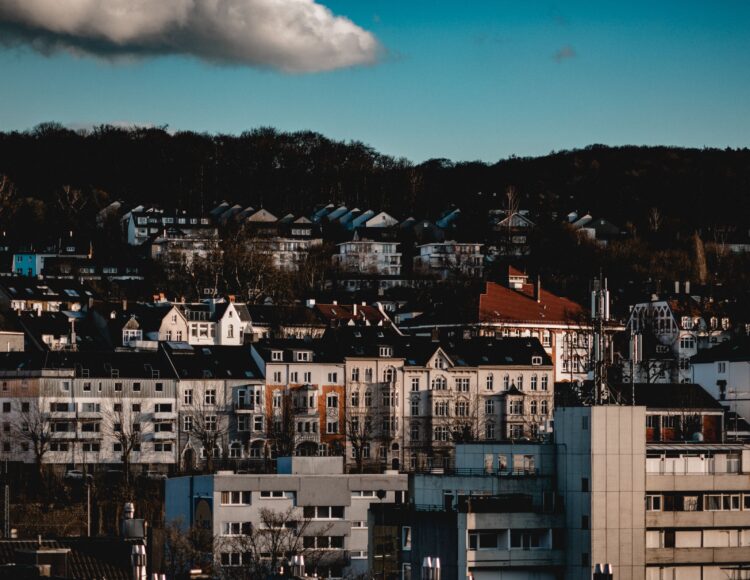
As we mark the International Day of Cooperatives, Wohnungsverein Hagen offers a concrete example of the cooperative model in action. Based in Hagen, Germany, the city’s largest housing cooperative is investing in the large-scale serial renovation of a residential complex in Hagen-Helfe, with the aim of improving comfort, reducing energy consumption and maintaining affordability for tenants.
ould you briefly introduce your organisation and the housing stock involved in this renovation project?
Wohnungsverein is Hagen’s largest housing cooperative, with around 6,000 apartments and approximately 100 commercial units across the city. The residential complex we plan to renovate using serial renovation methods is located in Hagen-Helfe, one of the greenest neighbourhoods in Hagen.
The quality of life here is excellent. The complex is surrounded by greenery and borders directly on a forest. It is truly a very beautiful residential complex. The buildings date from 1966 and, naturally, are beginning to show their age. Their appearance is no longer contemporary, and their technical infrastructure is also outdated. For this reason, we both want and need to carry out modernisation work.
How is the investment structured, and what does this mean in practice for a housing cooperative?
The investment required for the entire complex is a significant challenge, even for an organisation of our size. We plan to invest approximately €27 million. A substantial share of this — around €23 million — relates to the contract awarded to EcoWorks for the serial renovation work. However, we will carry out some specific works ourselves, namely the dismantling of the existing façades and the installation of new balconies.
Drawing on our experience over the past several decades, we are confident that the final result will be very convincing. The project is being financed 80% through subsidised loans. By meeting specific energy efficiency standards and using serial renovation methods, we qualify for a 30% subsidy in the form of a principal repayment grant.
How did you balance the financial viability of the renovation with the need to maintain affordability for tenants?
The main challenge associated with this investment is how to balance rental levels after the modernisation work. As a housing cooperative, we have a significant advantage: we are neither strictly dependent on generating high financial returns nor legally obliged to pay dividends. This allows us to calculate rents very carefully and keep them as affordable as possible.
That is precisely what we did when budgeting for this project: we kept the best interests of our tenants and the overall rental structure in mind, while ensuring that the project remains financially viable.
How will the renovation benefit tenants in the long term, particularly in terms of comfort and energy use?
We fully expect to achieve our primary goals: significantly improving residential comfort while also reducing energy consumption.
To what extent do existing public funding schemes support this type of large-scale renovation, and where do they fall short?
The various subsidy programmes we are using are comprehensive in scope and are, in fact, what make a renovation project of this scale possible in the first place. However, to put this into perspective, I must also say that once subsidies are taken into account, the total costs are roughly on a par with those of traditional renovation projects. At present, no significant savings are being achieved; rather, the overall balance is comparable.
What needs to happen at policy and market level to enable more projects of this scale?
I believe the market must continue to develop over the coming years, with a greater volume of projects being implemented. This would increase both public acceptance and overall awareness, while also allowing for further cost reductions. In turn, such projects would become increasingly attractive to a wider range of investors.
For more information, visit: https://www.wohnungsverein.de/serielle-sanierung-in-helfe/
Wohnungsverein Hagen is connected to the wider Housing Europe network through GdW, the Federal Association of German Housing and Real Estate Companies.