Do you sometimes get the impression that meaningful change only comes from large national reforms or millon-euro renovation plans?
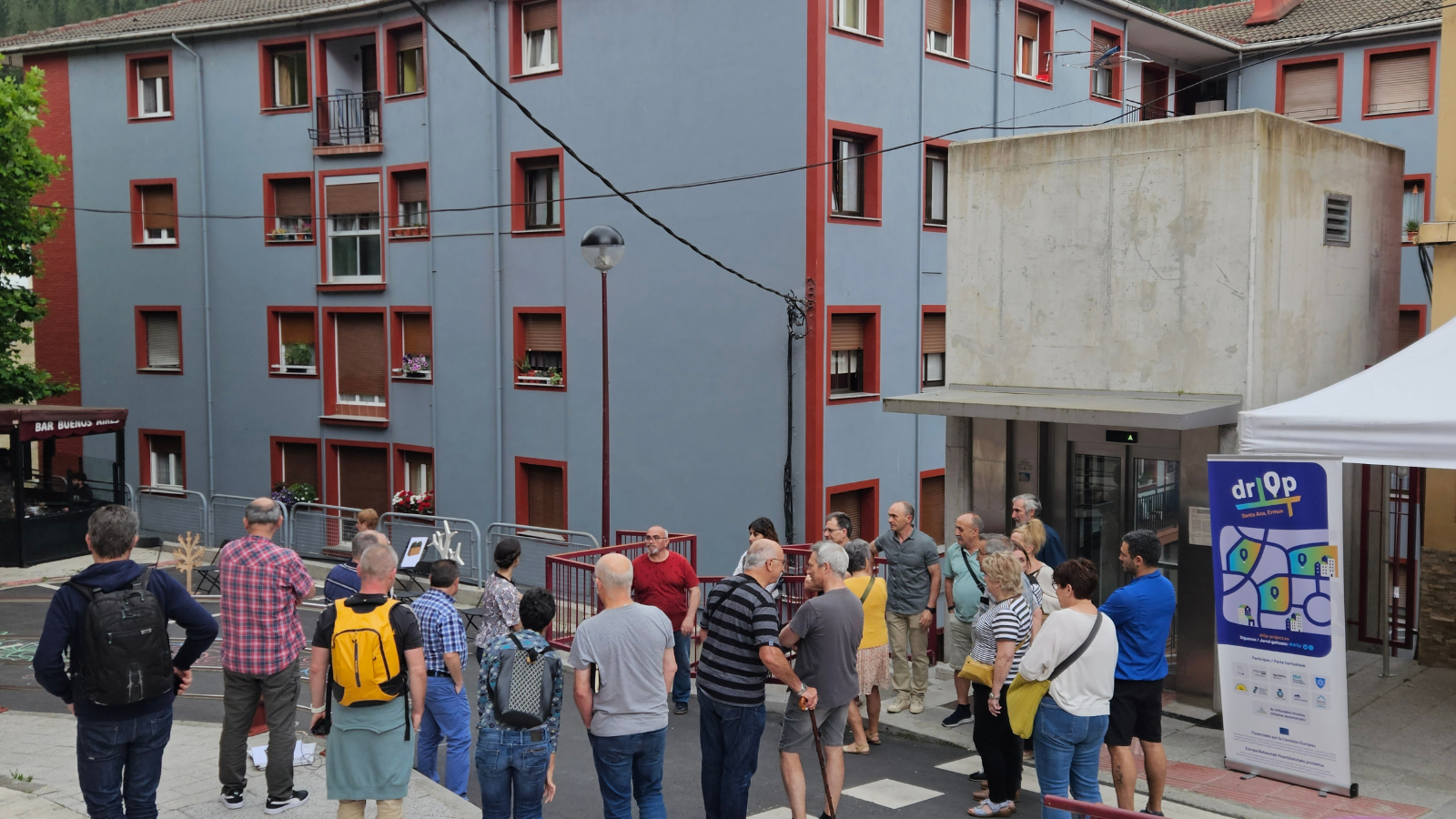
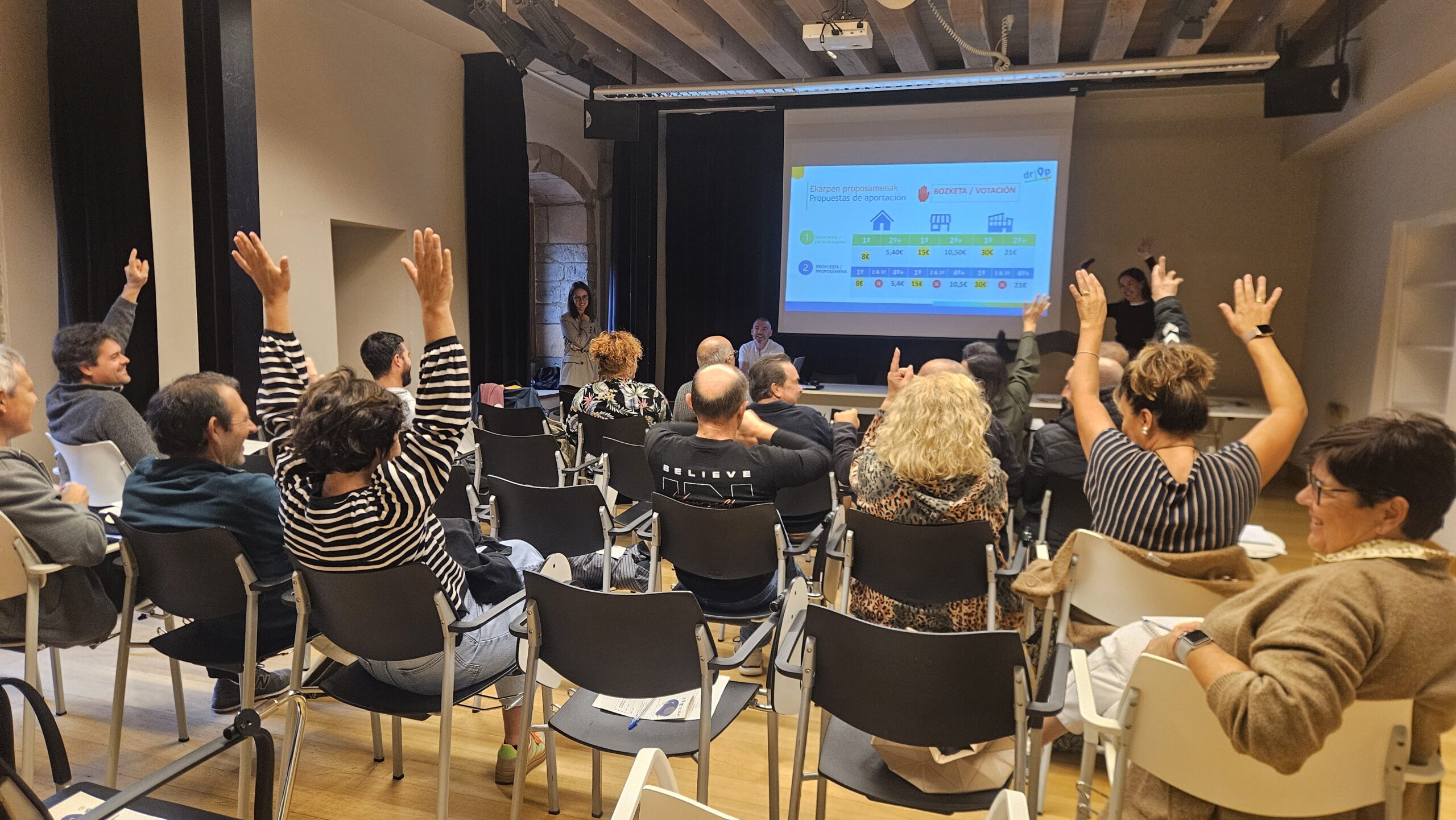
In Santa Ana, a post-war social housing district in Ermua (Spain), change began with a collective decision rather than a large capital programme. Within the Horizon Europe project drOp – Digitally enabled social district renovation processes, residents, municipal staff, local businesses and a school worked together to rethink how their neighbourhood could improve everyday life. Among the ten actions co-created, one became particularly emblematic of what neighbourhood-scale renovation can achieve: the creation of EkiElkar, a local energy community.
Santa Ana was built in the 1960s and 1970s during rapid industrial expansion. Like thousands of similar districts across Europe, it faces ageing buildings, limited energy performance and rising energy costs. Through drOp’s Integrated Renovation Methodology (IRM) — a structured yet adaptable framework linking social innovation, technical improvement and local economic development — residents identified renewable energy production and collective self-consumption as a priority.
An energy community is a legal entity that enables citizens, small businesses and public institutions to jointly produce, consume and manage renewable energy. Instead of remaining passive consumers, members collectively invest in renewable infrastructure and share the electricity generated. In Santa Ana, this idea materialised through a formal association bringing together 46 households (representing more than 115 residents), three local businesses and the local school.
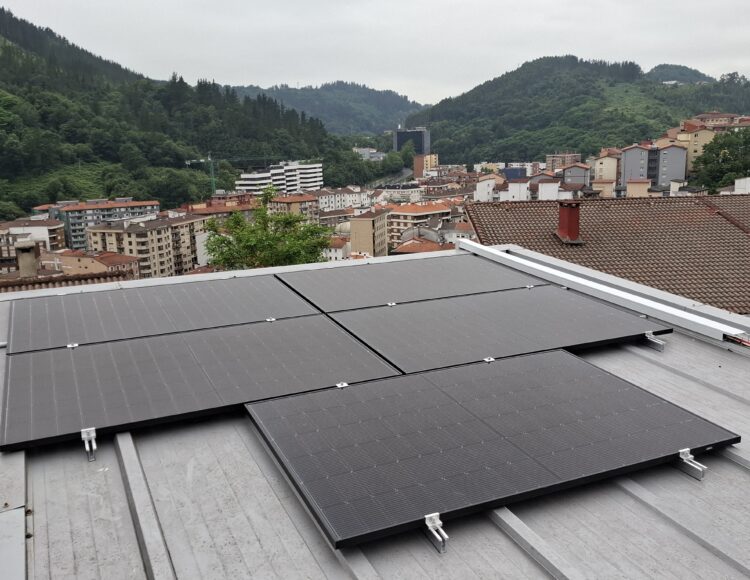
A 40 kWp photovoltaic installation composed of 90 solar panels was installed on the school’s roof. The system generates approximately 40,231 kWh of renewable electricity annually, avoiding around 10,259 kg of CO₂ emissions each year — the equivalent of planting over 500 trees or avoiding nearly 85,000 kilometres of car travel. Beyond generation, the design of collective self-consumption enables participating members to optimise their usage patterns, with an estimated 30% reduction in external grid consumption among households, businesses and the school adapting their behaviour to align with solar production.
Setting up EkiElkar required more than installing panels. A legal association was created to comply with national regulations. Allocation mechanisms were defined to distribute production fairly. Grid connection, administrative procedures and contractual arrangements required coordinated technical and legal support. drOp facilitated this setup phase, but operational governance rests with the community members themselves, ensuring long-term local ownership.
The initiative extended beyond infrastructure. Through the Neighbourhood Office — a permanent local presence established early in the project — residents received personalised energy bill analysis, advice on public subsidies and social electricity tariffs, and guidance on energy efficiency improvements. Twenty-three households received detailed bill assessments, helping connect renewable production with household savings. Three dedicated training sessions on energy communities were organised, and a digital monitoring app was introduced, allowing members to track consumption in real time, compare data and visualise emissions savings. This combination of infrastructure, advisory services and digital tools reinforced informed decision-making and behavioural change.
Energy transition was also framed as a shared celebration. The neighbourhood hosted its first Santa Ana Energy Day, a public event involving 147 pupils and 65 residents, where renewable energy, collective production and local climate action were presented in accessible and engaging formats. The event strengthened energy awareness while reinforcing community identity.
The impact of EkiElkar is multidimensional. Environmentally, the neighbourhood produces over 40 MWh of clean electricity annually and reduces its carbon footprint by more than ten tonnes each year. Economically, collective self-consumption contributes to stabilising energy costs and reducing exposure to price volatility. Socially, the initiative has strengthened neighbourhood networks and increased energy literacy in a district where participation had historically been limited. More than 130 residents participated in co-creation activities across the broader drOp process, and regular consultations at the Neighbourhood Office supported constant engagement.
EkiElkar does not stand alone; it is embedded within the broader IRM framework developed collaboratively by Ermua (Spain), Matera (Italy) and Elva (Estonia). This methodology has been consolidated in the drOp Replication Roadmap, a practical guide that enables cities and housing actors to apply the approach fully or selectively, covering diagnosis, engagement, co-governance structures, implementation and evaluation. The Roadmap is available in English, Spanish, Basque and Estonian, reflecting the project’s commitment to adaptability and peer learning across different regulatory and social contexts.
For public, cooperative and social housing providers across Europe, Santa Ana demonstrates that energy communities can function as both decarbonisation tools and social innovation mechanisms. They require early legal clarity, transparent governance design and sustained local facilitation. They benefit from shared infrastructure models that expand participation beyond individual rooftop ownership. Crucially, they show that neighbourhood-scale initiatives can link climate objectives, affordability and empowerment in concrete ways.
In Santa Ana, the energy transition did not begin with a large infrastructure programme. It began when residents, a school and local businesses decided to share their energy future — together.