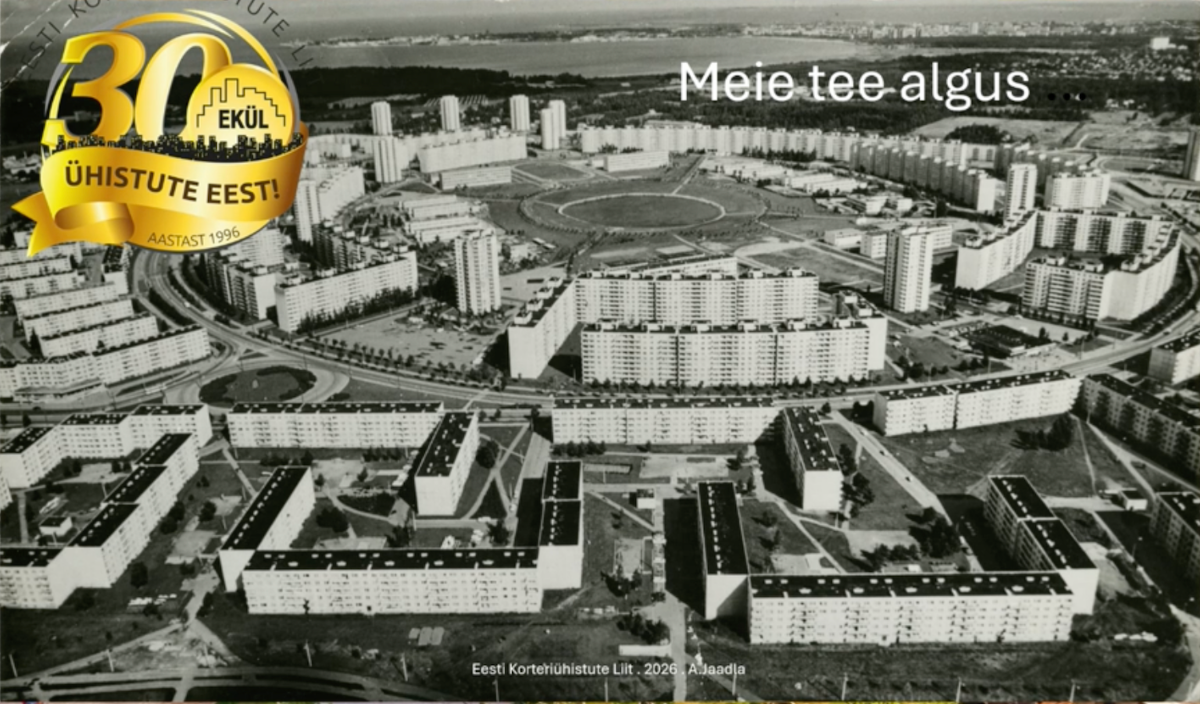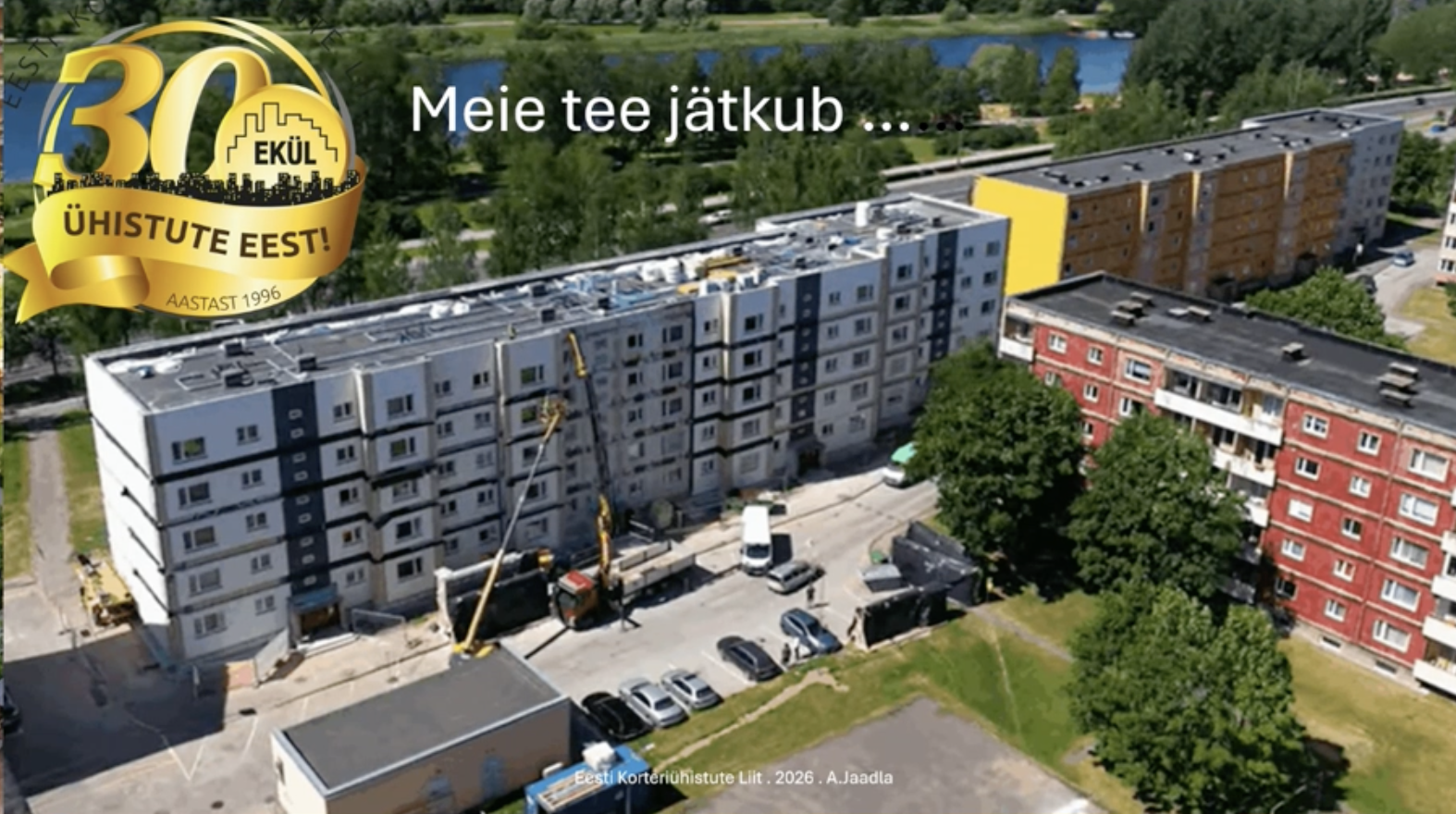
For already 30 years, the Estonian Union of Housing Associations (EKYL) and the team of Andres Jaadla have traced a remarkable journey – from the post-war apartment blocks of Mustamäe in Tallinn, at the time symbols of modern comfort with warm water and a private flat, to today’s large-scale energy renovation projects shaping the future of housing in Estonia.
The turning point came with finance. Twenty-five years ago, associations pioneered collective loan mechanisms, with managers taking personal responsibility and owners signing notary agreements one by one. In three decades, they have not a single bad loan. Housing associations proved to be among the most reliable partners for banks, with minimal risk and strong repayment records.
State-backed guarantees and renovation grants have helped unlock the market further. What began with insulating façades has evolved into complex, whole-building modernisation and fast, affordable prefabricated renovation, cutting energy waste while keeping homes accessible.
The Estonian experience has also shaped legislation, helping modernise apartment ownership rules and governance frameworks. Like all reforms, simplification remains a work in progress.
For Housing Europe President Marco Corradi, Estonia is a national success story and it has also turned into a reference for many countries in Eastern Europe.
As Sorcha Edwards stressed, EKYL has built an incremental and systematic approach to housing delivery through renovation, while also demonstrating how cooperation with Ukraine on reconstruction can place housing actors at the centre of recovery. You will hear more about that at our annual conference on June 5. Now, Estonia is transforming entire neighbourhoods and the environment around which is the only way forward.